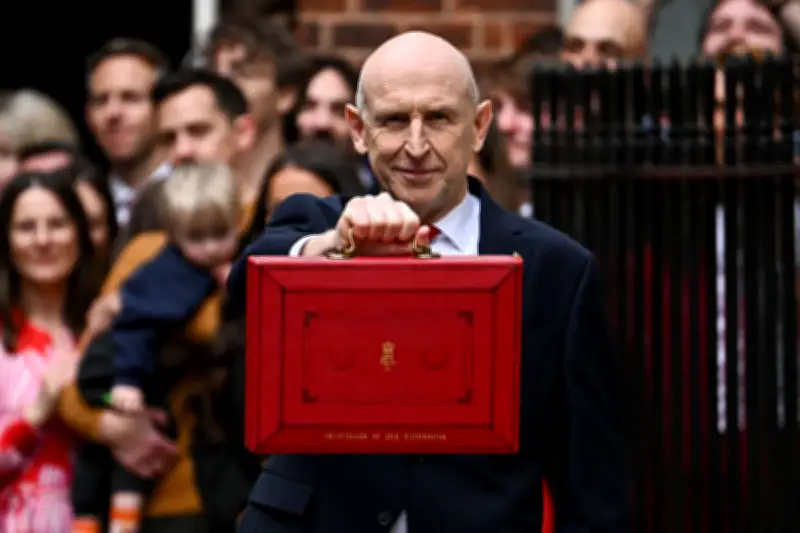
Chancellor John Healey has delivered his first Budget, offering £100 to millions of households to help with energy bills and tax breaks for high street businesses, funded by tax increases on banks and gambling firms. The measures aim to protect British workers and businesses from the economic impact of the Iran war.
Global Economic Storm and Budget Measures
Mr Healey said the UK was being battered by a global economic storm, with the Budget watchdog slashing its forecast for gross domestic product growth next year. The public finances have also taken a battering, with the cost of borrowing soaring and the UK spending £14 billion more on debt interest this year, he said.
The Chancellor told MPs: “Those are the storms we face. We can’t wish them away. We must choose the course we steer through them.”
Support for Households and Businesses
The energy bills support package will cost £2.6 billion, with around 20 million households in council tax bands A to D receiving £100 from the Government this winter. Mr Healey said he was “looking to our banks to help fund breathing space for British families”, with the bank tax hike by an extra 3% for 15 months from January.
Mr Healey also announced an increase in gambling taxes to pay for business rates relief for high street firms. He said it would mean that 70,000 businesses would be taken out of paying rates altogether, “meaning half of our shops, restaurants and gyms will now pay no business rates at all”.
Economic Forecasts and Key Measures
Despite the economic difficulties, the Office for Budget Responsibility (OBR) increased its forecast for economic growth in 2026 from 1.1% in March this year to 1.2%. However, the forecast for GDP growth was slashed from 1.6% to just 1.0% in 2027. The forecast is then unchanged at 1.6% in 2028 before rising to 1.8% in 2029, then 1.7% in 2030 against forecasts of 1.5% in each of those years, then 1.6% in 2031.
Key measures announced include: the freeze in fuel duty extended until July next year; hiking machine games duty from 20% to 25% for higher-stakes gambling machines; the national minimum wage and national living wage increasing by 3.9% for 2.3 million workers; funding for the £4.7 billion black hole in the defence investment plan, in part through taking money from capital budgets across Whitehall; an extra £10 billion of economic and military support to Ukraine, and half a billion in urgent military funding this winter; and a new founders’ relief to encourage start-up businesses.
Fiscal Position and Reactions
The OBR said the UK’s “economic and fiscal position remains very challenging” after almost two decades of shocks and stagnation, pushing up the national debt. “Since 2008, repeated adverse shocks have contributed to persistently weak GDP growth and elevated levels of government borrowing. This has resulted in a sharp increase in government debt as a share of GDP, to a level that is high by both recent historical and international standards.”
The Government is expected to borrow more every year than had been forecast in March, with borrowing around £18 billion higher this year, £16 billion in 2027-28, and an average of £11 billion a year over the following years, the OBR said. The cost of debt interest is expected to be £15 billion higher this year and then £12 billion a year more on average in the years to come. But borrowing as a share of the economy is forecast to fall from 4.4% last year to 4.2% this year, continuing to decline to reach 1.8% in 2030-31.
High inflation, largely due to the energy price shock of Donald Trump’s military action against Iran, will contribute to a painful squeeze on living standards. The OBR said it was expecting “no real earnings growth in 2027”, with household disposable income set to fall in the near term before recovering slightly, but even in 2030-31 it is set to only be 2% above pre-pandemic levels.
Tory leader Kemi Badenoch said the Budget is “not good enough, not strong enough, not bold enough” as the UK remains “overspent, overborrowed, overtaxed and drowning in an out-of-control welfare system”.