
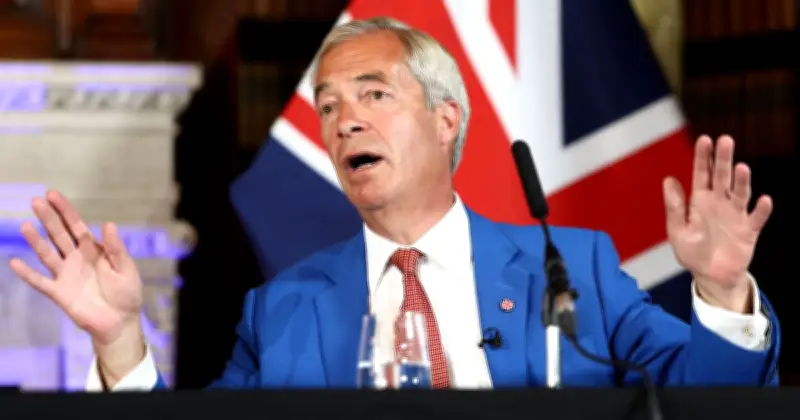
Nigel Farage has revealed he reached out to arch-rival Rupert Lowe and suggested a telephone call in an effort to end their long-running feud. The Reform UK leader was responding to a video from Lowe, the Restore Britain leader, calling for an end to the bitter split.
"I opened the door to that conversation," Farage said. "But I haven't yet had a reply."
In the video, Lowe said millions of people "see a patriotic Right hopelessly divided". He added: "I truly believe there could be sufficient common ground for our two movements to co-operate collectively, destroy the looming Left-wing alliance that will finish off what hope remains for this country."
Three-word response
Speaking at a press conference on Monday, Farage gave a three-word response to the peace offer, saying he had "an open mind" about reaching an agreement, while making clear no progress had been made.
Farage said: "If you want to do a political deal with somebody, you know, you would contact them privately and not do a 12-minute video. That said, I did actually reach out back yesterday to him. I did say, 'look, should we have a call?' I haven't heard back yet, so I don't know what the sincerity of this is."
Cabinet demand rejected
However, he dismissed Lowe's demand that Reform pledge not to give cabinet posts to former Conservative MPs in a future government led by Farage. That would rule out figures such as Robert Jenrick, the ex-Tory who is now Reform's Treasury spokesman, and Suella Braverman, its education spokesman.
Farage said: "I don't ditch my friends. I don't ditch my allies, whether that's Suella Braverman or Posh George (Cottrell), you know I do not ditch people because somebody else wants me to."
Damage warning
The Reform leader conceded the split between Reform UK and Restore Britain could damage his party's chances of winning a general election.
He said: "In broader terms, look, you could see a situation where Restore, without the hope of winning anything outside Great Yarmouth, I mean literally without hope of winning a single seat in the country, could do us great harm."
"I think online you will see a lot of Restore potential voters now beginning to worry about the impact that might have."
He added: "I finalise that by saying if it was the offer of a deal, it came in a very unusual way. I have responded to it potentially, you know, with an open mind, as I would, but I'm certainly not going to be ditching people who I view to be allies and a great asset."
The recent mayoral election in Greater Manchester illustrates the problem. Reform took 21% of first-preference votes, while Restore received almost 9%. Labour would still have won even without the Right-wing vote being divided, but the result suggests a split on the Right could allow Labour to take marginal seats it would otherwise lose.




