Nigel Farage has accused Prime Minister Andy Burnham of pursuing "reparations by stealth" after the Labour leader agreed to hand over £40 million in new aid funding to Caribbean countries as part of his plan to apologise for Britain's role in the slave trade.
Writing exclusively for the Express, the Reform UK leader said the scheme, which includes help for tackling climate change, was the "same scam dressed up in a different way." He said: "Now he's talking about spending potentially tens if not hundreds of millions of your taxpayer pounds on foreign 'reparations' for the 500-year-old transatlantic slave trade. It sounds like a sick joke. Because in many ways it is."
Critics warn of spiralling costs
Mr Farage added: "It's reparations by stealth, and it comes at a steep price for people already struggling with current prices, inflation, and tax rates. It's another kick in the teeth for the ordinary Briton."
Critics have warned the £40 million figure could spiral into hundreds of millions if Britain issues a formal apology about slavery, with taxpayers footing the bill.
Mr Burnham has insisted he will not agree to pay direct compensation for the UK's historic role in the slave trade. However, during talks in Antigua, ministers have started discussing potential help with debt restructuring and funding for tackling climate change. Future foreign aid could also be channelled into education and health programmes demanded by reparations campaigners.
Funding signed off in Antigua
On arrival in Antigua on Monday night, Mr Burnham signed off £40 million to "accelerate critical infrastructure investment in the Caribbean, including renewable energy." Although the funding is not directly linked to the slavery row, it will be seen as another sop to those campaigning for reparations.
Britain has already shelled out millions of pounds to Caribbean nations as part of its £13 billion foreign aid spending and currently sends £75 million a year to Nigeria, another Commonwealth country.
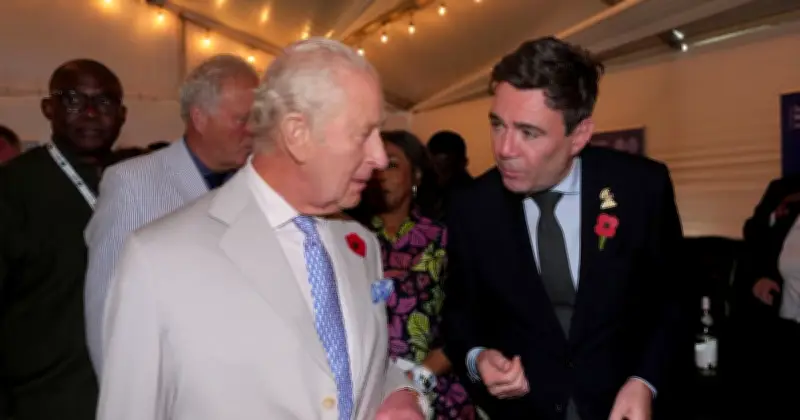
King Charles spoke of the "sincere sorrow" about the slave trade as he formally opened the Commonwealth Heads of Government Meeting (Chogm) in Antigua on Tuesday. He told leaders that the "complex" histories of their forebears must include "the good they did as well as the wrongs."
Political backlash intensifies
The row has overshadowed the bi-annual summit, with Kemi Badenoch branding Mr Burnham the country's "chief apologiser." Mrs Badenoch used a speech in central London to attack the Prime Minister's handling of the situation. She said: "The purpose of the apology is to make us look weak. It is to make this country look weak. And once we start looking weak, then we have every man and his dog making demands and sending us an invoice, which the British taxpayer has to pay. We don't have money for that anymore. We are running out of money."
She added: "The little we have is being spent on welfare. Anyone who thinks that an apology is serious trade and economic policy, is just not serious. I've got a bridge to sell them, they don't know how this stuff works. We need to tell the good and the bad of our history. What's happening is that we're focusing only on the bad with lots of people who've got books to sell about how terrible this country is."
Tory grandee Sir Jacob Rees-Mogg dismissed calls for slavery reparations as a "ridiculous idea." He said of the Prime Minister: "He now wants to go back to the 1770s for something for which you and I have no personal responsibility, to give money to people who have no consequence of what happened then. I think it's all a ridiculous idea, and we should get away from this idea of thinking that we're just here to compensate everyone for everything. We spread civilisation around the world and people are very lucky for that, for what we've done. So, I think his priorities are bizarre. I think it's a very odd order of priorities; I think it's because he doesn't know what he wants to do."
Both Foreign Secretary Ed Miliband and former Prime Minister Gordon Brown have also begun conversations about detoxifying the debate about reparations. Britain is likely to formally apologise for the slave trade for the first time next year, when the UK holds the rotating presidency of the G20 group of countries.