

The European Union has agreed to impose sanctions on violent Israeli settlers, breaking a years-long deadlock over the issue. However, the move has been described as only a 'baby step' by some MEPs, as it falls short of full-scale trade sanctions.
EU Foreign Policy Chief Speaks Out
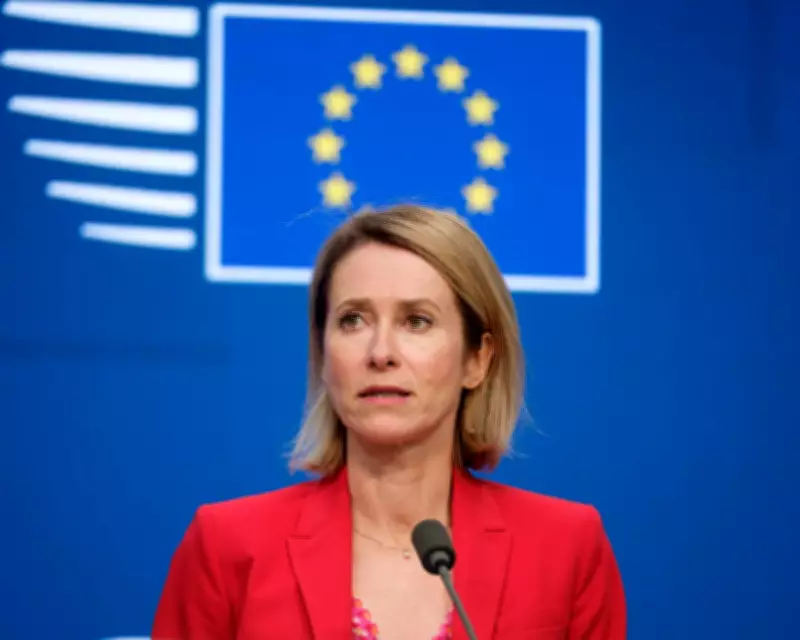
Kaja Kallas, the EU's foreign policy chief, stated on Monday: 'Violence and extremism carry consequences.' Despite this, there remains no consensus among the 27 member states on more hard-hitting trade measures.
France's Position
France's foreign minister, Jean-Noël Barrot, announced that the EU is 'sanctioning the main Israeli organisations guilty of supporting the extremist and violent colonisation of the West Bank, as well as their leaders.' He emphasised that 'these most serious and intolerable acts must cease without delay.'

Details of the Sanctions
The full list of sanctioned individuals has not yet been published following Monday's agreement in principle. However, it is understood that two extremist Israeli ministers, Itamar Ben-Gvir and Bezalel Smotrich, are not included. Both were placed under UK sanctions last June for their 'repeated incitements of violence against Palestinian communities.'
The deadlock was broken after Hungary's new pro-EU government lifted its veto on the sanctions, which had been blocked by former prime minister Viktor Orbán. Kallas also confirmed that the EU would sanction leading Hamas figures.
Israel's Response
Israel's foreign minister, Gideon Sa'ar, criticised the EU's decision, stating that the bloc had chosen 'in an arbitrary and political manner, to impose sanctions on Israeli citizens and entities because of their political views and without any basis.'
Limited Scope of Measures
The measures against a small number of settlers fall short of what some member states had hoped for. France and Sweden have called for tariffs on imported products from illegal settlements. In a joint paper, the two countries wrote: 'We believe that the EU urgently needs to increase the pressure on Israel to halt its settlement policy and practices.'
Sweden's foreign minister, Maria Malmer Stenergard, described putting tariffs on products from illegal settlements as 'the most realistic proposal.' Banning products requires unanimity among the 27 member states, whereas tariffs can be imposed by a majority vote.
Under the EU-Israel association agreement, goods from the occupied territories miss out on preferential terms, but trade is not prohibited. Kallas, who is also a vice-president of the European Commission, noted that she could not issue a draft law to impose tariffs on goods from illegal settlements: 'I raised this issue that member states wanted this proposal. I asked [for] this, but the proposal is not there. And I can't draft it.'
Reactions from MEPs
Barry Andrews, an Irish centrist MEP who chairs the European parliament's development committee, described the EU foreign ministers' decision as a 'welcome (baby) step.' Writing on X, he called for enforcement of labelling and banning of settler products, as well as ending research cooperation with Israel. He added: 'Ultimately, only a review of the EU-Israel association agreement, with view to suspension, will have a major impact.'
Renewed Pressure on the EU
Amid surging violence in the West Bank and the dire humanitarian situation in Gaza, the EU is under renewed pressure to use its leverage to push Israel's government to change course. Last week, former senior EU diplomats and officials called for sanctions against all individuals and entities engaged in illegal settlements, including planners, lawyers, banks, and other professionals involved in the proposed E1 settlement.
The signatories warned that this illegal settlement of 3,400 illegal homes would cut the West Bank in two 'and so wreck any prospects of a viable Palestinian state.' The declaration was signed by 452 former senior EU politicians, diplomats, and officials, including two former prime ministers: Guy Verhofstadt of Belgium and Stefan Löfven of Sweden.

Violence in the West Bank
Since the 7 October attacks by Hamas, Israeli settlers have pursued a growing campaign of violent intimidation against Palestinians in the West Bank with the aim of driving them from their land. According to UN figures, 230 Palestinians were killed in the West Bank by Israeli forces and settlers last year.





