The European Union is set to release more than €16 billion to Hungary, funds that had been frozen under the rule of Viktor Orbán. European Commission President Ursula von der Leyen hailed the “winds of change” in the country following the election of Péter Magyar last month.
Historic Breakthrough
The decision, described as a “historic breakthrough” by the new prime minister, coincides with a police U-turn allowing next month’s Budapest Pride parade to take place. Last year, authorities sought to block the event under the previous government’s orders.
Last year’s march gained global attention after Orbán’s Fidesz party enacted legislation—the first of its kind in the EU’s recent history—that created a legal basis for banning Pride events, citing a widely criticised need to protect children.

Since Magyar’s landslide victory, which marked the end of Orbán’s 16-year rule, the new leader has repeatedly voiced support for equality and freedom of assembly. However, he has not specifically addressed Pride events, nor has his government reversed Orbán’s legislation, leaving questions about this year’s parade.
Von der Leyen’s Praise
Von der Leyen stated that Magyar had convinced the European Commission that Hungary is “turning the page.” The funds will be allocated to housing, transport, energy, small and medium enterprises, and societal supports under cohesion funds.
“We can already feel a strong wind of change across Hungary,” she told a press conference. “In only a few weeks, you have driven forward long overdue reforms,” she added, addressing the conservative leader.
Magyar told reporters in Brussels that he agreed with von der Leyen on all steps to release the funds, and that Hungary would pass necessary laws. This implies that any compromises to LGBTQ+ rights will be corrected.
About €2.2 billion of the released funds are contingent on restoring “academic freedom” in Hungary’s universities.
Pride Parade Confirmed
Budapest Pride organisers notified police of their intention to hold the 31st march on 27 June. They expressed confidence the event would proceed, especially after the EU’s top court ruled that Orbán’s 2021 anti-LGBTQ+ law—amended last year to ban Pride—was discriminatory and breached EU rules.
“After the extraordinary year of 2025, we trust in the cooperation of the authorities and their acceptance of the gathering,” organisers said. “We warmly welcome everyone in June who took part in last year’s demonstration, as well as those who continue to believe in equal rights and a democratic Hungary.”
Police confirmed the march would be allowed. In a statement, they said: “During the notification process for the 2026 Pride parade and the subsequent in-person consultation with the organisers, no grounds for prohibiting the assembly arose.” They also issued “prescriptive-restrictive decisions regarding three counter-demonstrations,” allowing them at a distance from the Pride parade.
Record Attendance Despite Ban
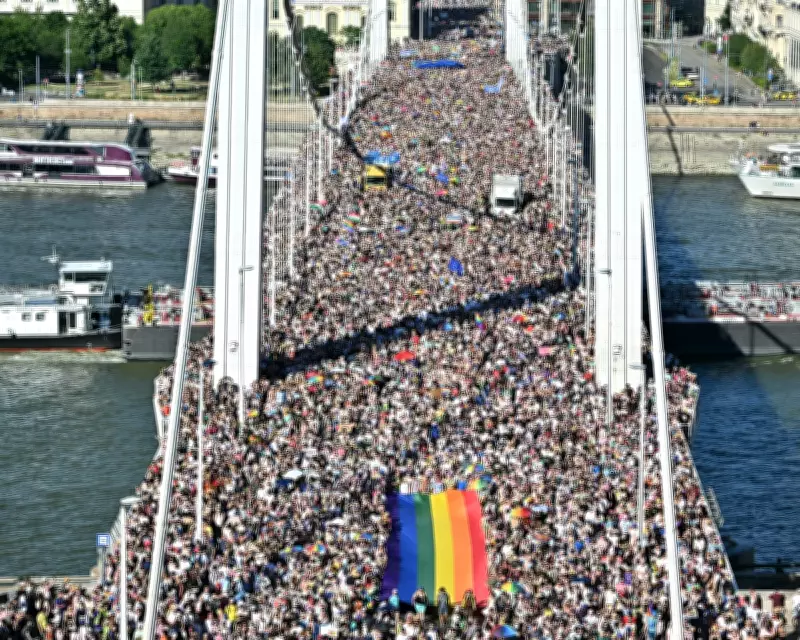
Last year’s march attracted a record 200,000 attendees, according to organisers, turning the event into a symbol of defiance against Orbán’s government. The former government had threatened to use facial recognition to fine participants up to €500, but police later confirmed no action would be taken.
Key to last year’s success was Budapest’s progressive mayor, Gergely Karácsony, who co-organised the event as a municipal cultural event to sidestep Orbán’s legislation. Months later, he was charged with organising the banned parade, with prosecutors seeking a fine.
Géza Buzás-Hábel, a Roma rights campaigner in Pécs, also faces a fine for organising the city’s fifth Pride march last year.