

Democrats Secure Major Victory in Virginia Redistricting Battle
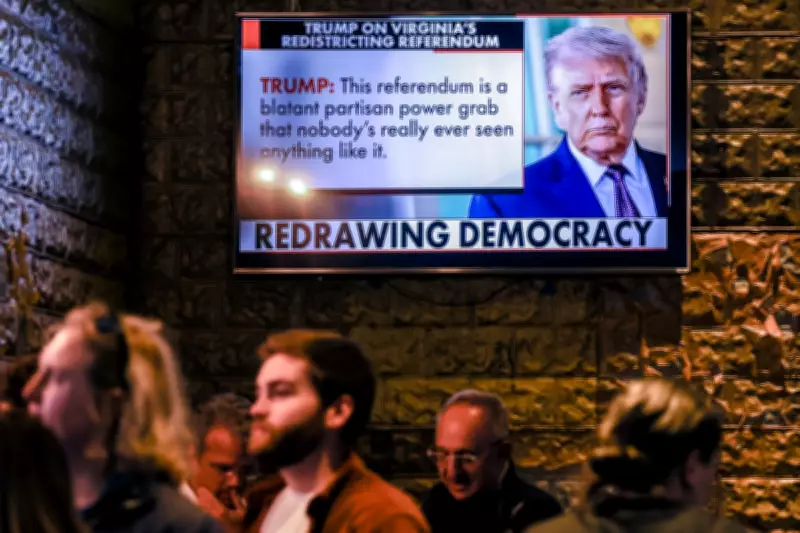
In a significant political development, Democrats have emerged victorious in the redistricting fight in Virginia, dealing a substantial blow to former President Donald Trump's nationwide gerrymandering campaign. Voters in Arlington, Virginia, approved new congressional maps on Tuesday, 21 April 2026, during a closely watched referendum that could dramatically reshape the state's political landscape.
The Stakes of the Redistricting War
Months into his second term, Donald Trump embarked on an ambitious strategy to defy historical trends where the party in power typically loses seats during midterm elections. His plan relied heavily on Republican-led states redrawing congressional maps to systematically eliminate Democratic strongholds. However, this gamble appears to be faltering as Democrats mount a robust counteroffensive.
The latest success came in Virginia, where voters endorsed a redistricting plan that could reduce Republican representation in the House of Representatives from five seats to just one. This outcome represents a major setback for Trump's efforts and suggests that, rather than overcoming historical patterns, Republicans may face substantial losses in the upcoming November midterms.

Democratic Leadership's Response
Top House Democrat Hakeem Jeffries celebrated the victory with a defiant statement, emphasizing the party's aggressive stance. "Democrats did not step back. We fought back. When they go low, we hit back hard," Jeffries declared, vowing to pursue "maximum warfare, everywhere, all the time" against Republican redistricting tactics.
The Virginia referendum passed by a narrow margin of three percentage points, significantly less than the 15-point victory that elected Democratic Governor Abigail Spanberger four months earlier. Despite the slim win, the implications are profound: Virginia's congressional delegation is poised to shift from a 6-5 Democratic advantage to a commanding 10-1 majority when the new Congress convenes next year.
National Implications and Republican Setbacks
The redistricting conflict began last year when Republican-controlled states like Texas, Missouri, and North Carolina heeded Trump's call, redrawing maps to jeopardize up to seven Democratic-held seats. However, the strategy encountered multiple obstacles:
- Indiana Senate Republicans declined to participate in the gerrymandering campaign.
- A bipartisan commission in Ohio implemented new maps that placed Democratic incumbents in less danger than anticipated.
- A court ruling in Utah improved minority chances of securing a seat.
The most significant reversal occurred in November when California voters approved maps potentially costing Republicans five House seats—precisely the number Texas Republicans aimed to gain through their redistricting efforts.
Virginia's Message and Legal Challenges
State Senate President Pro Tempore L. Louise Lucas, instrumental in advancing the maps, highlighted the broader significance of Virginia's decision. "This goes beyond Virginia, and what started in Texas didn't stay in Texas, and what started here will not stay here either," Lucas asserted. "Virginia sent a message: if you try to rig the system, we fight back. If you try to take powers from voters, we will take it right back."
Despite the referendum's approval, the Virginia Supreme Court is reviewing a legal challenge that could potentially invalidate the vote. Even if the previous maps—created under a nonpartisan process established six years ago—are reinstated, Democrats remain competitive in at least two swing districts within the state.
Ongoing Battles and Political Trends
The redistricting war continues with upcoming skirmishes, notably in Florida where Republican Governor Ron DeSantis has called a special legislative session to consider map adjustments that could threaten up to three Democratic seats. However, current political dynamics favor Democrats, as evidenced by their success in special elections and shifting demographic support away from Trump's 2024 coalition.

Trump's approval ratings remain negative, particularly on economic issues, while Democrats lead in generic ballot polls—a key indicator of midterm sentiment. Jeffries issued a stark warning to Florida Republicans, predicting that aggressive gerrymandering could backfire, mirroring Texas's struggles where Republicans may gain only three Democratic seats at most.
"If they go down the road of a DeSantis dummymander, the Florida Republicans are going to find themselves in the same situation as Texas Republicans, who are on the run right now," Jeffries cautioned, adding provocatively, "But go ahead, and make our day."
As the midterm elections approach, the redistricting tit-for-tat may ultimately result in a stalemate or even advantage Democrats, compounded by voter dissatisfaction with Trump's policies. This evolving landscape suggests that the president's gerrymandering war might indeed prove futile, with Virginia's vote serving as a pivotal moment in the broader political confrontation.





