

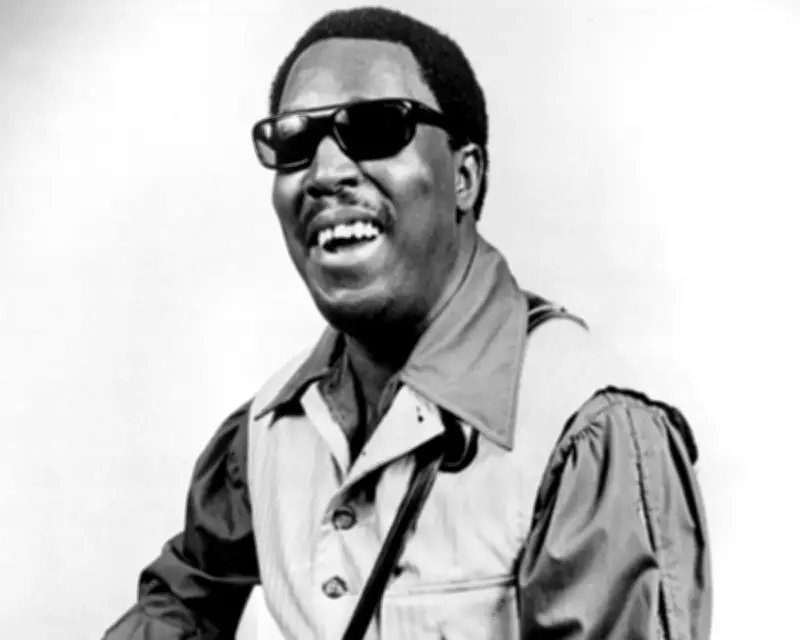
Clarence Carter, the celebrated US soul singer whose hits included the transatlantic smash Patches, has died at the age of 90. His management company confirmed his passing to the Guardian, reporting that he died on Wednesday due to complications from pneumonia.
Early Life and Career Beginnings
Born in Montgomery, Alabama, in 1936, Carter was blind from birth. He launched his music career as part of the duo Clarence & Calvin, later known as the C & C Boys, who released several singles in the early 1960s. When his partner Calvin Scott, also blind, was injured in a car accident, Carter embarked on a solo path. His first R&B chart hit came in 1967 with the self-penned Tell Daddy, which inspired Etta James to write a cover version and response, Tell Mama, a US Top 30 success.
Breakthrough Hits
In 1968, Carter released what is arguably his most enduring track, Slip Away, a mournful yet steadily strutting ballad where he pleads with a woman to cheat on her partner with him. The song reached No 2 on the R&B chart and crossed over to the US pop chart at No 6. It has since featured in numerous film soundtracks, including The Commitments, Almost Famous, and Licorice Pizza. That same year, he also scored hits with Too Weak to Fight and the ribald Back Door Santa, an offbeat Christmas classic later sampled in Run DMC's Christmas in Hollis.

Marriage to Candi Staton
1968 was also the year Carter met future soul legend Candi Staton, who became one of his backing singers before they married in 1970. Staton later remarked that she married him because he was blind, seeking freedom from a jealous ex-husband. Carter introduced her to producer Rick Hall of the Muscle Shoals studio, helping launch her solo career. He co-wrote songs for her, including the Grammy-nominated I'd Rather Be an Old Man's Sweetheart (Than a Young Man's Fool), now regarded as classics. They had a son, Clarence Carter Jr., but Carter's infidelity led to bitter songs from Staton and their divorce in 1973.
Peak of Success and Legacy
Carter's R&B hits continued to accumulate, culminating in Patches, his cover of the track by soul group the Chairman of the Board. His impassioned performance told the social-realist story of a father urging his son to persevere through hardship, reaching No 4 in the US and No 2 in the UK. The song won its writers, Ronald Dunbar and General Johnson, the 1971 Grammy for best R&B song, while Carter earned a nomination for best R&B vocal performance (male). He told the NME: Music is my life and it has been good to me. Since I lost my sight, music has not only entertained me and earned me my livelihood, but it has been a tremendous comfort to me. When I’m down and feeling low, I just get out my guitar and sing.
Carter remained a fixture in the US soul scene until the mid-1970s, when disco's rise diminished his success. He experienced a brief comeback with the sexually explicit 1988 single Strokin', which also charted in the UK, and continued releasing albums through the 1990s. Film director William Friedkin, a fan of Strokin', used it in his film Killer Joe and called Carter the Mozart of Southern music.
Clarence Carter's legacy as a blind soul pioneer with a unique voice and storytelling prowess remains indelible. His music continues to inspire and entertain, with Slip Away amassing over 45 million streams on Spotify.






