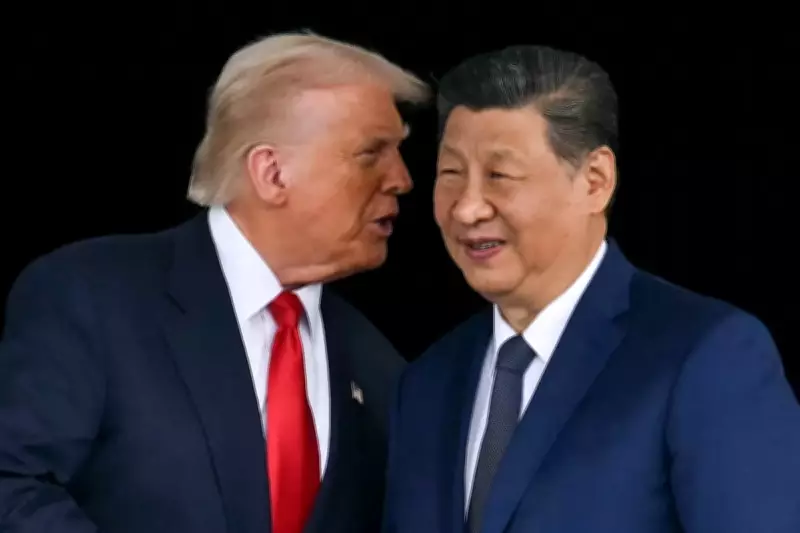
As Xi Jinping prepares to host Donald Trump in Beijing, America's traditional allies are confronting an unsettling reality: Washington no longer looks dependable, says Ben Judah. Trump's actions have fractured the US alliance system just as Xi Jinping and Vladimir Putin have consolidated theirs.
Trump's Impact on Alliances
Since becoming president, Trump's policies have systematically undermined US alliances. Extortionate tariffs hit allies, Mexico was threatened with military strikes, American aid to Ukraine ended, Denmark faced threats over Greenland, Britain was humiliated over Chagos, and thousands of US troops were reportedly pulled from Germany. European allies were left shocked by dalliances with Putin, while Gulf allies were aghast at the lack of consultation over Iran. In Asia, Japan was told to cool tensions with China, South Korea was bullied into paying billions for a tariff deal, Taiwan's president was blocked from visiting New York, and India was heavily sanctioned.
Deepening Authoritarian Axis
Meanwhile, Vladimir Putin and Xi Jinping have deepened their axis of authoritarians. The Ukraine war propelled far deeper coordination between Russia, China, Iran, and North Korea. China provided huge quantities of non-lethal military aid to Russia, and under the banner of a "No Limits Friendship", Moscow and Beijing reconstituted parts of their defence industries. Iran dispatched Shahed drones to assist Russian strikes, and Russia inked a mutual-defence pact with North Korea in exchange for troops and artillery shells.

Trump's return to power has pushed the Atlantic alliance further apart. His Iran war risks driving Russia, China, and Iran even closer together. Russia has assisted Iran with intelligence and drone capabilities, while China has provided radar systems and electronic-warfare support. Beijing also supplies critical components to Iran's missile programme while importing Iranian oil.
Economic Warfare Defeat
In the trade war, America lost. China's stranglehold over rare earths forced the US to yield after Trump's tariffs. Xi Jinping's restrictions pushed the US towards a cliff edge, and the White House yielded in May and October 2025. This was the first time China imposed sanctions on the US and it buckled in a geopolitical contest. As a result, China gained access to Nvidia's H200 chips critical to AI leadership. According to the Australian think-tank ASPI, Beijing now leads on 64 out of 74 critical technologies.
This week, as the world's two other most powerful men come to him, Xi Jinping has reasons to be pleased. The rest of us, America's traditional allies, have much to be concerned about. Trump's return to power is only strengthening the Axis of Authoritarians — not the West.