
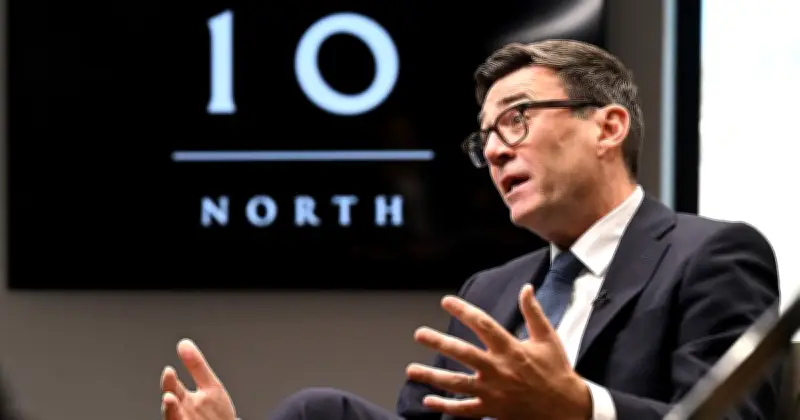
Andy Burnham appeared on the BBC on Sunday to deny he would call an early general election. However, as political commentator Jonathan Saxty writes, the new Prime Minister faces a fundamental dilemma regarding his mandate.
The mandate question
Burnham insists that in Britain voters elect a party, not a Prime Minister. Yet if he wants to veer dramatically from Labour's 2024 manifesto, he would need a general election to legitimise his plans. Conversely, if he sticks to that manifesto, the purpose of replacing Sir Keir Starmer becomes unclear.
Among the policies Burnham has floated are a wealth tax and a land value tax, neither of which appeared in the 2024 manifesto. He has also proposed radical devolution plans and public ownership policies, again absent from the manifesto.
Previous calls for elections
Burnham himself has demanded early elections in the past. In 2022, he said: 'We need to start demanding a General Election at the end of this Tory leadership election. They were all elected on a manifesto promise to level up the North and are all abandoning it.' He also wrote: 'The Tory Party’s majority is based on promises to the north. If they do this, demand a General Election.'
Consistency and U-turns
Political figures such as George Osborne and Ed Balls have speculated that Burnham's flurry of policy announcements might be a prelude to an early poll. Meanwhile, Burnham has performed U-turns on issues from trans rights to the EU, casting doubt on his denial of an early election.
The core dilemma remains: if Burnham departs from the 2024 manifesto, he must call a general election; if he does not, his premiership appears redundant.




