The Institute for Public Policy Research (IPPR) has urged Britain to make EU membership its goal, citing the "unreliability" of the United States under President Donald Trump. The call comes as relations between Washington and Kyiv deteriorate, with fears mounting over American commitment to European security.
In a report published on Monday, the influential left-wing think tank warned that "Britain's assumptions about its place in the world no longer hold, upturned by Russian aggression, American unreliability and Chinese coercion." The IPPR, which is independent but close to the Burnham administration, argued that "the EU that Britain left no longer exists, and the country cannot 'rejoin'. Instead, the UK must become a member of a transformed union."
Polling Shows Majority Back EU Membership
Polling released by the IPPR with Persuasion UK found that more than half (52%) of voters want to join the EU, compared with less than a third (29%) who want to stay out. The intervention follows a series of erratic moves from Mr Trump, including a surprise move on Friday to block a number of sanctions on Russia two days before they were due to come into force.
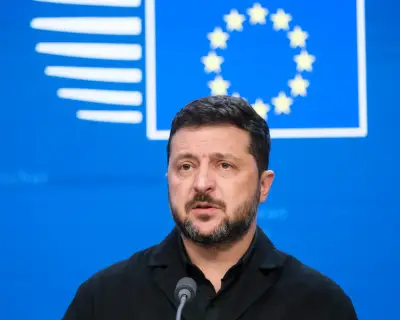
Mr Zelensky on Saturday accused Mr Trump of rewarding and encouraging Vladimir Putin. Russia and Ukraine continued to strike one another's energy infrastructure over the weekend, with Kyiv launching more than 1,000 drones across Russia in what has been described as one of its largest ever aerial bombardments. Smoke was seen billowing above Saint Petersburg on Sunday following air attacks on the city's oil terminal and the Ruchi oil depot.
Zelensky Warns Trump on Russia
The intensified action comes despite Mr Trump last week unveiling a supposed energy ceasefire between Russia and Ukraine. After continued strikes and worsening relations with the US, Mr Zelensky later said: "The block [on attacking refineries] is out. We're done."
In a post on social media on Sunday, the Ukrainian President warned Mr Trump: "America should see that Russia is not taking any reciprocal steps in response to sanctions relief or agreements. On the contrary, they take every signal of an opportunity to make money as proof that their bet on war is paying off and they can keep fighting."
On Saturday afternoon, Mr Zelensky said the American side had signalled that negotiations could take place next week. He said: "The American negotiating track will continue. We're counting on them to put more pressure on Putin, not on us. Otherwise, it's simply unfair. As for our meetings with the American side – we expect to meet and are ready to meet in Ukraine or in Europe. If they want to meet in America, let them invite us. We're ready to negotiate anywhere."
UK Government Takes Different View
Other recent developments include Mr Trump announcing plans to import Russian diesel to the US, calling for Mr Zelensky to be replaced, and declining to say whether Russia was responsible for the war. It has also been alleged the White House slowed down the US-provided Starlink satellite system used by Ukraine to shoot down Russian drones.
Former CIA Director and retired US General David Patraeus said US sanctions would be "really helpful" in putting pressure on Putin. He told Sky News: "US sanctions would really be helpful in addition to the 21 or 22 rounds of EU sanctions that have been imposed, then I think you can actually see it's possible that Vladimir Putin might look in the mirror one morning and conclude that he really cannot continue this war."
Cabinet minister Yvette Cooper said the UK takes a "different view" to Mr Trump on Ukraine, warning that the UK will continue to increase sanctions. Speaking to Sky News's Sunday Morning, Health Secretary Ms Cooper said: "We've been very clear that Ukraine's security is also our security. It's Europe security. It's also UK security. So look, of course, we have taken a different view on the issue about the need to keep increasing sanctions, and we will continue with that."
Mr Burnham last week said it would be a "dereliction of duty" to reject closer ties with the EU. Ahead of the UK-EU summit next month, he told the Commons: "If we are serious about promoting growth, controlling immigration, upholding our values and security, it is a conversation we must have. Sticking with the status quo is not good enough for Britain. Worse, it would be a major dereliction of duty to turn away. We need to take a calm, clear-eyed, rational look at the world as it is today to consider what is best for our country."