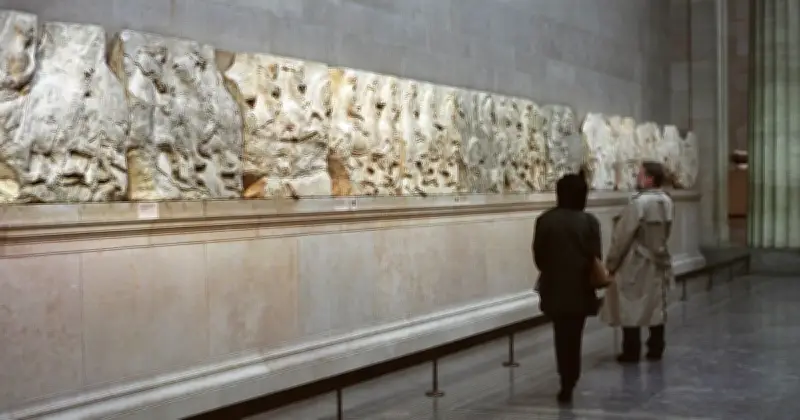
The election of Andy Burnham as Prime Minister could dramatically reshape the decades-long campaign for the return of the Elgin Marbles to Greece. Burnham, who has publicly supported repatriation for over 20 years, now holds the power to influence one of Europe's most contentious archaeological disputes.
Burnham's Long-Standing Support for Repatriation
Burnham's advocacy dates back to his early years as a backbench MP, when he backed parliamentary measures calling for the marbles' return. As Mayor of Greater Manchester, he argued that the sculptures are an inseparable part of the Parthenon and must be viewed as a unified historical piece. His stance contrasts sharply with previous prime ministers who insisted the matter was solely for the British Museum.
Greek campaigners have welcomed Burnham's rise, but No 10 has yet to announce any formal policy change. The British Museum operates independently of the government, and the British Museum Act 1963 prohibits trustees from permanently disposing of items in the national collection. Any permanent transfer would require a parliamentary vote to amend the law.
Ongoing Stalemate with Greece
Talks between Greek Prime Minister Kyriakos Mitsotakis and British Museum officials have repeatedly stalled. Mitsotakis has insisted on full repatriation, rejecting temporary loans. The Elgin Marbles, or Parthenon Sculptures, date from 447 to 432 BCE and originally adorned the Parthenon and other Acropolis structures. Roughly half of the surviving sculptures are in London, with the remainder in Athens.
Historical Context of the Marbles
Between 1801 and 1812, Thomas Bruce, the 7th Earl of Elgin and British Ambassador to the Ottoman Empire, removed the sculptures, claiming an Ottoman decree permitted it. He shipped 247 feet of frieze, 15 metopes, and 17 pediment figures to Britain. In 1816, Elgin sold the collection to the British government for £35,000, and Parliament vested it in the British Museum.
According to the British Museum, the institution holds the marbles legally and cares for them as part of the world's cultural heritage. However, Greece has consistently argued that the artefacts were removed under dubious circumstances and should be reunited in the Acropolis Museum.