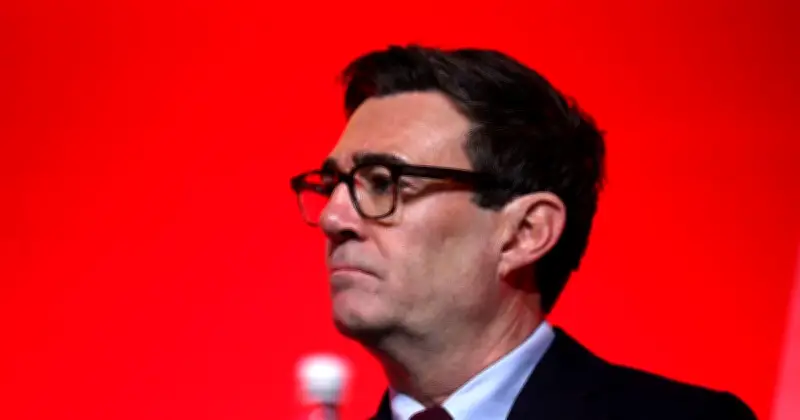
Greater Manchester MP Graham Stringer has warned that Labour leader Andy Burnham faces disaster if he tries to reunite the Left by moving Britain closer to the European Union, cautioning that the push risks betraying working-class voters and deepening internal party divisions.
Stringer, one of the remaining eurosceptics in Labour's ranks, spoke out ahead of Burnham's visit to Brussels on Friday to negotiate a new relationship with the remaining member states. Burnham has made no secret of his long-term ambition to see the UK rejoin the EU in his lifetime.
A referendum could be lost again
Stringer, 76, said he believes "massively" that the pro-Brexit side could win again if a referendum on rejoining were held. He is confident that once "the facts" about the cost of renewed membership, the prospects of "joining the euro" and "losing control" are presented to the public, there would be a "heavy" defeat for Rejoiners.
The Labour pro-EU push comes as the party struggles to prevent voters from drifting to Reform UK on the Right and the Greens on the Left. Stringer warned that if heartland voters get the impression Labour is now a pro-rejoin party, they will feel "betrayed".
"About a million traditional Labour voters have already gone and they're supporting Reform. It will be very difficult for the Labour Party to get them back, and they will be joined by more people if it looks as though we are betraying the largest democratic vote in our democratic history," he said.
Reopening old divisions
When campaigning to become MP for Leave-voting Makerfield, Burnham said that while he thought Brexit had been damaging, he also believed "the last thing we should do right now is re-run those arguments".
Stringer agrees that reopening the divisions exposed in the run-up to the 2016 referendum and its aftermath would be a mistake.
"Brexit was more divisive than I ever expected it to be," he said. "Andy says he wants to unite the country, and returning to what would necessarily be an abrasive debate is not the way to unite it."
He also cautioned Burnham against trying to unite the Left by pushing for Britain to return as a member state, saying he risks "abandoning large chunks of the working class who still do not want to be part of the European Union".
Warnings over the EU summit
Stringer further warned that Britain "wouldn't be joining the European Union that we left", anticipating demands for the UK to sign up to the euro and the Schengen open borders system. "It would be a disastrous move," he said.
He mocked the idea that the UK would grow at a radically faster rate inside the bloc. "Does [the PM] think that if we stayed in, we would be growing at 6% or 7%, that we'd be growing at the same rate as China?" he asked. "It's absolute nonsense… We've got trade deals with the parts of the world that are growing, as opposed to the European Union, which is in a state of stagnation."
Looking ahead to the imminent UK-EU summit, he argued it is a "huge, huge mistake" to go "cap in hand" to the EU and attempt to negotiate a better trade relationship from a position of weakness. "Andy is sending out signals that we're weak… That is not the way to do it," he warned.
If Britain wants a new deal, he argued, we should "wait until they need to ask us for that and then we can negotiate something in our interest". At present, he claims, the EU "can't believe that anybody had the cheek to leave their organisation".
Stringer's history and views
Born in Manchester, Stringer studied chemistry at the University of Sheffield and was drawn into politics through a desire to stop the United States's bombing campaign in Vietnam and put an end to apartheid. He won election as a Manchester councillor in 1979 and by 1984 led the council. After 12 years in the role, he stood for Westminster and was elected in the 1997 landslide.
Opposition to EU membership was once widespread on the Left on the grounds that, as he puts it, "ordinary people should choose the people who represent them and make the laws on their behalf".
Stringer voted against membership of the European Economic Community in 1975: "I thought very hard about it at the time and decided on democratic grounds – no different from my views now, really, that we shouldn't be joining."
He argues the "EU is a massive failure economically", stating it has failed to deliver on hopes it would "compete with the United States and emerging Southeast Asian nations". He credits former president of the European Commission Jacques Delors with winning over much of the Left when he addressed the TUC in 1988 and described a vision of a single market with workers' rights at its heart. Since then, he claims, taking a pro-EU stance has become an "article of faith" in the Labour party.
Asked whether Labour whips put him under pressure to abandon his eurosceptic convictions during the Blair administration, he said: "The honest answer is no… I can honestly say that no pressure was put on me." He argued that one of the strengths of now-Sir Tony was that "he respected that the people in the Labour party had a range of views".
"I voted against the Iraq War, for instance," he added. "And no pressure was put on me that… I mean, in contrast to Keir Starmer, who very stupidly disciplined people right, left, and centre, Blair and Brown were in that sense very tolerant."
Senior Left-wingers, including John McDonnell and Rebecca Long-Bailey, lost the whip for calling for abolition of the two-child benefit cap when Labour entered government in 2024, but Stringer argued that "disciplining people who've been elected as MPs and have been around for a long time always ends up looking silly for the leadership".
Despite being out of step with Labour on net zero and Europe, Stringer has no intention of switching allegiances, despite messages in his inbox encouraging him to change sides: "I get emails regularly from people all over the country saying, 'Why don't you join Reform?' because I'm strongly pro-Brexit. My answer is, I joined the Labour party, I agree with the basic founding principles of the Labour party in terms of representing ordinary people.
"I think the Labour party at the moment has got it wrong on the European Union, but if I left the Labour party every time I thought they'd got a policy wrong, I wouldn't have been in it for long. So, I'm sticking with my party… I'm in a party that is democratic, and I hope one day it will go back to where it started."
When not at work in Westminster or his constituency, Stringer relaxes by playing "a very obscure game called real tennis", which counts Henry VIII among its famous fans. "I stagger about the court still when I can," he said, adding: "I didn't start playing until I was too old for squash and I wish I'd played earlier, because it's an addictive game."
If forces across the British establishment and beyond succeed in securing a referendum to return to the EU, Stringer is expected to campaign against rejoining, viewing it as a battle for democracy.