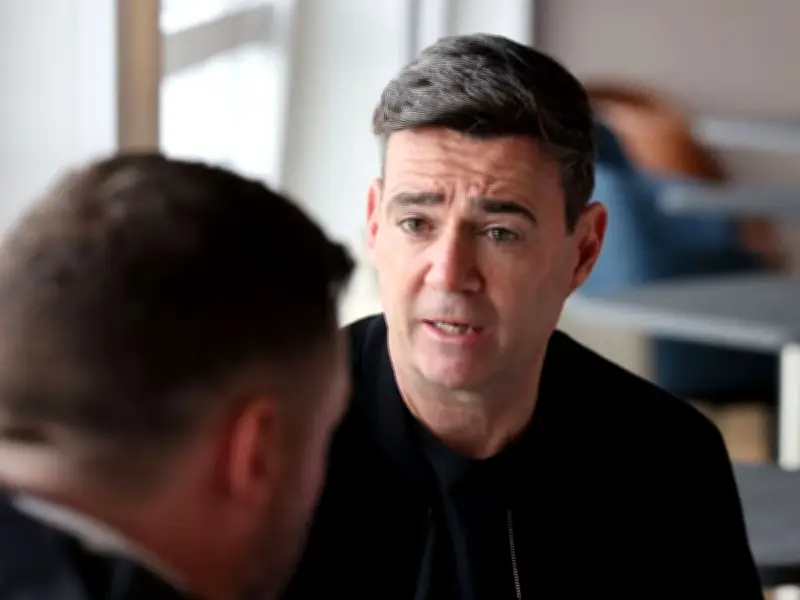
Prime Minister Andy Burnham has said journalism is a vital part of the national infrastructure and that local news media is critical to the success of the government’s devolution agenda. His comments came in an article for Journalism Matters, the news industry’s annual campaign coordinated by the News Media Association.
Mr Burnham said he was “proud to support this year's Journalism Matters campaign,” which is about “recognising journalism not as a nice-to-have, but as part of the national infrastructure of a healthy country and democracy.”
“It holds power to account, strengthens our resilience and connects people to the places they call home,” he added.
ECHO backs Gabe's Law and Hillsborough campaign
The ECHO is supporting Journalism Matters in a month when it has backed Gabe's Law, a campaign highlighting a simple change to barriers at multi-storey car parks that could save lives. Launched in consultation with the Samaritans, the campaign has worked with the families of victims of car park falls, including Johnny Santer, whose son Gabe inspired the efforts to change the law.
Mr Santer said: "I'm absolutely delighted that the ECHO has got on board with us now as official supporters in joining the campaign. I'm hoping that with your network and reach we can get other organisations aligned with our campaign. Everything I do is for Gabe. It's all for Gabe. It's his love and his light."
Last week the Hillsborough Law advanced past its committee stage in the House of Lords. The Liverpool ECHO has worked with the families of victims and survivors of the Hillsborough disaster to support the campaign every step of the way. Earlier this year, the ECHO's Liam Thorp was invited by families to be with them in Downing Street as they met then-Prime Minister Sir Keir Starmer after the bill passed through the House of Commons.
Local reporting delivers results in Everton
The ECHO's work extends beyond Westminster. Reporter Jamie Greer's coverage of Anderson Street in Everton led to fly-tipping that had been blighting the community being cleaned up within hours of contacting Liverpool City Council on behalf of residents like Lillian Holmes, 82, who said: "Loads of times, we've reported it and nothing gets done at all. No one cares, to be quite honest with you."
The council also pledged to fix street lighting which had been out of action for some time.
Backing Journalism Matters, the Prime Minister said: “Too much power in this country has flowed one way: towards Westminster and away from the places where people actually live their lives. This government is changing that. We are putting power and resources back into the hands of communities. Because I want people in local communities to have a bigger say over the decisions that shape their area.”
“But with greater local power must come local accountability. And that is why local journalism matters. Local reporters are the people sitting in council chambers, courts and planning meetings, asking the questions that need to be asked. They shine a light on decisions made in people’s name and give communities a voice,” he added.
“But their role goes much further than holding power to account. At moments when communities are at their most vulnerable, good local journalism can bring people together and separate fact from fiction. We saw that after Southport and, more recently, in Belfast, when trusted reporters challenged lies and misinformation being spread online.”
Government action on local news deserts
This year’s Journalism Matters campaign sees the news industry celebrate the role journalism plays underpinning national infrastructure. A global report published by UNESCO earlier this year found a raft of economic and security benefits connected to journalism in countries with an ecosystem that supports an independent free press.
In his article, Mr Burnham noted that access to good local journalism is becoming increasingly unequal. He said ninety-five per cent of adults access local news, but the market alone will not sustain it everywhere. Up to 37 local authority districts now have no dedicated outlet of their own, leaving as many as 4.4 million people in local “news deserts”, disproportionately in some of the most deprived urban communities.
The Prime Minister said the government is acting through its Local Media Action Plan, with the new Local News Fund providing up to £12 million over two years. This year, local newspapers, websites and independent television and radio stations in England and Wales have been able to bid for up to £125,000 to invest in their future. Up to £275,000 has also been made available for projects that strengthen the wider industry, and in the second year, £1 million will help communities bring local journalism back where it has disappeared.
NMA chief executive Theo Bamber said: “The Prime Minister is absolutely right to point to the critical role that independent journalism plays in our society and particularly how important local news will be to the success of his own sprawling devolution agenda.”
“Now, the support shown by the Prime Minister must turn into real action that demonstrates the government understands the changed environment that journalists and news publishers are operating in and strengthens their ability to do more of what they’re brilliant at - chasing stories, uncovering the truth and holding power to account. This means the government must do everything in its power to maintain a free and plural media ecosystem where the value of journalistic content is recognised and protected, whether that’s from global tech companies or the consequences of poor policy decisions. Journalism and news publishing are part of our national infrastructure and need the protection and support that comes with that.”
Mr Burnham concluded that devolution cannot simply mean moving power from one set of politicians to another, and that people need journalists willing to ask difficult questions, expose wrongdoing, challenge misinformation and champion their communities.