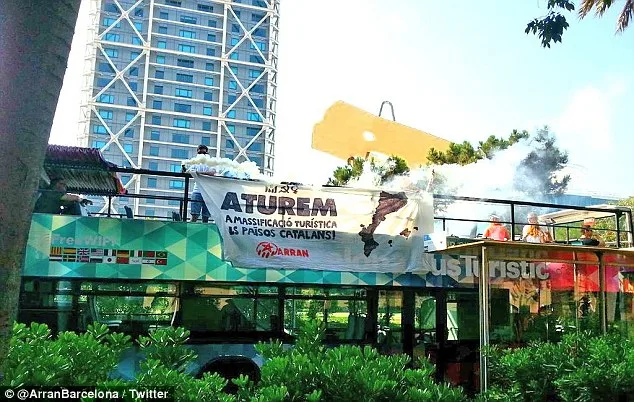
Barcelona, a city long synonymous with sun, sea, and a vibrant culture, has reached a turning point. After decades of relentless marketing to attract tourists, the local authorities have appointed a man on a mission to say 'no more' and restore the city to its residents. José Antonio Donaire, the city's first commissioner for sustainable tourism, is determined to reverse the tide of mass tourism that has transformed the Catalan capital.
Record Visitor Numbers Prompt Action
Last year, the Barcelona area welcomed 26 million visitors, a 2.4% increase from 2024. This surge has sparked a significant shift in policy. Donaire's appointment signals a departure from viewing tourism as an unalloyed good to recognising it as a force that alienates citizens and erodes Barcelona's identity.
'We've reached the end of the road. Barcelona has reached the maximum number of tourists it can accommodate,' Donaire states. 'We don't want more tourists, not even one more, but we need to manage those we have.'
La Boquería Market: A Symbol of Change
One of Donaire's flagship initiatives is the transformation of La Boquería market, once a haven for chefs and foodies but now a no-go area for most locals. Overrun by tourists seeking takeaway snacks, the market epitomises the worst of mass tourism. Donaire plans to ban takeaway food and restore it to a traditional market selling fresh produce, with the consent of the majority of stallholders. 'Within a year you'll see the new Boquería,' he promises.
Curbing Tourist Accommodation
Barcelona's efforts to curb visitor numbers began in 2017 with a moratorium on new hotel construction in the city centre. However, this was largely undermined by a surge in short-let tourist apartments listed on platforms like Airbnb. In 2028, the city plans to revoke licenses for all 10,000 legal tourist apartments, hoping they will return to the residential rental market and alleviate the housing crisis.
While acknowledging that similar measures in New York City did not lead to increased rentals, Donaire insists Barcelona has plans to incentivise landlords. 'At the moment, the housing stock is growing by 2,000 homes a year. If we can get those 10,000 tourist apartments on the residential market, it's the equivalent of five years' growth,' he explains.
Shifting Visitor Profiles
Donaire, a former professor at the University of Girona and director of its tourism research institute, emphasises that the goal is not just to reduce numbers but to change the profile and behaviour of visitors. Currently, 65% of visitors are 'leisure tourists,' with the remainder attending conferences or cultural events. The aim is to achieve an equal three-way split between leisure, cultural, and business visitors.
Other measures include reducing cruise ship berths from seven to five, though the city will still receive over three million cruise passengers annually. These visitors, Donaire notes, 'spend little and create more problems than benefits.' Day trippers, numbering seven million annually, will face increased parking fees and forced parking on the city's periphery.
Encouraging Sustainable Tourism
About half of Barcelona's tourists are repeat visitors who have already seen the main sites. Donaire plans to encourage them to explore areas like Montjuïc, a large park with museums but few residents, or to take day trips outside the city. 'What we don't want is to encourage tourism in areas that aren't prepared for it and where it will create problems,' he says.
The city is also clamping down on antisocial behaviour, including a ban on organised pub crawls. 'We're not interested in this type of tourism and we want it to disappear,' Donaire asserts. Additionally, a portion of the recently increased tourist tax will be invested in the city centre to boost local commerce, which is currently dominated by convenience stores, souvenir shops, and cannabis dispensaries.
A New Direction for Barcelona
These proposals may be met with scepticism, as calls for 'quality over quantity' in tourism are not new. However, Donaire and his backers hope that after 30 years of tourist boom, the balance can be tipped back in favour of residents. 'Many citizens feel the city centre no longer belongs to them,' Donaire says. The question remains: Can he be the man to give it back?






