Kemi Badenoch has insisted that the Conservative Party represents Tony Blair's sole hope of achieving a growth-focused government capable of rescuing Britain. The Conservative leader warned that Labour would disregard the former prime minister's appeal to reduce the tax burden, scale back Net Zero commitments, and trim welfare spending.
Speaking in response to Sir Tony's 5,000-word essay published earlier this week, Ms Badenoch asserted that her party is the 'only show in town' for implementing such an agenda. She accused Keir Starmer, Andy Burnham, and Wes Streeting of courting the Left-wing, thereby rejecting Blair's centrist approach.
Labour has been engaged in another intense bout of soul-searching about its future, triggered by Sir Tony's intervention. In his essay, the former Labour leader urged the party to embrace economic growth, ease taxation, and reconsider environmental and welfare policies.
Responding to Sir Tony's article in the Times, Ms Badenoch claimed that Labour MPs have no understanding of 'where money comes from' and believe that one person's success 'must always have come at somebody else's expense.' She added: 'The Blairite legacy is that the entire country is now run by HR as Labour junk your best ideas and champion your worst.'
'There is only one show in town for the political project you proposed. In the short term, the Conservative project is relentlessly focused on delivering a high-growth, lower-immigration economy, cheaper energy by scrapping Miliband's Net Zero targets, reducing Starmer's ballooning welfare bill and putting the money directly into defence to increase our military strength,' she said.
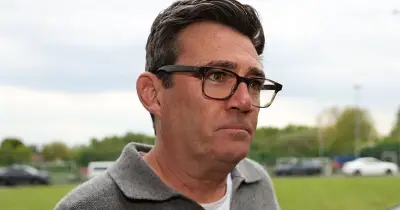
Meanwhile, Mr Burnham, the Mayor of Greater Manchester, has accused three-time general election winner Sir Tony of failing to reject Margaret Thatcher's legacy. He attributed economic success in Manchester to a 'very interventionist' approach, arguing that markets should not dictate policy.
Ms Badenoch responded: 'Andy Burnham's reply proves your point better than I ever could. Faced with your warning that Labour needs growth, cheaper energy and welfare restraint, his answer is more state control, more public spending and another attack on markets and enterprise. Burnham will learn the hard way that spending taxpayers' money as mayor is much easier than finding it as prime minister.'
She further claimed that Labour politicians were 'embarrassed' by Sir Tony's election wins and wanted to 'test to destruction all the left-wing ideas that were mothballed in 1979.'
In his own essay answering Sir Tony, Mr Burnham wrote: 'The lesson from Greater Manchester is that you can't just leave it to the market, as Tony's essay seems to suggest. If you want higher growth in areas that don't have it, you need strong public control and direction over both the investment strategy and the enablers of a more productive economy, such as transport, energy, water, education and housing.'
Swiping at Sir Tony, he added: 'The Labour government in which I was proud to serve did many great things. It did not, however, take us off the direction set by Thatcher. This has given us 40 years of neoliberalism and the simple truth is this: it has not been kind to communities in Makerfield and those like them across the UK. Trickle-down economics did not in the end trickle down very much at all.'
Mr Burnham argued that deregulation was behind the 2008 Credit Crunch, which had caused Britain's ongoing political turmoil. 'The fall in the living standards of millions, and the reality that life has got harder for most year-on-year since the financial crash in 2008, is, I believe, the gaping omission in (Sir Tony's) analysis,' he said. 'This has been the single biggest driver of the turmoil in politics he describes and the cratering of support for traditional parties of Right and Left, here and around the world.'
In his own response to Sir Tony, Sir Keir Starmer said during a visit to a London train depot yesterday: 'My response to Tony is, yes, it's right to talk about policy, it's right to talk about ideas, that's where the debate should be. But actually no, I don't agree that the policy choices of this Government weren't the right policy choices given what we inherited, a very different situation in 2024 to 1997.'