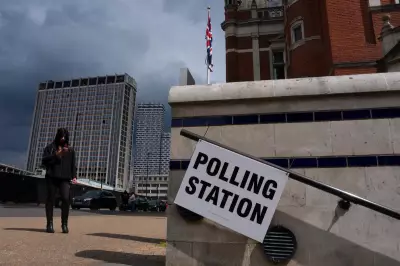
Kemi Badenoch, the leader of the Conservative party, has launched a scathing attack on Nigel Farage, branding him an opportunist who lacks genuine unionist beliefs. This criticism follows Farage's recent comments urging Scottish nationalists to support Reform UK in the upcoming Holyrood election and his suggestion that a second independence referendum might be reasonable.
Farage's Controversial Statements on Scottish Nationalism
Earlier this week, Nigel Farage made headlines by expressing his belief in "genuine nationalists" in Scotland who oppose the Scottish National Party's (SNP) push to rejoin the European Union. He actively encouraged these individuals to vote for Reform UK in the election scheduled for 7 May. In an interview with the Scotsman, Farage further stirred controversy by stating that while he supports the United Kingdom, it would be "probably quite reasonable" to hold another independence referendum in the future if the issue resurfaces.
Badenoch's Firm Rebuttal in Edinburgh
Speaking to reporters in Edinburgh on Thursday, Badenoch dismissed Farage's remarks as politically expedient. She asserted that only the Conservative party truly represents centre-right and unionist values. "Nigel Farage doesn't really believe in anything except Nigel Farage. He tells everybody what they want to hear," Badenoch declared. She elaborated by accusing him of shifting his stance depending on his audience, claiming he acts as a unionist when speaking to unionists and a nationalist when addressing nationalists.

Badenoch also criticised Reform UK's perceived inconsistency, citing an instance where the party allegedly voted both for and against the two-child benefit cap in the same parliamentary vote. "They don't know what they stand for, except that they are against everything and everybody that is part of the system. They can see problems, but they don't have the solutions," she added, highlighting what she views as a lack of substantive policy from Reform.
Electoral Battleground and Strategic Maneuvers
The Conservatives are engaged in a fierce struggle to prevent Reform UK from siphoning off tens of thousands of votes in the election. Currently, the Conservative party holds the position of the second-largest party in Holyrood, but opinion polls consistently show it trailing behind Labour, Reform UK, and the Scottish Greens, with support levels roughly equal to the Liberal Democrats at approximately 8-13%.
Malcolm Offord, Reform UK's Scottish leader, inadvertently supported Badenoch's allegations of political disruption when he confirmed that his party would not block SNP leader John Swinney from becoming first minister in a closely contested vote. This stance could significantly impact the post-election landscape, especially if Reform UK secures 10 or more seats as polls suggest, making their votes potentially decisive in Holyrood.
Independence Referendum and Anti-SNP Sentiment
The SNP is widely anticipated to win the election comfortably, with some polls indicating a possible majority. Swinney has confirmed that if the SNP achieves this, he intends to demand a second independence referendum by 2028, despite the UK Labour government's refusal to authorise such a move. In response, there is a growing anti-SNP sentiment, with some senior Tories, including former Scottish secretary David Mundell, advocating for tactical voting to prevent an SNP majority. Mundell urged voters in a social media post to use their votes wisely to avoid "Scotland spend[ing] the next five years in a constitutional cul-de-sac," directly contradicting Badenoch's insistence on unwavering Conservative support.
Meanwhile, Scottish Labour and the Liberal Democrats are hopeful that anti-SNP parties could unite to elect Anas Sarwar as first minister, even if the SNP emerges as the largest party, with potential backing from the Conservatives. However, Offord's refusal to collaborate with Labour to block the SNP, stating "No. Because we are the challenger party," complicates these efforts and underscores the fragmented nature of the opposition.