
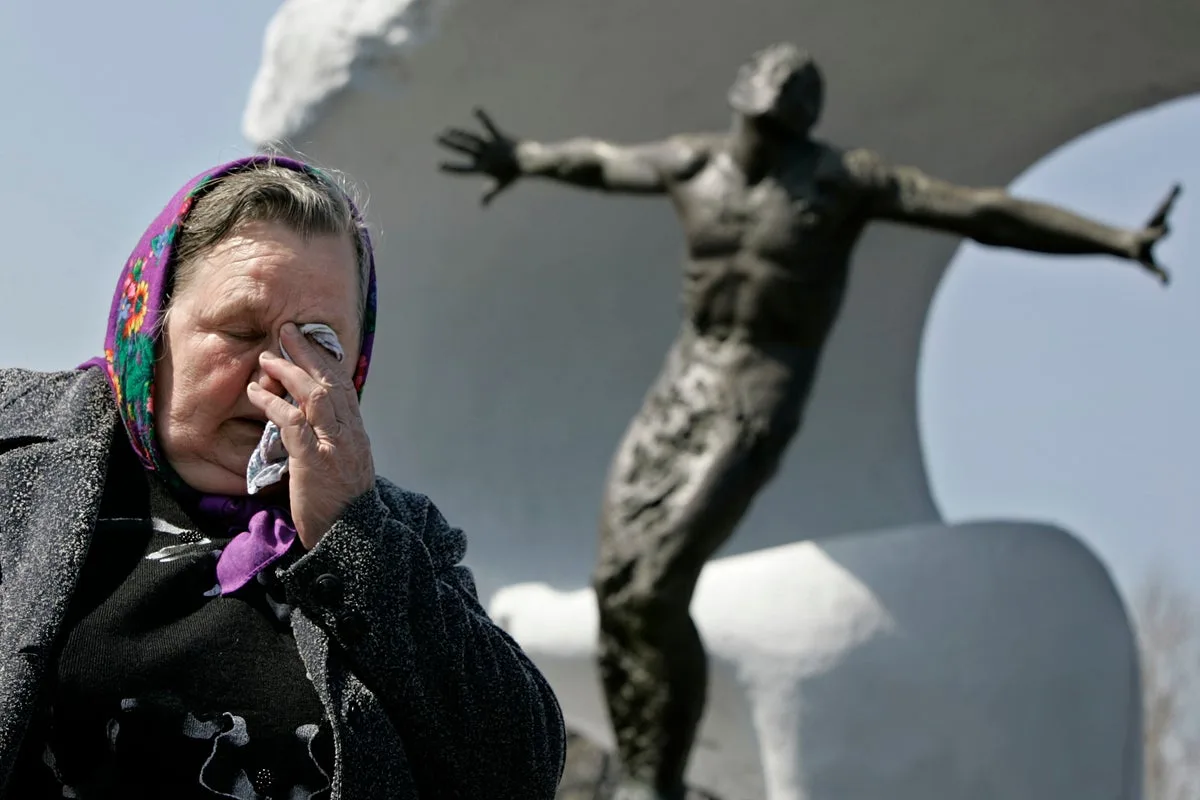
In the weeks following the Chernobyl nuclear disaster on April 26, 1986, the Soviet government released only sparse details. Acting on a tip, Associated Press correspondent Carol J. Williams and another Western journalist ventured to Mitinskoye Cemetery in northwestern Moscow, where they uncovered 23 fresh graves.
The graves, all identical with flowers and concrete borders, lacked any signs identifying them as Chernobyl victims. However, a cemetery official confirmed the plot was for those who died as a result of the accident. Six headstones bore the names of firefighters previously reported as radiation victims.
Workers were erecting marble tombstones with gold-painted inscriptions listing names, birthdates, and dates of death, all after April 26. Empty spaces in the plot suggested more deaths were anticipated, consistent with American bone marrow specialist Dr. Robert Gale's assessment that more fatalities were likely among the 55 to 60 still in serious condition.
The journalists were briefly detained by police for trespassing and had their notes and film confiscated, but were later allowed to view the graves on condition they make no recordings. The cemetery official declined to specify the total number of deaths, but the last official Soviet report on June 5 had listed 26 fatalities, including two from the initial explosion.
One victim, Valery Khodemchuk, was entombed within the ruined reactor as his body was never recovered, while Vladimir Shashenok was buried near the power station. The discovery highlighted the secrecy surrounding the disaster's human toll, with relatives leaving bouquets on the graves and a visitor commenting, 'It's very sad, they were so young.'




