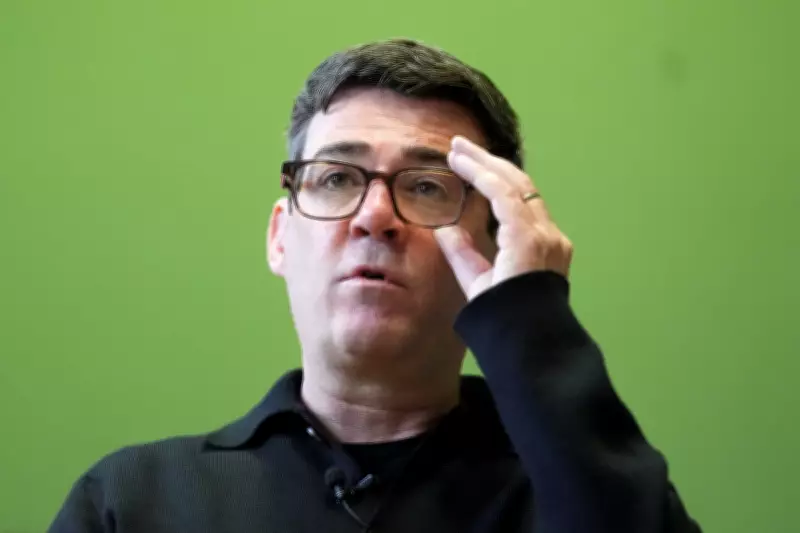
Andy Burnham, the Greater Manchester mayor often dubbed the 'King of the North,' is once again at the centre of Labour leadership speculation as Sir Keir Starmer's position weakens. With the party facing threats from the Greens and Reform UK, Burnham's name has resurfaced as a potential replacement, despite his lack of a Westminster seat.
A flexible political player
Burnham's career has been marked by ideological flexibility, having served in the cabinets of Tony Blair and Gordon Brown, as well as in the shadow cabinets of Ed Miliband and Jeremy Corbyn. This adaptability is both his strength and weakness. Supporters see him as a unifying figure, while critics question his commitment to principle. His supporters interpret his current 'soft left' stance as a sign of authenticity, but his record suggests pragmatism similar to Starmer's.
Ambition for the premiership
Burnham's ambition for the top job is undeniable, even if his path has been circuitous. He has been mayor of Greater Manchester since 2017, a role that has given him a national profile. Historically, mayors have risen to become national leaders, as seen with Boris Johnson in London, Willy Brandt in West Berlin, and Jacques Chirac in Paris. Burnham's journey from his Tootal Building headquarters to 10 Downing Street is not unprecedented, but it remains a long shot.

A by-election in the safe Labour seat of Gorton, within Burnham's northern fiefdom, could have provided a route to Westminster. However, Labour's National Executive Committee blocked his candidature, citing the risk of triggering a costly mayoral by-election. Critics suggest Starmer feared having a rival on the backbenches. The move was seen as a Stalinist tactic that worked, but it also left Labour weaker and unable to address the leadership crisis.
Third time lucky?
Burnham has already run for the Labour leadership twice, in 2010 and 2015. In 2010, he finished fourth with just 9% of the vote, behind Ed Miliband, David Miliband, and Ed Balls. In 2015, he was the frontrunner but lost to Jeremy Corbyn by 19% to 59%. His defeat was partly due to a late shift to the left that alienated his own supporters. Now, with Starmer's approval ratings at a record low—Labour's poll rating has fallen to 16%—Burnham sees an opportunity for a third attempt.
Burnham has been building his support network, Mainstream, described as a 'soft left' think tank for 'radical realists.' This mirrors the Starmerite Labour Together group. He has also publicly backed Lucy Powell for the deputy leadership, further positioning himself as a potential leader. However, he has avoided directly challenging Starmer, instead dodging questions about his ambitions.
The 'King of the North' persona
Burnham has reinvented himself as a northern champion, shedding his New Labour image for a more authentic, hip Mancunian style. He now speaks passionately about the North being cheated of financial rights, a message that resonates with voters. He has also been a vocal critic of welfare reforms and has campaigned for a public inquiry into the rape gangs scandal. His 'Manchesterism'—a vague soft left agenda—has not caught on widely, but it has solidified his base.
His handling of the Manchester Arena terror attack and his battles with Whitehall over transport and funding have boosted his profile. He successfully integrated public transport in Greater Manchester, mimicking London's model, and has pursued a war on homelessness. However, his record is not without blemishes. He was criticised for his role in the Mid Staffs hospital scandal as health secretary, though he was never officially censured.
Can he succeed?
The question remains whether Burnham can do better than Starmer. He has not articulated clear policies on fixing public finances, reforming social security, or tackling immigration. His 'soft left' agenda lacks substance, and his support for higher borrowing has not gained traction. Moreover, he faces competition from other potential candidates like Wes Streeting, Shabana Mahmood, and Angela Rayner, though Rayner's star has faded.

Despite these challenges, Burnham's resilience and self-belief are notable. He has survived near the top of Labour politics for decades, adapting to changing tides. At 55, he is younger than Starmer and Farage, and his 'authentic' appeal could be an asset. But without a Westminster seat, his path to the premiership remains blocked. A by-election or a resignation could change that, but for now, Burnham remains the perennial 'nearly man' of Labour politics.