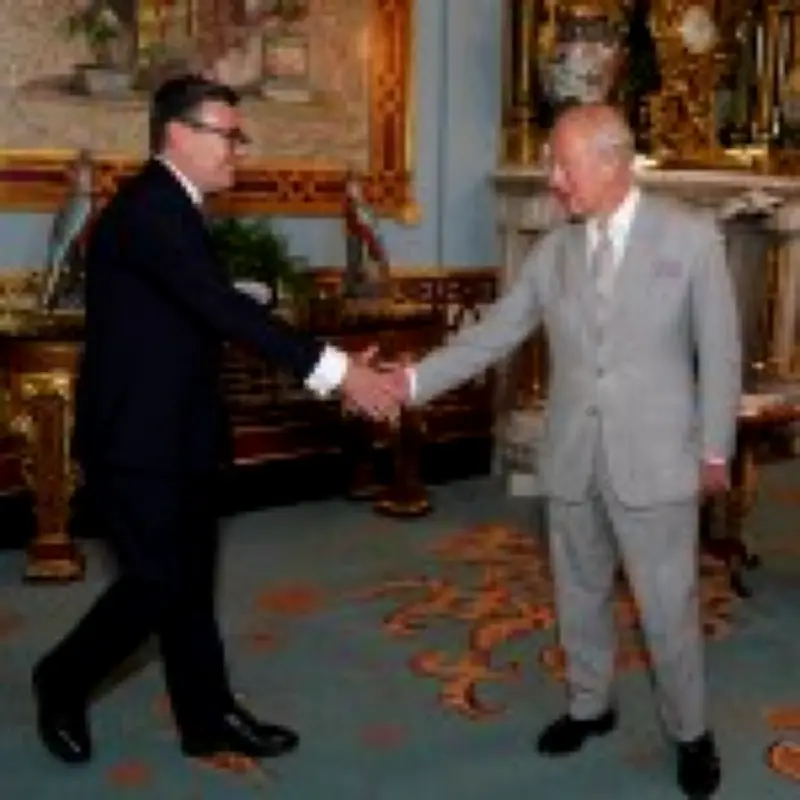
Andy Burnham is now the UK's fifth Prime Minister in four years, taking over from Keir Starmer as the country's seventh leader since the 2016 Brexit vote. The former Mayor of Greater Manchester accepted an invitation to form a new government during a meeting with King Charles, shortly after Sir Keir formally tendered his resignation to the monarch.
Sir Keir resigned with a speech outside Number 10 before offering his resignation to the King at Buckingham Palace. Burnham will soon begin appointing top Cabinet members, with uncertainty still swirling around his picks for roles including Chancellor, Home Secretary, and Foreign Secretary.
Rapid Rise from By-Election to Number 10
The moment marks the culmination of a spectacularly busy month for Burnham since he was confirmed as winner of the Makerfield by-election on June 19. After spending the past nine years as Manchester's mayor, he has been introducing himself to Labour MPs, many of whom he had never met before. He became party leader at a special conference in London on Friday, after a contest where he faced no serious opposition.
The new PM has also been getting familiar with a Westminster Parliament that he has described as 'more fragmented' and 'unhappier' than the one he left in 2017. In an interview with the Sunday Times, Burnham said the country 'will see early moves to help' with the cost of living, adding: 'It's all about helping people.'
First Policy Decisions and Challenges
Yesterday morning, Burnham confirmed one of his first big decisions: scrapping the digital ID plans championed by Starmer's government in what he called a 'reset of priorities.' He has also argued for a change in culture at Westminster, switching to a more collaborative and less combative approach between different parties and factions.
But the country's latest leader faces a raft of serious challenges as he enters office, including weak economic growth and a war in Iran on the verge of spiralling out of control. He will need to find funding for the Defence Investment Plan, tackle the NEET crisis highlighted by the Milburn Review, and reform the social care system.
Devolution as a Key Strategy
In the Makerfield by-election campaign and media appearances since, Burnham has argued for devolution as the best means of pulling the UK out of its rut. Speaking at the People's History Museum in Manchester last month, he said he would set up an 'extended operation' of Downing Street in the city, dubbed 'No 10 North.' This office would be the 'nerve centre for a rewired Britain,' acting as the 'conduit' for redistributing power from Whitehall to mayors and other regional leaders around the country.
Stability and Future Election Prospects
However, in his speech outside Number 10 today, he is expected to say he is 'acutely conscious' that he is the UK's fifth prime minister in the past four years, underlining why the country requires more stability and responsibility in politics. If he does not choose to go to the public early for a snap general election – which would give him an opportunity to run on his own manifesto, rather than Labour's 2024 one – he will have three years before the next one is due.
With his party still languishing far below Reform UK in the polls, Burnham will need to pull off a remarkable feat of resurrection if he is to avoid the same fate as his short-term predecessors.