

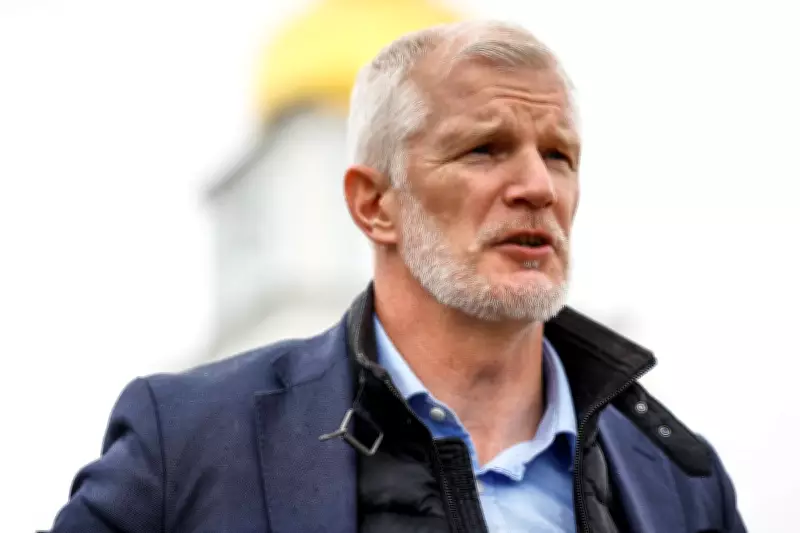
As the prospect of a Labour leadership race looms, the rumoured contenders are surely limbering up. There’s Wes Streeting, the latest high-profile figure to resign from Keir Starmer’s government, citing a lack of confidence. There’s Angela Rayner, freshly cleared by HMRC over the tax affairs that previously prompted her to step down as deputy prime minister. And there’s Andy Burnham, Greater Manchester’s mayor, who’s had a space cleared for him to become an MP in Makerfield, and has declared his intention to run, saying he will “change Labour for the better”. But amid all these familiar faces, another, less well-known name keeps cropping up: that of Al Carns, the 45-year-old former Royal Marine turned MP for Birmingham’s Selly Oak constituency.
One of the 243 new Labour MPs who arrived in Parliament in 2024 following Starmer’s victory, he seemed to (not-so) subtly throw his hat in the ring this week when he published an article titled “How Labour can win again” in the left-leaning magazine New Statesman. In the piece published on Wednesday, the Aberdeen native set out a vision and mission statement for the party, just days after it suffered staggering defeats in the local elections and amid calls for Starmer to step down. It’s a move that many insiders are viewing as a sign of a leadership bid, following months of whispering about the ex-military man’s potential as a future PM who could help the party reconnect with voters who have shifted their allegiances to Reform.
“We do not need more slogans, strategies, press releases or commissions,” he wrote. “We need action. People in this country do not expect perfection. But they do expect seriousness. They expect stability and fairness. And they expect a government that is on their side. That is what Labour must be again.” This “action man” reputation – helped along by some ice pick-wielding, camo-wearing photo opportunities during a trip to the Arctic frontier earlier this year – makes him a compelling character, especially in counterpoint to Starmer’s perceived beigeness and political flip-flopping. “He is the most extraordinary man and would be the most impressive leader this country has ever had,” one Labour MP gushed to PoliticsHome last year.

He’s certainly one of the only potential Labour leaders who can lay claim to having set a record by climbing Mount Everest in under five days, with their acclimatisation aided by xenon gas and hypoxic training, as Carns did along with some former special forces colleagues in 2025. His backers will surely be hoping that his patriotic credentials and his working class authenticity will resonate with disillusioned voters, too. Plus, his “dark horse” status could prove an advantage amid widespread disenchantment with the establishment and fatigue over the same-old political players vying for comebacks (think Miliband and Burnham). And he’s also a prospective candidate that the Tories would baulk at. “He’s one of the most capable individuals on the Labour benches and would be an absolute nightmare to face,” a Conservative MP told The Guardian earlier this year.
But are we at risk of over-hyping a relatively green politician on the basis of a strong military back story? It’s a pattern that seems to play out over and over again in British politics – remember when Tom Tugendhat was being touted as the potential saviour of the Tory party? Or when ex-paratrooper Dan Jarvis was tipped as a challenger to Jeremy Corbyn? One person messages me: ‘Apparently, in one focus group Al Carns got less name recognition than Steve Smith. Who was Steve Smith? A name the pollsters made up.’

Brought up by a single mum, Carns’ early days in Aberdeen moulded his politics – and, he reckons, makes him well-placed to understand the electorate’s current frustrations. “I know what security means to my mum and I know what pressure does to families when money is tight and when the future feels uncertain,” he wrote in New Statesman. “I saw it first hand.” In 1999, at the age of 19, he enlisted as a Royal Marine Commando, after initially being turned down due to his colour blindness, and went on to serve five tours in Afghanistan. Fourteen out of Carns’ 24 years in military service cannot be made public due to reasons of national security, but we do know that he won the Military Cross in 2011 “in recognition of gallant and distinguished service” in Afghanistan the previous year. He estimates that he has had about four brushes with death, including a terrifying incident when he was nearly dragged into the propeller of a ship during a mission in the Persian Gulf. He later received a Distinguished Service Order, and was made an OBE in the Queen’s Birthday Honours in 2022.
One of Reform leader Nigel Farage’s go-to lines of attack on Starmer is that the PM is somehow “unpatriotic” – he would certainly struggle to level similar claims at Carns, whose record speaks for itself. He has accused Farage of offering “quick fixes – a magic wand for all your problems, a potion for your ailments”, but has warned that this approach can “capture the imagination of people who feel like politics hasn’t worked for them”. By 2024, Carns had worked his way up to the rank of colonel and had served as a military adviser to three defence secretaries: Penny Mordaunt, Gavin Williamson and Michael Fallon. So his decision to leave the Marines in order to stand as a Labour MP for a safe seat in Selly Oak came as “more than a little bit of a surprise” to his military colleagues, a defence source told The Independent. Indeed, he had been tipped for promotion to brigadier just before resigning his commission, a move which would have made him one of the youngest to hold that position. Had he remained, he could well have made it to the head of the Marines, the source adds, noting that Carns had not previously come across as particularly politically inclined (indeed, talking politics in the mess tends to be frowned upon).
Carns, though, has argued this career shift made perfect sense. “My view is that the military is all about public service, and I want to extend that to politics, a broader church,” he told The Independent in 2024. After surfing to victory on an 11,537 majority, Starmer quickly appointed him as a junior veterans minister five days after the election, anointing him as something of a rising star. Last year, he landed another promotion, becoming minister for the armed forces – and amid all this, he has somehow found the time to re-enlist in the Marines as a reservist. Though he is a relatively new face in Westminster, Carns, it seems, is pretty well-liked within his party, and his general reputation is one of a man who makes decisions quickly. Immigration minister Mike Tapp recently told the Spectator’s podcast that his colleague is “an action man, and I don’t mean that on the battleground – I mean in getting stuff done”. There is, he added, “no analysis paralysis from Al Carns”. Carns is not backwards in coming forward about his achievements, either, according to the source, who cites a variation on an old joke: “How do you know Al Carns is in a crowded pub? He comes up and tells you.” He would, the source adds, have little trouble coming across as “Mr Reliable”.
His years of defence expertise will almost certainly help buoy his image as a strong potential leader ready to steer Britain through choppy waters, as the global political situation seems to become more febrile by the day. And while Starmer appears to have fallen firmly out of favour with Donald Trump, Carns also has first-hand experience of dealing with the hot-headed president, having personally briefed him on a visit to England during his first presidency (he did, however, publicly bristle at Trump’s “utterly ridiculous” comments on the contribution of Nato troops in Afghanistan). Detractors, though, would argue that while Carns definitely has the advantage of a compelling narrative, he is largely untested when it comes to some of the defining issues of the day, such as immigration and the economy. And when the time came for MPs to vote on a controversial issue within his defence remit – the Troubles bill, which some critics claimed could lead to the prosecution of veterans – he was away on a foreign trip (a calendar clash that some observers saw as remarkably convenient). The source suggests that he doesn’t have much constituency within the party itself – and that a hardened political operator such as Rayner would probably make easy work of him in a party hustings. It’s also perhaps worth bearing in mind that picking out a high flyer from outside the world of politics and parachuting them into a top job isn’t necessarily a route to guaranteed success in high office. Just look at the fate of one former director of public prosecutions.
There is, though, another way that Carns could play a big role in any forthcoming leadership election. Even if his status as a relative political newbie means that he may struggle to gain the number of backers required to mount a proper campaign, his popularity – both in Parliament and with potential voters – could place him in a strong bargaining position, with more established contenders jostling to win his support. Serving as a powerbroker in this way might just help him secure the job of Defence Secretary in a new Cabinet – a gig he’d be more than qualified for. Last year, Carns brushed off leadership rumours, noting that “you’ve got to follow before you can lead”. But now, it seems, he might believe that 2026’s political battleground requires different tactics.





