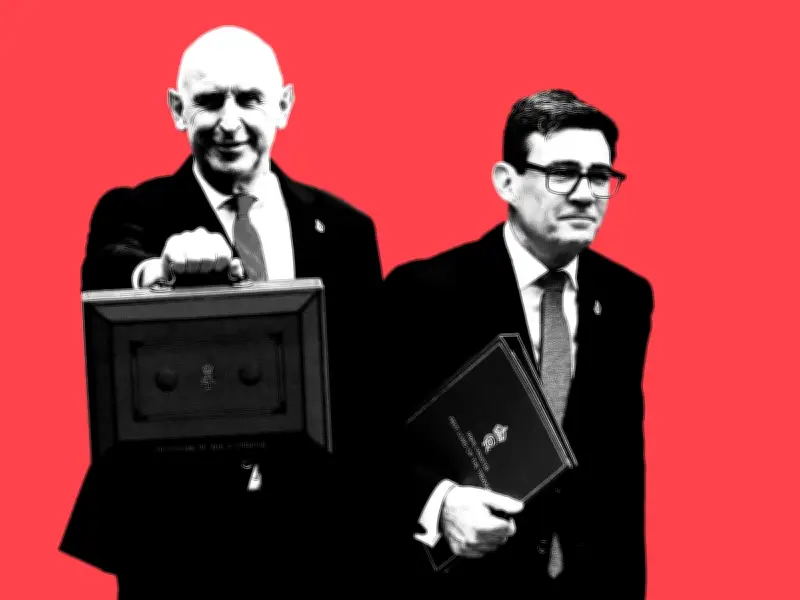
Chancellor John Healey delivered the 2026 Budget on Wednesday, the first under Andy Burnham's leadership, promising households and businesses “breathing space today” from everyday costs. Speaking in the House of Commons on October 28, he described it as “a Budget for the working people of Britain”.
His announcements included extending the cut to VAT on electricity to July, taking £50 off the annual price cap, alongside a £100 household energy payment for people in council tax bands A to D to help with bills “through to the spring”. He also told MPs he will raise the threshold for small business rate relief for retail, hospitality and leisure businesses to £18,000, and freeze rates for all other firms in these sectors in real terms.
The national minimum wage and national living wage will increase by 3.9% for 2.3 million workers, he confirmed. The Chancellor also confirmed new rates for the state pension and other benefits from April next year, as well as new tax rules that will prevent low income state pensioners paying income tax when the full state pension amount exceeds the personal allowance. A major change to Carer's Allowance that will see the end of the earnings threshold 'cliff edge' has also been included in the Budget.
Things going up in price after 2026 Budget
John Healey announced that all basic alcohol duty rates will increase by 4.55% in line with RPI inflation, effective from 1 February 2027. However, the Chancellor also announced a £10 million alcohol duty relief for about 2,000 smaller British brewers and cider makers.
From 1 October, smokers and vapers are facing higher rates of tobacco duty. A new Vaping Products Duty came into effect the same day, which is applied to e-liquids manufactured in or imported into the UK. It is charged at £2.20 per 10ml, whether or not the liquid contains nicotine.
Mr Healey said he will hike gambling taxes to pay for a high street support package, including by increasing machine games duty from 20% to 25% for higher stakes machines.
Things going down in price after 2026 Budget
The planned increase to fuel duty set for January 2027 has been scrapped by John Healey's budget. While this might not technically bring down the price of petrol and diesel, it will be cheaper from next year than it would have been if the tax had risen as planned.
The cost of charging an electric car will be cheaper thanks to measures announced in the Budget. The government said it is cutting prices at local, lower-powered public chargers to give electric vehicle drivers who rely on them some breathing space, set to save them around £150 per year on average.
The Government announced it will remove import tariffs on more than 100 products, helping lower import costs on items such as baked beans, chocolate and gherkins. Together with tariff suspensions already introduced, the Government estimates that households could save up to £21 on their food shop each year.
These things might change
Around 20 million households will receive a £100 one-off payment to help them with energy bills this winter, paid to those living in Council Tax bands A to D. The cut to VAT on energy bills will be extended to July, taking £50 off the annual price cap, Mr Healey announced.
Mr Healey also announced that standing charges on gas bills, a fixed daily fee added regardless of how much gas a customer uses, will be scrapped from next year for around 23 million homes. These charges cost around £108 per year for a typical household. While those who live in smaller homes or use less gas will be better off from this change, it could mean those who live in larger houses or use more gas could see their bills actually increase.