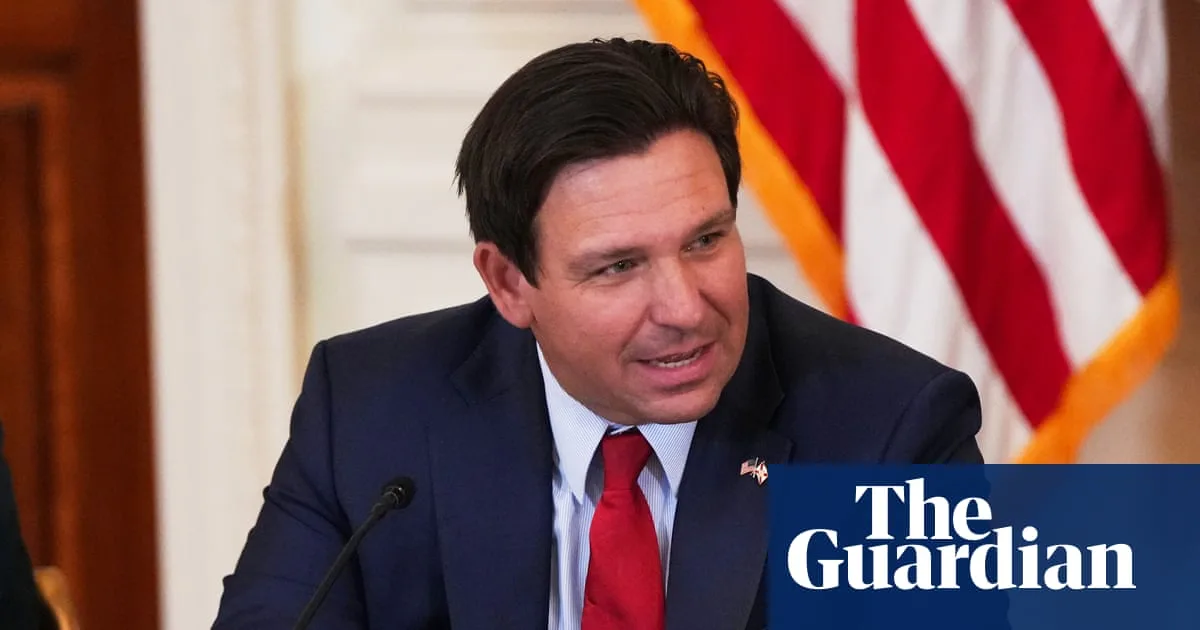
Florida and Mississippi Enact Proof-of-Citizenship Voting Laws Amid National Debate
Florida and Mississippi Sign Proof-of-Citizenship Voting Bills

Florida and Mississippi Governors Sign Proof-of-Citizenship Voting Bills

The governors of Florida and Mississippi have officially signed legislation mandating documented proof of citizenship for voter registration, marking a significant move in a growing trend among conservative states. This development comes as four states have now enacted similar laws this year, with South Dakota and Utah having passed their own measures in March.

National Context and Federal Stalemate

These state-level actions unfold against the backdrop of Donald Trump's Save America Act, which remains stalled in the US Senate with minimal prospects for passage. The federal bill includes provisions for proof-of-citizenship requirements and strict photo ID mandates, but its impasse has led to a strategy of encouraging states to adopt comparable restrictions independently.

In Florida, the new law empowers the state department to identify potentially ineligible voters by cross-referencing registration data with state and federal records. Those flagged will be contacted by registrars and required to provide citizenship documentation; failure to comply will result in removal from voter rolls. Additionally, the law updates acceptable voter IDs, adding US passport cards while eliminating retirement center IDs, public assistance IDs, neighborhood association IDs, and debit or credit cards. These changes are scheduled to take effect on January 1, 2027.

Wide Pickt banner — collaborative shopping lists app for Telegram, phone mockup with grocery list

Immediate Impacts and State Variations

Some states are moving faster: South Dakota's proof-of-citizenship law has been expedited to be in place before the November midterm elections. In Mississippi, the recently signed Shield Act mandates that voter registration applications be verified against driver's license databases and the USCIS Systematic Alien Verification for Entitlements (SAVE) database to detect non-citizens.

Governor Tate Reeves of Mississippi defended the legislation in a social media post, stating, "While states like California and New York flood their voter rolls with illegal aliens, Mississippi will do the opposite and defend Americans' right to determine the outcome of elections." He criticized Democrats for what he described as appeasing a radical base and outsourcing governance to unauthorized individuals.

Legal Challenges and Broader Trends

These laws are not without controversy. Louisiana's proof-of-citizenship requirement, enacted in 2025, faces ongoing court challenges, as does a similar law in New Hampshire that replaced an affirmation system with documentation mandates. Oklahoma is also advancing measures to enhance voter ID requirements, including a constitutional amendment proposal that has cleared committee stages.

Beyond state legislation, there is anticipation of executive orders from the Trump administration aimed at influencing election administration. A recent order issued on Tuesday seeks to create lists of eligible voters and restrict mail-in ballots, drawing immediate legal threats over constitutional concerns. Other potential orders might mirror the Save America Act, though such actions would likely face swift federal court challenges due to the constitutional allocation of election powers to states and Congress, not the executive branch.

Investigations and Future Directions

Parallel investigations by the FBI and the Office of the Director of National Intelligence, led by Tulsi Gabbard, are examining foreign interference in US elections. However, Gabbard's recent annual threat assessment to Congress notably omitted references to such interference for the first time in a decade, raising questions about the basis for future executive actions.

As activists circulate more extreme proposals, such as banning mail-in voting entirely or requiring mass re-registration, there is little indication that the White House will adopt these measures. The focus remains on state-level implementations and potential federal maneuvers, setting the stage for continued legal and political battles over voting rights and election security in the United States.

Pickt after-article banner — collaborative shopping lists app with family illustration