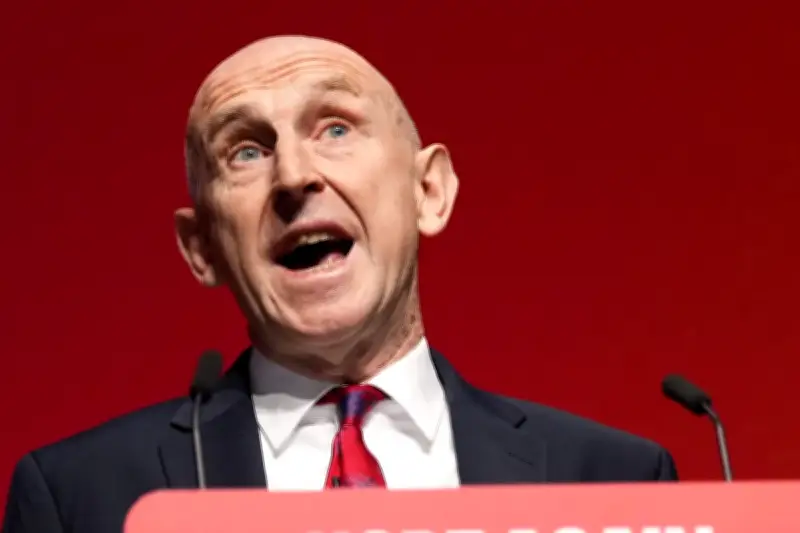
Chancellor John Healey is preparing to unveil the first Budget under Andy Burnham’s Labour Government. All eyes will be on the man occupying Number 11 Downing Street when he delivers his statement in the House of Commons on Wednesday, October 28.
The chancellor has warned the public to be prepared for a tough Budget, with many commentators expecting him to announce tax rises. Mr Healey’s cabinet colleagues will be hoping he will announce spending boosts for their departments. Rising borrowing costs and international cost-of-living pressures, fuelled by the US war on Iran, means the chancellor faces a difficult task to balance the books.
Business rates cut and online marketplace tax crackdown
Chancellor John Healey is expected to announce an increase in the threshold at which small companies start paying business rates from £12,000 to £18,000, reports The Sunday Times. The move would mean thousands of high-street shops, cafes, pubs and other small businesses would no longer have to pay business rates. The figures relate to "rateable value" - the estimated annual rental value of a commercial property.
The chancellor is preparing to announce that online marketplaces like Amazon and eBay will be made responsible for collecting tax owed by all retailers selling on their platforms, according to The Times. The change would make websites responsible for collecting VAT at source for retailers on their platform who have an annual turnover of more than £90,000, regardless of where they are based.
The move could raise up to £1billion for the Treasury and would fund the business rates cut for high-street shops, the newspaper reports.
Energy bills, bank tax and mansion tax
Andy Burnham has already cut VAT on electricity bills - and John Healey has hinted that further relief in the Budget, telling ITV News: “Energy costs are punishing at the moment.
“We will do what we can in the Budget, both for business and for households, to give people a bit of breathing space.”
The Guardian reports that the chancellor is likely to expand the existing Warm Home Discount, which a yearly £150 rebate to energy bills for households receiving a qualifying means-tested benefit - with an extra £100 boost being mooted.
There is speculation that the chancellor will target banks in the Budget. Reversing cuts to the bank surcharge made by former chancellor Jeremy Hunt is understood to be under discussion, The Guardian reports. The move would raise more than £2billion a year.
Speculation has been rife that the Budget will could include a significant change to high-value council tax surcharge – or “mansion tax” - which was announced by Rachel Reeves last year. It will see owners of properties valued at over £2m start paying a regular annual charge worth up to £7,500 from April 2028.
Last month, The Times reported that the chancellor is considering lowering the threshold to £1.5m, which would make nearly 62,000 more London homeowners subject to the tax. However, The Standard reported that London MPs are confident Mr Healey has ruled out the move.
Capital gains tax and fuel duty
The chancellor has rejected calls by senior Labour MPs to raise capital gains tax (CGT) to the same levels as income tax, according to The Financial Times. However, The Telegraph reports that CGT could still be raised by a smaller amount.
Rachael Reeves announced an increase to fuel duty of 3p a litre in January and 2p a litre in March. But as the US war with Iran sends oil prices surging, The Times and others are reporting that Mr Healey could be set freeze duty in a boost for millions of motorists.