US Congressman Thomas Massie has called for Andrew Mountbatten-Windsor to be “investigated and prosecuted” as he launched a legislative bid to compel the government to release more Epstein files.
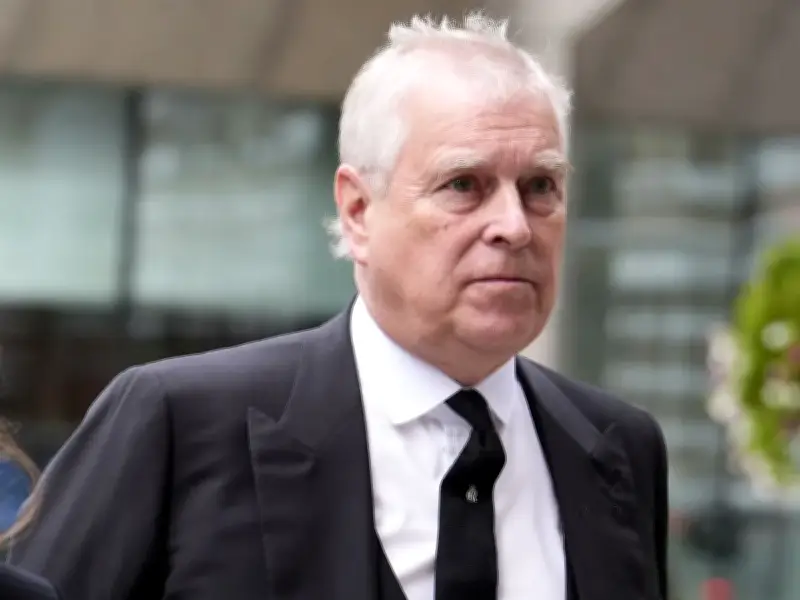
Massie used the floor of the US House of Representatives to name the disgraced former prince among 14 people he alleged to be “co-conspirators” of Jeffrey Epstein. He claimed these people should be “investigated and prosecuted” over unspecified alleged crimes. Andrew has repeatedly and vehemently denied any and all allegations against him.
Discharge Petition to Force Vote
The extraordinary intervention came as the Republican began collecting the 218 signatures needed to force a vote on the Epstein Files Transparency Act II. Those signatures are for a discharge petition, which would bring a proposed bill out of committee and to the floor to be voted on without the approval of House leadership or the committee chair.

Massie’s new legislation has been designed, he said, to “bring the fight to the state courts”, to provide “closure for survivors” and demand “accountability” from the US Department of Justice – which supporters have accused of withholding or heavily redacting files. If passed, the law could dramatically widen access to material held by federal investigators and give victims, prosecutors and US lawmakers new powers to demand unredacted files.
Massie's Remarks and the Legislation
Massie said: “On the House floor tonight (Mon), I read the names of several Epstein co-conspirators who should be investigated and prosecuted.” He added: “I also began collecting 218 signatures for the discharge petition to force a vote on Epstein Files Transparency Act II.”
Earlier, Massie told Congress: “And the government continues to withhold over three million files. That’s why we’ve introduced the Epstein Files Transparency Act II, to bring the fight to the state courts, accountability to the Department of Justice and closure for survivors. We want perpetrators of these crimes to be investigated and prosecuted.”
“Perhaps hearing these names will shame the Department of Justice into delivering justice,” he said. He then read out 14 names, including Mountbatten-Windsor as well as several American billionaires, bankers, celebrities and model agents.
Massie’s allegations do not amount to a criminal finding, and Mountbatten-Windsor has not been charged with any Epstein-related offence. Being named in Epstein material, or having associated with him, does not by itself establish involvement in criminal conduct.
Massie’s remarks were made under the protection of the US Constitution’s Speech or Debate Clause, which broadly protects members of Congress from legal action over legitimate legislative activity. Massie is one of the architects of the original Epstein Files Transparency Act, which Donald Trump signed into law on November 19 last year. That law required the US Attorney General to release covered unclassified records relating to Epstein, subject to protections including those safeguarding victims.
New Powers for Victims and Prosecutors
Massie and his allies now say the Justice Department has failed to go far enough. The Republican congressman from Kentucky introduced H.R. 9694, the Epstein Files Transparency Act II, alongside Democratic representatives Ro Khanna and Teresa Leger Fernández in July. Democratic senators Jeff Merkley and Ben Ray Luján introduced companion legislation in the Senate.
The measure would give victims, state attorneys general, district attorneys and other authorised state officials the power to sue the US Attorney General over Epstein records they claim have been unlawfully withheld, redacted, delayed, concealed or not published. It would also allow members of Congress to demand complete, unredacted access to covered records and challenge the Justice Department in court if officials refuse. State and local prosecutors could seek unredacted federal material required for criminal investigations and court proceedings, while victims could obtain complete records concerning themselves and the abuse they suffered.

Massie lost his Kentucky seat to Trump-backed challenger Ed Gallrein in May this year, meaning he has just months left in office. During remarks made when conceding his race in May he suggested he would continue to push back against Trump's government, and particularly its handling of the Epstein files. He said: “Today is the six-month anniversary of the Epstein Files Transparency Act. We've taken out two dozen CEOs, an ambassador, a prince, a prime minister, a minister of culture - and that was just six months. I've got seven months left in Congress.”
Andrew's Association with Epstein
The former Duke of York became friends with sex offender Epstein in the late 1990s through Maxwell and continued associating with the financier even after Epstein had been convicted in Florida of soliciting prostitution from a minor. Most damagingly, the father of two stayed at Epstein’s Manhattan mansion in December 2010, two years after the paedophile pleaded guilty to offences involving a teenage girl. The pair were also famously photographed walking together in New York’s Central Park during that visit.
Mountbatten-Windsor later attempted to explain the trip during his disastrous BBC Newsnight interview in November 2019, saying he had travelled to America to end the friendship face-to-face. The interview instead deepened the crisis surrounding him, and within days, he stepped back from royal duties.
At the centre of the scandal were allegations made by Virginia Giuffre, who claimed Epstein and Maxwell trafficked her to have sex with Mountbatten-Windsor when she was 17. She alleged she had sex with the royal on three occasions, including following a night at Tramp nightclub in London in March 2001. He categorically denied her allegations and repeatedly said he had no recollection of meeting her. A photograph showing Mountbatten-Windsor with his arm around Giuffre’s waist at Maxwell’s London home became one of the defining images of the Epstein scandal.
During his Newsnight interview, the King’s brother denied Giuffre’s account of the alleged London encounter by saying he had taken his daughter Princess Beatrice to a birthday party at Pizza Express in Woking that afternoon. He also disputed her recollection that he had been sweating heavily while dancing with her, saying he had a medical condition at the time, which meant he could not sweat. Giuffre later sued Andrew in a New York federal court, accusing him of sexual assault.
Mountbatten-Windsor fought unsuccessfully to have the lawsuit dismissed before reaching an out-of-court settlement with her in February 2022. The settlement contained no admission of liability. As part of the agreement, Mountbatten-Windsor acknowledged that Giuffre, who died by suicide in April 2025, was an “established victim of abuse” and said he regretted his association with Epstein. The settlement spared him the prospect of being questioned under oath in a civil trial. Weeks earlier, the Queen stripped him of his honorary military roles and royal patronages, and he stopped using His Royal Highness in an official capacity.
Justice Department Releases and Next Steps
The Justice Department said in January that it had released almost 3.5 million pages, more than 2,000 videos and 180,000 images under the legislation. Officials said material not released publicly included duplicate documents, legally privileged information, records protected by statutory exemptions and material unrelated to the Epstein and Maxwell investigations.
But Massie, as well as other lawmakers and victims, have said the act passed was not fulfilled. His new legislation would sharply increase the legal pressure on the Justice Department to disclose material which has remained hidden, while giving prosecutors outside Washington far greater ability to obtain evidence for their own investigations. New Mexico Attorney General Raúl Torrez, whose office is investigating Epstein’s activities in the state, has backed the legislation and argued that access to unredacted federal material is essential. Massie now needs 218 House members to sign his latest discharge petition before he can attempt to force EFTA II to a vote. Epstein died by suicide in August 2019 as he awaited trial for sex offences.