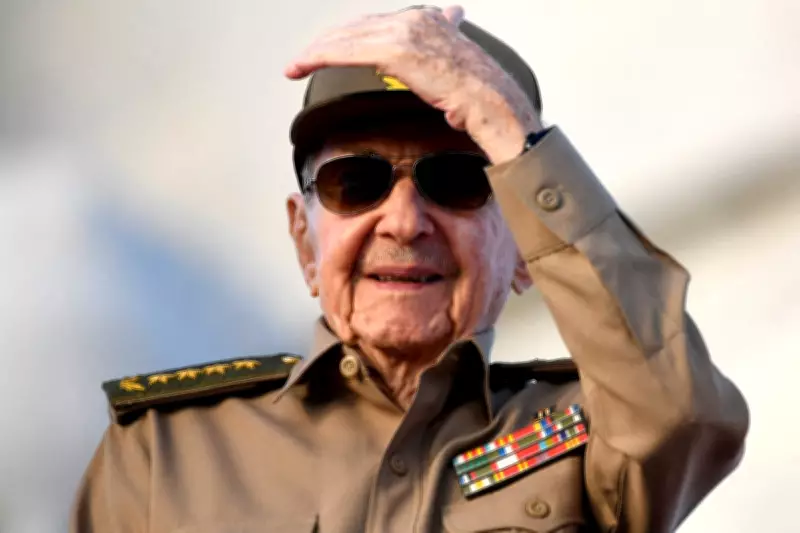
The United States has indicted former Cuban President Raul Castro on murder charges, according to court records, marking a significant escalation in tensions between the two Cold War adversaries. The charges, filed by the U.S. Department of Justice, are believed to stem from a 1996 incident in which Cuban jets shot down two civilian planes operated by Brothers to the Rescue, a Miami-based Cuban exile group, killing all four people aboard.
Background of the Indictment
The Trump administration has been intensifying pressure on Cuba, aiming to promote regime change on the island, which has been under communist rule since Fidel Castro led a revolution in 1959. A Department of Justice official told Reuters last week that the charges against Raul Castro, 94, are expected to be based on the 1996 shootdown. The official did not provide further details on the specific charges.
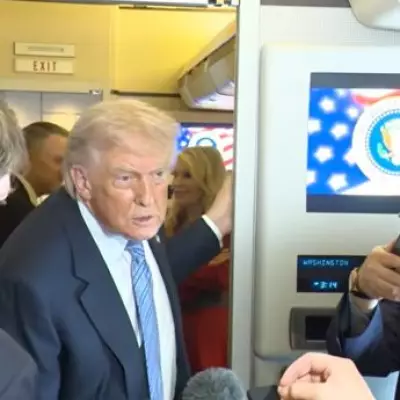
President Donald Trump earlier on Wednesday labeled Cuba a "rogue state harboring hostile foreign military" and framed the administration's actions as part of a broader effort to expand U.S. influence in the Western Hemisphere. The indictment comes amid a U.S. campaign that has effectively imposed a blockade on Cuba by threatening sanctions on countries supplying it with fuel, leading to power outages and worsening the island's economic crisis.

Castro's Status and Extradition Unlikely
Castro, who last appeared in public in Cuba earlier this month, is not expected to face trial in the United States. There is no evidence he has left the island, and the Cuban government is unlikely to allow his extradition. Cuban President Miguel Diaz-Canel said on Monday that Cuba does not represent a threat to the United States.
The indictment represents a new low in U.S.-Cuba relations, which have fluctuated since the revolution. Diplomatic ties briefly improved under former President Barack Obama but have deteriorated under Trump, who has taken a harder line.
Miami Ceremony and Community Reaction
The U.S. Attorney's office in Miami planned an event starting at 1 p.m. EDT on Wednesday to honor victims of the 1996 incident. The Justice Department said it would make an announcement in conjunction with the ceremony but did not provide details. Members of Miami's large Cuban-American community gathered outside the city's freedom tower, where the ceremony was scheduled.
"We all hoped for a long time, for many years that this would happen," said Bobby Ramirez, a 62-year-old musician who left Cuba in 1971 at age seven. The ceremony coincides with the anniversary of the end of the U.S. military occupation of Cuba on May 20, 1902, a date Cuba does not recognize as its independence day.
Rubio Offers Aid, Cuba Responds
U.S. Secretary of State Marco Rubio, whose parents were Cuban immigrants, offered $100 million in aid to Cuba in a video message on Wednesday, blaming the island's leaders for shortages of electricity, food, and fuel. Cuban Foreign Minister Bruno Rodriguez called Rubio "the mouthpiece of corrupt and vengeful interests" but did not rule out accepting the aid, noting that Cuba has not rejected the package despite its cynicism given the blockade.
Cuba has not commented directly on the criminal case against Raul Castro.
Raul Castro's Role and the 1996 Incident
Born in 1931, Raul Castro was a key figure alongside his brother Fidel in the guerrilla war that toppled U.S.-backed dictator Fulgencio Batista. He helped defeat the Bay of Pigs invasion in 1961 and served as defense minister for decades before becoming president in 2008, stepping down in 2018 but remaining influential behind the scenes.
As defense minister in 1996, he was in charge when Cuban jets shot down two planes operated by Brothers to the Rescue, a group of Miami-based Cuban exile pilots searching for Cuban rafters. The Cuban government argued the strike was a legitimate response to airspace intrusion. Fidel Castro said the military acted on "standing orders" and that Raul did not give a specific order. The International Civil Aviation Organization later concluded the shootdown occurred over international waters.
The U.S. imposed sanctions after the incident but did not pursue criminal charges against the Castro brothers until now. In 2003, the Justice Department charged three Cuban military officers, but they were never extradited.

Parallels to Maduro Indictment
The indictment of Raul Castro recalls the drug-trafficking indictment of former Venezuelan President Nicolas Maduro, an ally of Cuba. The Trump administration cited that indictment as justification for a January 3 military raid in Caracas that captured Maduro, who now faces charges in New York and has pleaded not guilty.
Trump threatened in March that Cuba was "next" after Venezuela. Diaz-Canel warned on Monday that any U.S. military action against Cuba would lead to a "bloodbath."