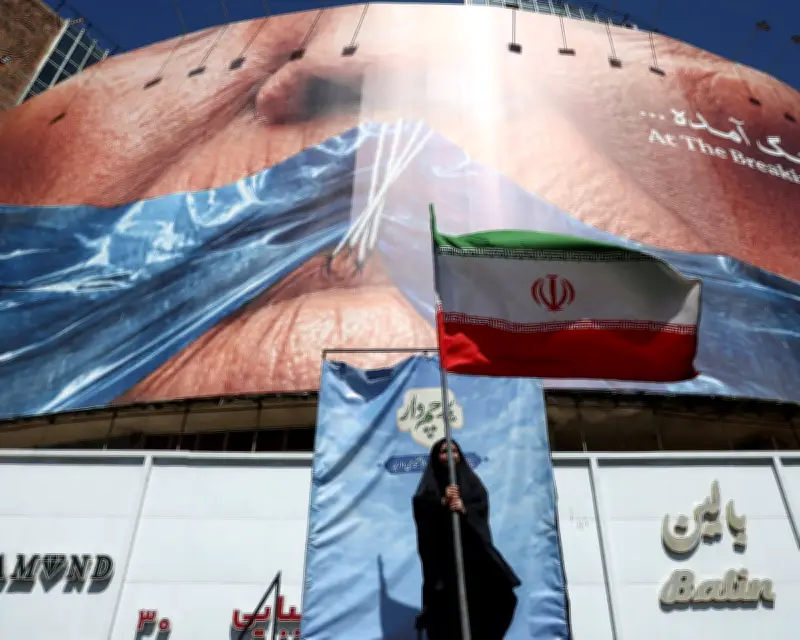
US President Donald Trump has met his match in Iran's hardline regime, as Tehran continues to deny peace negotiations and maintain its grip on the Strait of Hormuz. The standoff comes at a critical time for Trump, with global energy crisis looming and midterm elections approaching.
Denied Talks and Duplicity Claims
Trump's latest attempt to initiate negotiations was quickly denied by Iran, prompting the president to post on his social media platform, Truth Social: "Iranian Leadership is unbelievably duplicitous!" He claimed Iran had begged for a meeting and that talks had already begun, adding, "Nothing gets through to Iran, unless we want it to, and nothing will get through, unless a Deal, or Total Surrender, is accomplished."
Iranian foreign ministry spokesperson Esmaeil Baqaei stated on Monday, "We are not currently negotiating with the United States. Our negotiations are with Oman to secure passage through the strait of Hormuz." He emphasized that any agreement with Oman would not return the strait to its prewar status, keeping the waterway a political football.
Strategic Stalemate
Iran remains capable of closing the strait, which carries a fifth of global oil supply, while the US faces a shortage of key munitions and lacks meaningful targets to force a change in Iranian policy. Three ceasefires have collapsed since April, and with midterms just over three months away, a Reuters/Ipsos poll shows fewer than a third of Americans support the war in Iran.
For Iran, strategic unpredictability has strengthened its negotiating position. Alex Vatanka, a senior fellow at the Middle East Institute, noted that Iran seeks to "maximise the pain that they can impose on the United States and its partners in the region," and that Trump "is not really yet ready for a deal with Iran."
Iran, facing a US blockade halting trade, is shaking things up to get Trump's attention and potentially achieve a different result, as diplomatic talks have not yielded progress.