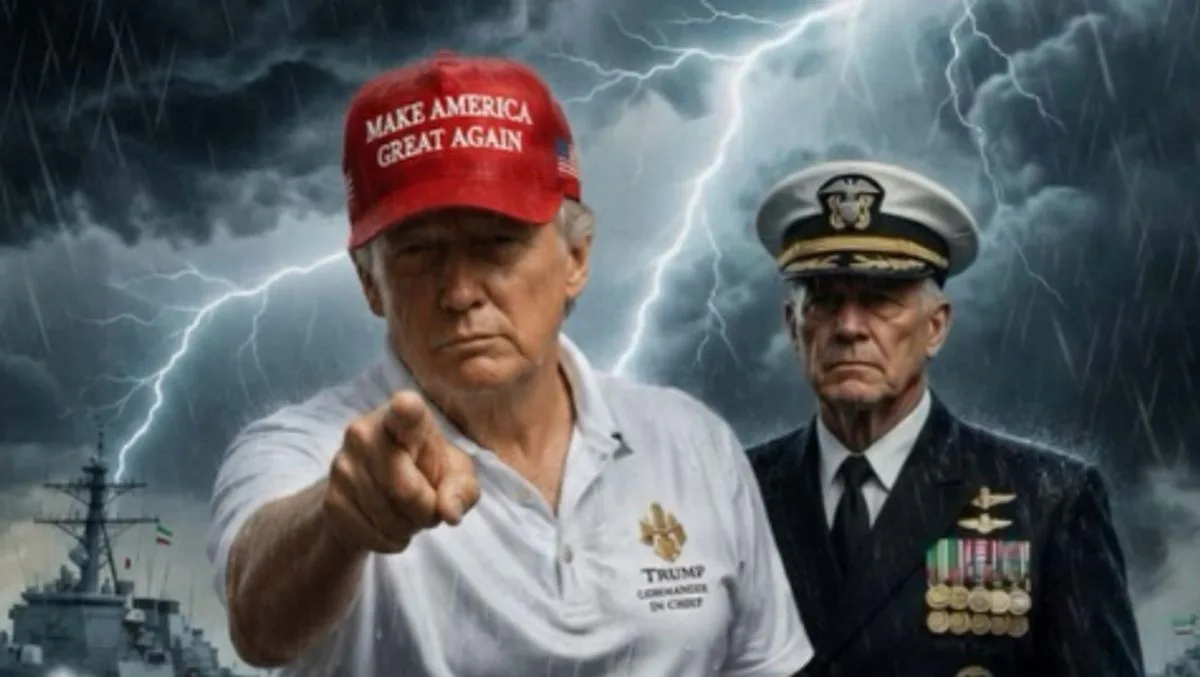
Donald Trump has sparked fresh speculation about potential military action against Iran after posting an AI-generated image on his Truth Social platform early on Tuesday. The picture, shared just after midnight, shows the president standing before a fleet of US warships under dark thunderclouds split by lightning, with the words 'CALM BEFORE THE STORM' emblazoned in silver lettering.
The post came hours after reports emerged that the United States and Israel have intensified military preparations in case fighting with Iran reignites following a fragile ceasefire last month. According to Middle East officials, both countries are preparing for the possibility of renewed strikes as early as next week.
The phrase 'calm before the storm' carries particular weight for Trump watchers. In 2017, during his presidency, Trump used the same words while posing with military leaders at a White House dinner. When pressed by reporters, he smirked and replied, 'You'll find out.' Days later, speculation swirled over whether he was hinting at military action against North Korea or Iran.
Critics have accused Trump of fearmongering and escalating tensions online, while supporters praise the image as a projection of strength during a dangerous geopolitical moment. The use of AI-generated imagery is part of a wider trend in US government communications, with departments including immigration enforcement increasingly using AI-enhanced visuals in public campaigns.