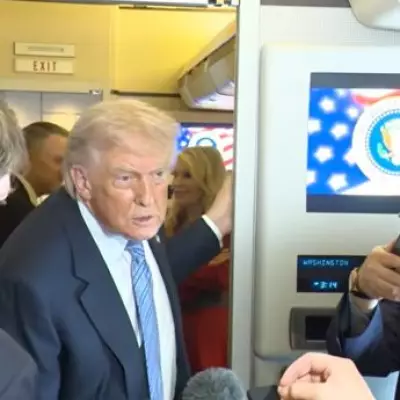
President Donald Trump has moved to withdraw his $10 billion lawsuit against the Internal Revenue Service, following reports that his administration was poised to establish a fund to compensate some of his allies. The disclosure was made in a federal court filing in Florida, where the lawsuit was initially lodged last year.
Background of the Lawsuit
The lawsuit, filed earlier this year in a Florida federal court, alleged that a previous leak of Trump and the Trump Organization's confidential tax records caused "reputational and financial harm, public embarrassment, unfairly tarnished their business reputations, portrayed them in a false light, and negatively affected President Trump, and the other Plaintiffs’ public standing." His sons, Donald Trump Jr. and Eric Trump, were also named as plaintiffs in the suit.
The development comes after ABC News reported last week that Trump was prepared to drop his legal challenge as part of a potential deal. This arrangement would reportedly involve creating a $1.7 billion fund to compensate individuals who supported the president and believe they were wrongfully investigated and prosecuted. The court filing itself did not specify any terms of a potential agreement.

Democratic Criticism
News of a potential fund to compensate Trump allies immediately drew sharp criticism from Democrats. Representative Jamie Raskin, the top Democrat on the House Judiciary Committee, condemned the idea as "unconstitutional." Speaking on ABC’s "This Week" on Sunday, Raskin stated, "This, of course, is a political grievance fund that Donald Trump can use to pay off his friends."
Raskin further argued, "If these people have a valid cause of action, they should bring it to the court like every other American does, and use the system of due process, and proving things by clear and convincing evidence, or a preponderance of evidence, go and prove it. But the idea that Donald Trump can just pass it out like a pardon is absurd."
Trump's Allegations of Weaponization
While the precise beneficiaries of such a fund remain unclear, its proposed creation aligns with Trump’s long-standing assertions that the Biden administration’s Justice Department has been weaponized against him. He has frequently cited, as proof, the since-dismissed criminal charges he faced between his first and second terms, including allegations of conspiring to overturn the 2020 presidential election results and retaining classified documents at his Mar-a-Lago estate in Florida. Several of his aides were also prosecuted, as were hundreds of his supporters involved in the January 6, 2021, Capitol riot.
Merrick Garland, who served as attorney general during the Biden administration, consistently denied allegations of politicization, maintaining that his decisions were based on facts, evidence, and the law. His Justice Department also investigated former President Biden for his handling of classified information and pursued separate tax and gun prosecutions against Biden’s son, Hunter.
Retribution Campaign
This move comes as Trump has consistently voiced intentions for his Justice Department to pursue a retribution campaign, targeting perceived adversaries and initiating wide-ranging investigations into alleged conspiracies by law enforcement and intelligence officials to undermine his political prospects. No charges have been brought in this investigation, and it remains uncertain whether any ever will be.