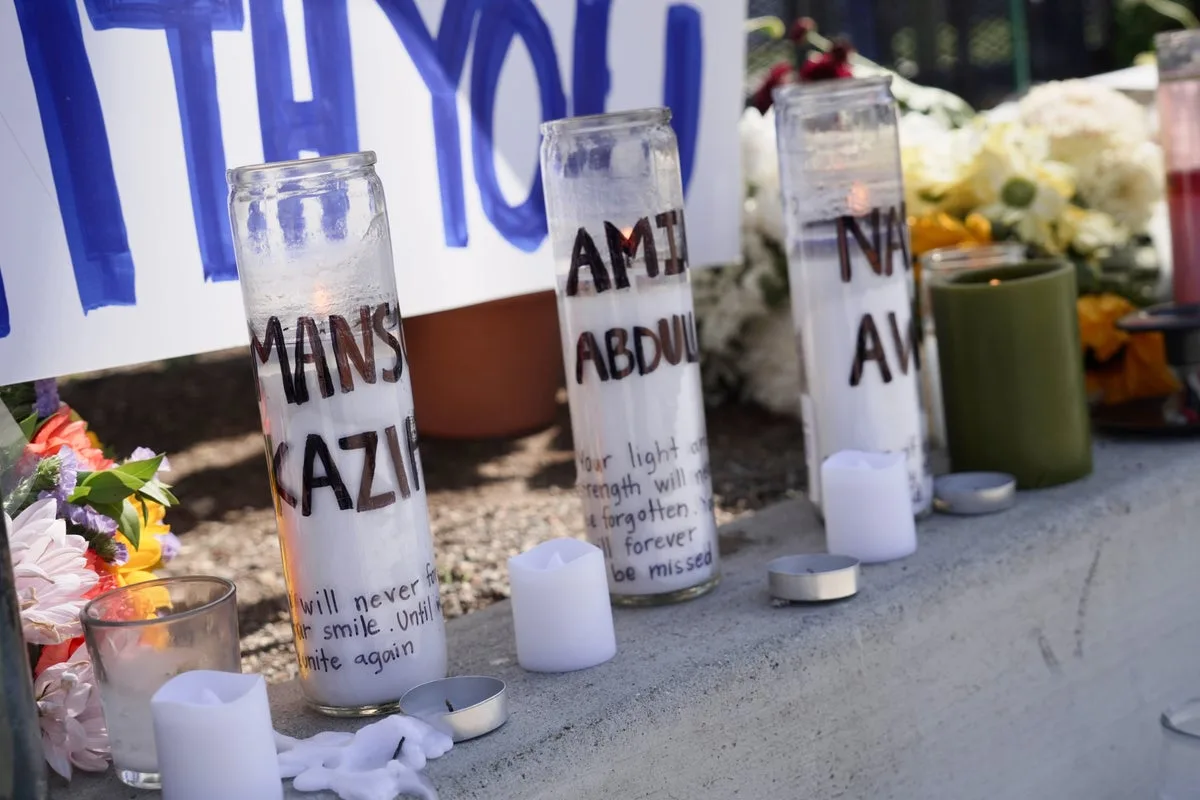
One of the teenagers who killed three people at a San Diego mosque this week had been flagged to law enforcement last year for exhibiting alarming behaviour and idolising Nazis, prompting police to confiscate his father's guns, according to court records.
The officers who conducted a welfare check at the home of Caleb Vazquez wrote that he was “involved in suspicious behaviour idolizing nazis and mass shooters,” and obtained a court order on 29 January 2025 to remove 26 guns under a 2014 California law allowing the confiscation of firearms from people considered dangerous. Vazquez’s parents had voluntarily surrendered the guns days earlier, according to an affidavit signed by Marco Vazquez, the father.
Authorities have said Vazquez, 18, met Cain Clark, 17, online, where they both were radicalised. Police haven't shared more details about how they knew each other, or specified whose weapons were used in the shooting. Cain Clark’s mother told law enforcement that weapons were missing from her home on Monday, kicking off an hourslong search for the teens before they committed the shooting at the Islamic Center of San Diego and then killed themselves, police said.

Court filings show Vazquez decided to “secure all sharp knives in the home” and surrender the firearms that they had kept in a secure gun safe when they became aware of unspecified serious allegations against their son. He was also previously committed to an involuntary psychiatric hospitalisation. The court filings, first reported by The New York Times, didn't say what he was admitted for.
The Vazquez family said in a statement released Thursday that Caleb Vazquez was on the autism spectrum and had grown to resent parts of his identity — but didn’t specify what aspects were challenging to him. “Coming from a diverse family that not only includes immigrants but Muslims as well, we always taught the importance of acceptance, compassion, and love for one another. We are proud of the different backgrounds, cultures, ethnicities, and religions within our family and community,” their statement said. “We believe this, combined with exposure to hateful rhetoric, extremist content, and propaganda spread across parts of the internet, social media, and other online platforms, contributed to his descent into radicalized ideologies and violent beliefs,” said their statement, released through their attorney Colin Rudolph.
In writings by Vazquez and Clark that expressed white supremacist views, Vazquez wrote of having “some mental health issues” and being rejected by women. They suggest both teenagers idolised previous shooters who have died while carrying out mass shootings. The writings expressed hatred toward Jewish people, Muslims, Black people and a range of other groups.