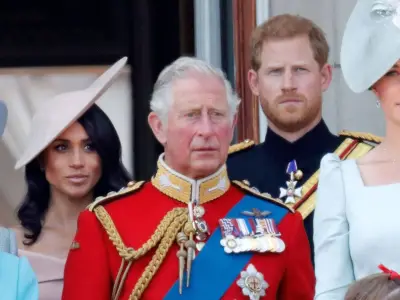
Royal Family's Enabling of Prince Andrew Has Permanently Damaged the Monarchy
Royal Family's Enabling of Prince Andrew Damages Monarchy

Royal Family's Blind Support for Prince Andrew Has Irreparably Harmed the Monarchy

The British royal family stands accused of enabling Prince Andrew's misconduct through years of financial support and willful ignorance, with experts warning this institutional failure has permanently damaged the monarchy's standing. While the public long ago recognized Prince Andrew as problematic, his privileged family continued providing housing, funding, and protection that effectively shielded him from accountability.

Systematic Enabling Through Financial Support

King Charles and the late Queen Elizabeth II reportedly loaned Prince Andrew approximately £12 million to help him avoid facing justice in United States courts. This substantial financial assistance represents more than mere family support—it constitutes active intervention that prevented proper legal scrutiny of his alleged misconduct. The royal family maintained this support system even as evidence mounted regarding Prince Andrew's association with convicted sex offender Jeffrey Epstein and other questionable relationships.

This pattern of enabling extended beyond financial matters to include institutional protection. Royal officials consistently turned "blind eyes and deaf ears" to mounting concerns, creating an environment where misconduct could flourish without consequence. The belated stripping of Prince Andrew's titles and military affiliations represents too little, too late for many observers who view these actions as cynical public relations maneuvers rather than genuine accountability.

Wide Pickt banner — collaborative shopping lists app for Telegram, phone mockup with grocery list

Institutional Damage Beyond Repair

The monarchy faces its most severe crisis since Edward VIII's abdication in 1936, but with far more profound implications. Unlike that earlier constitutional episode, which resulted in a relatively seamless transition, the Prince Andrew scandal has exposed fundamental flaws in the hereditary system itself. The institution has been "destroyed from within" according to critics, with the veil of secrecy permanently lifted regarding how the royal family protects its own.

Democracy advocacy group Republic calculates the monarchy costs British taxpayers over £510 million annually through various grants, subsidies, tax exemptions, security arrangements, and transportation expenses. This exorbitant price tag appears increasingly difficult to justify as public confidence erodes. The scandal has accelerated calls for either a dramatically reduced Dutch-style monarchy or complete abolition in favor of an elected head of state.

Political Implications and Reform Momentum

Labour leader Keir Starmer reportedly advised King Charles to distance himself from his brother, but this counsel came too late to prevent significant damage. The political establishment now faces growing pressure to address systemic issues within the monarchy, with Parliament showing increased willingness to scrutinize royal affairs that were previously considered beyond public examination.

The crisis comes amid broader political shifts, including Reform UK's growing influence and important by-elections that could reshape Britain's political landscape. These developments create an environment where constitutional reform previously considered unthinkable now enters mainstream political discourse. The combination of royal scandal and political realignment creates unprecedented pressure for institutional change.

Historical Parallels and Future Prospects

The current situation echoes previous royal crises, particularly the period following Princess Diana's death when Prime Minister Tony Blair intervened to counsel Queen Elizabeth II on responding to public sentiment. However, the Prince Andrew scandal differs fundamentally because it involves alleged criminal behavior rather than personal tragedy, making institutional reform more urgent and likely.

As public and parliamentary scrutiny intensifies, returning to previous norms appears impossible. The debate has shifted from whether the monarchy should change to what form that change should take. Options range from significant reduction of royal privileges and public funding to complete abolition of the hereditary system. What remains clear is that the institution "will never be the same again" following the exposure of how it protected a member accused of serious misconduct.

Pickt after-article banner — collaborative shopping lists app with family illustration

The royal family's handling of Prince Andrew represents a watershed moment in British constitutional history, exposing systemic flaws that can no longer be ignored or concealed. As accountability demands grow louder, the monarchy faces its most significant existential challenge in nearly a century, with profound implications for Britain's future governance structure.