The partner of murdered Rachel Nickell has laid bare the full horror of repeated police failings during the long quest to find her attacker after her death in 1992. André Hanscombe also told of his pain over allowing their son Alex, aged nearly three when he witnessed his mother's brutal death on Wimbledon Common, to be questioned repeatedly by experts in a bid to help the police. The decision, it would turn out, led to 'a lot of conflict' in later years.
André, now 62, says it was 'absolutely devastating' to discover that Rachel's killer Robert Napper had twice come close to being caught as a serial rapist in 1989 — meaning that the attack on Rachel, and his other victims, had been 'preventable'.
Leaked Dossier Reveals Catastrophic Errors
Speaking in a new documentary, he recalls being shown a leaked CPS dossier the night before Napper's court case in 2008, which revealed the full extent of the 'chaotic catalogue of errors' that meant Napper remained on the loose for several years — while Colin Stagg was wrongly charged. 'It was absolutely devastating — Alex had been through such an ordeal, we'd been trying to make sense of that week after week, month after month, year after year. And all that's just exploded, because here it says it was all preventable.'
When paranoid schizophrenic Napper, now 60, finally confessed to Rachel's manslaughter, he had already been held in high security Broadmoor hospital for 13 years, having gone on to murder and mutilate single mother Samantha Bisset and also suffocate her young daughter Jazmine in 1995.
Missed Opportunities to Stop Napper
But the dossier showed that three years before Rachel was killed, Napper had been named as a potential suspect during an investigation into a serial rapist on the Green Chain Walk near Plumstead, southeast London and had then vanished despite agreeing to take a blood test for the police. The investigating officers at the time then excluded him from police enquiries for being 'too tall' — a decision which had catastrophic consequences. Police now suspect Napper of being responsible for 106 attacks involving 86 victims across the area.
Even worse, André discovered that Napper's own mother had contacted the police to report her son after he confessed to raping a woman in Plumstead. 'They didn't follow it up,' he says, describing their deaths as the 'worst possible scenario' after the loss of Rachel. 'This could have prevented all of the attacks that followed. The attack that Alex witnessed was preventable, Rachel's death was preventable, Samantha and Jazmine's deaths were preventable. If they'd done their job properly, he'd have been taken off the street.'
Personal Archive and Documentary Insight
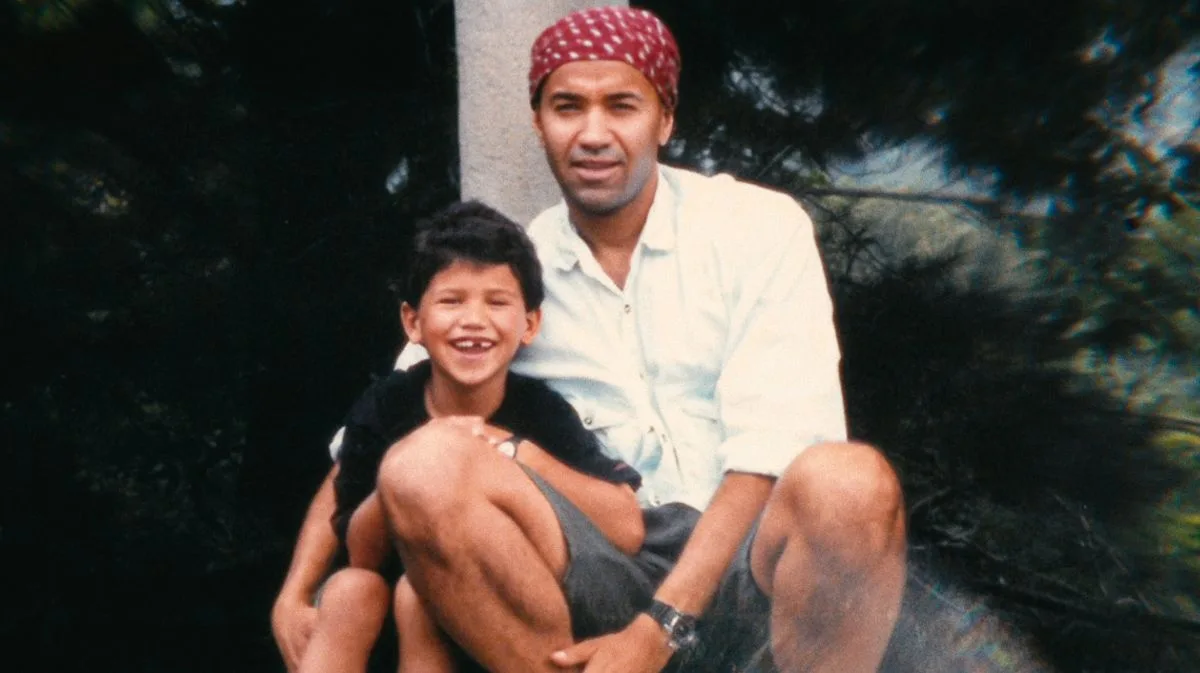
The documentary has access to André's personal archive, showing many pictures and videos of himself, Rachel and Alex in and around their home in Balham, southwest London, that have not been seen before. Filmmaker Lucy Bowden said the pair's motivation to tell their full story, more than three decades on, was to demonstrate the resilience of the human spirit. 'I think they just want people to watch this and see that, even with the worst possible thing that could happen, people can find their own peace and come through it.'
She said viewers will get a sense of what a difficult position André was in when it came to trying to coax his son into providing information for the police. 'I think that what Alex goes through in terms of being questioned through André by psychologists and the police has been a huge thing for them to deal with. He's in this really difficult position where he obviously wants to protect his child, but he also knows that he could help to find the murderer and stop other murders from happening.'
Strained Relationship Between Father and Son
André and Alex say their relationship was indeed put under strain for many years over what the toddler went through. Alex, now aged 36, says: 'I was very angry about a lot of the things that we'd lived through — the sessions that went on for weeks and months. The thing that was most distressing for me was to be taken back to that day repeatedly. I don't think I had the same trust and respect for my father as I once had. And the fundamental point was that he was the protector of the family as the father, and unfortunately had allowed this to happen to us. So in my teenage years we had a lot of conflict.'
André says he accepted Alex's feelings of frustration and outrage because he also blamed himself. 'There was an anger and that anger was, quite rightly, directed towards me. I had a huge sense of guilt that I hadn't protected my family and you do feel stupid, you feel like a fool.'
Child Psychiatrist Reflects on Questioning
Child psychiatrist Jean Harris Hendricks said she had never before worked with a child who'd been the only witness to the death of a parent. 'I had no experience of how this piece of very intensive work could affect a small child and yet the rational part of my brain fully agreed that it was important to try and prevent further killings. So there was a dilemma there,' she says in the film. After several weeks, and with Alex growing increasingly stressed, she was part of a team who returned the youngster to the scene of the attack in order to try and jog his memory. Now, she describes it as 'a very long shot' which smacked of desperation. 'I wasn't very happy with what I'd done but I'd tried,' she said, branding the exercise as 'an attempt that hadn't worked'.
New Life Abroad and Moving Forward
Soon afterwards André moved with his son to an isolated area in the south of France and the pair relocated to Spain in 1996. They made the Netflix documentary, which sits alongside three-part drama The Witness, to show how they eventually came through their ordeal. 'There is true evil in this world. I was forced to come to terms with that,' André explains. 'I had a mission to bring Rachel's child through this in the best way possible.'
Alex now has huge gratitude for the love and care his father has shown him over the decades. 'My father sacrificed everything for me and for what he believed in without any guarantees of how it would turn out,' he says. 'He was brave enough to do what he felt was right in his heart and I'm forever indebted to him for that.'
The Murder of Rachel Nickell launches on Netflix on Thursday 4 June.