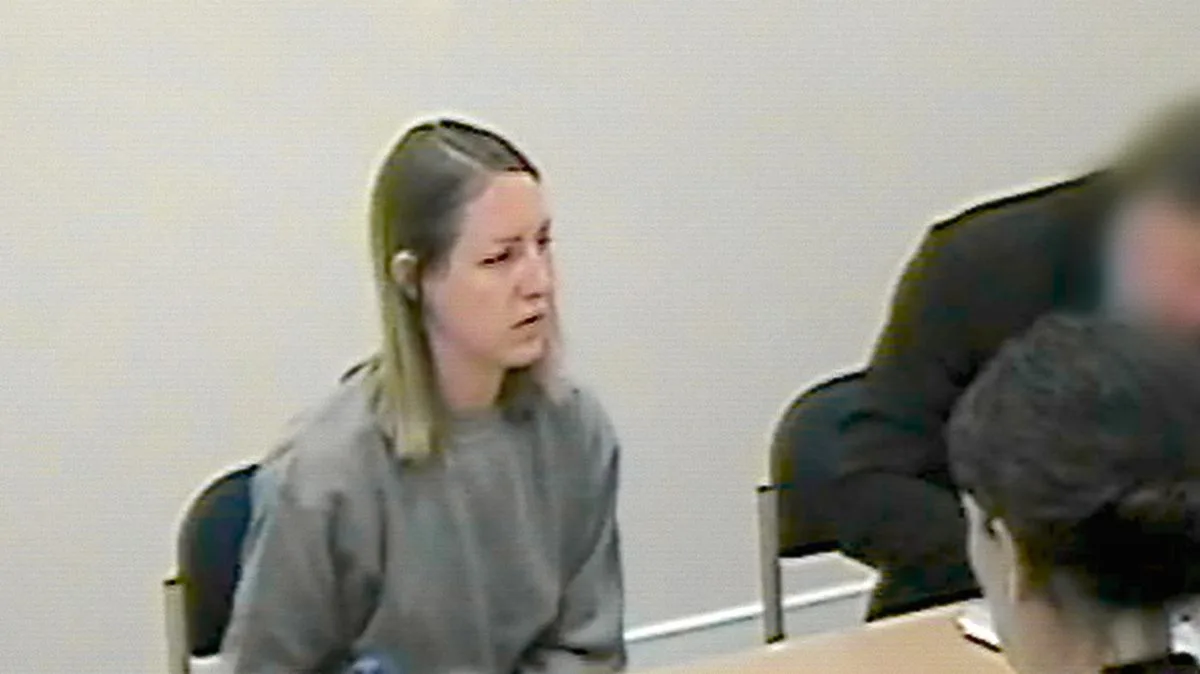
Fears that Lucy Letby was 'scapegoated' for the deaths of premature babies at the Countess of Chester Hospital have intensified following the emergence of new evidence about the doctors who allegedly persuaded police to build a criminal case against her.
Internal documents have revealed that hospital managers were concerned about the 'bullying' behaviour of two doctors, Dr Stephen Brearey and Dr Ravi Jayaram, towards Letby after she formally highlighted apparent failures of care in the neonatal unit. This led to her removal from the wards by the doctors.
After Letby launched a grievance procedure against the doctors, the hospital found in her favour. However, by that time, the doctors had already contacted Cheshire police to register their concerns. Letby was subsequently convicted of the murders of seven babies and the attempted murders of seven others between 2015 and 2016.
Grievance Investigation Findings
A draft copy of the investigation into Letby's grievance, dated November 12, 2016, and marked 'strictly private and confidential', concludes that 'it is the view of nursing and executive interviewees that the drive to blame LL for the rise in mortality came from SB and RJ... I find it a concern that these concerns are based on 'gut feel'... I am therefore concerned as to whether this warrants further investigation under the Trust's Bullying and Harassment policy'.
The document, placed on the website of the Thirlwall Inquiry, states: 'Given the positive views of LL's competence, capability and flexibility regarding when she is needed, LL is likely to be in a position where she may be looking after the sickest babies on the unit and coupled to the fact that she works full-time and will work extra shifts when asked, increases the likelihood that she might be on duty when adverse events occur'.
Hospital Management Response
Hospital management met on May 12, 2017, to discuss how to handle the doctors. A handwritten note reveals the conclusions of Sue Hodkinson, director of human resources, and Tony Chambers, chief executive of the Countess of Chester. Under the heading 'RJ/SB – plan re management' is the line: 'Action plan to manage out' the doctors from the hospital. Other headings, including 'GMC' (General Medical Council), suggest that managers discussed ways to stop the consultants from targeting Letby.
However, by this point, the doctors had alerted Cheshire police, shifting the spotlight onto Letby's supposed role in the babies' deaths. The juries in the resulting trials were unaware of this full context.
Ongoing Doubts About Convictions
Over the past two years, The Mail on Sunday has highlighted how Letby was convicted based on contested statistical probabilities and increasingly disputed theories about how she might have inflicted harm on the children. The juries reached their verdict despite the absence of any forensic or CCTV evidence and the lack of a convincing motive. Independent medical reviews found that the unit was understaffed and stretched beyond capacity.
Mark McDonald, the lawyer representing Letby, said: 'This material puts a completely different perspective on why Lucy was accused of such awful crimes. Was she a whistleblower? Was she a scapegoat? These are questions which one day, when Lucy is exonerated, the Countess will need to tackle, but what we do know is that hospital was in crisis and the neonatal unit was not fit for purpose and should never have been dealing with desperately sick children.'
Political Scrutiny
Dr Jayaram was the only medical witness at Letby's two trials who was able to point to behaviour directly linking her to babies' deaths. Addressing the Commons earlier this year, Tory MP Sir David Davis asked: 'Why did Cheshire police decide Letby was responsible? Initially, there was no intention to launch any criminal investigation, but on May 15, 2017 that all changed. After a single meeting with two consultants, Dr Stephen Brearey and Dr Ravi Jayaram, from the Countess of Chester, Letby was explicitly identified as the focus of suspicion.'
The Countess of Chester Hospital did not respond to a request for comment.






