The rushed launch of Digital ID was a 'fiasco' that spooked the public and destroyed confidence in the policy, MPs say today. It can also be revealed that the Government has spent more than £650,000 of taxpayers' money advertising the unpopular scheme.
Scathing Report on Digital ID Rollout
In a scathing report, the Home Affairs Select Committee says that public opinion had previously been supportive of the introduction of ID cards. But this was undermined by Sir Keir Starmer's unexpected announcement that Digital ID would become mandatory for right-to-work checks last September. There had been no 'rigorous policy development' or 'public consultation' beforehand, just demands from long-time advocate Sir Tony Blair and a report by think-tank Labour Together calling for a 'BritCard'.
Chairman of the committee Dame Karen Bradley said: 'The Government's early attempts to set out its plans for digital ID were nothing short of a fiasco. To the public this announcement came out of the blue and made little sense. It raised fears of government over-reach into people's lives and was so poorly thought out that they had few answers to ease these concerns.'
'It is worth bearing in mind that this was a policy direction that was generally well received by the public before they were spooked by the Government's poorly thought out and badly explained plans.'
Public Opposition and Collapsing Support
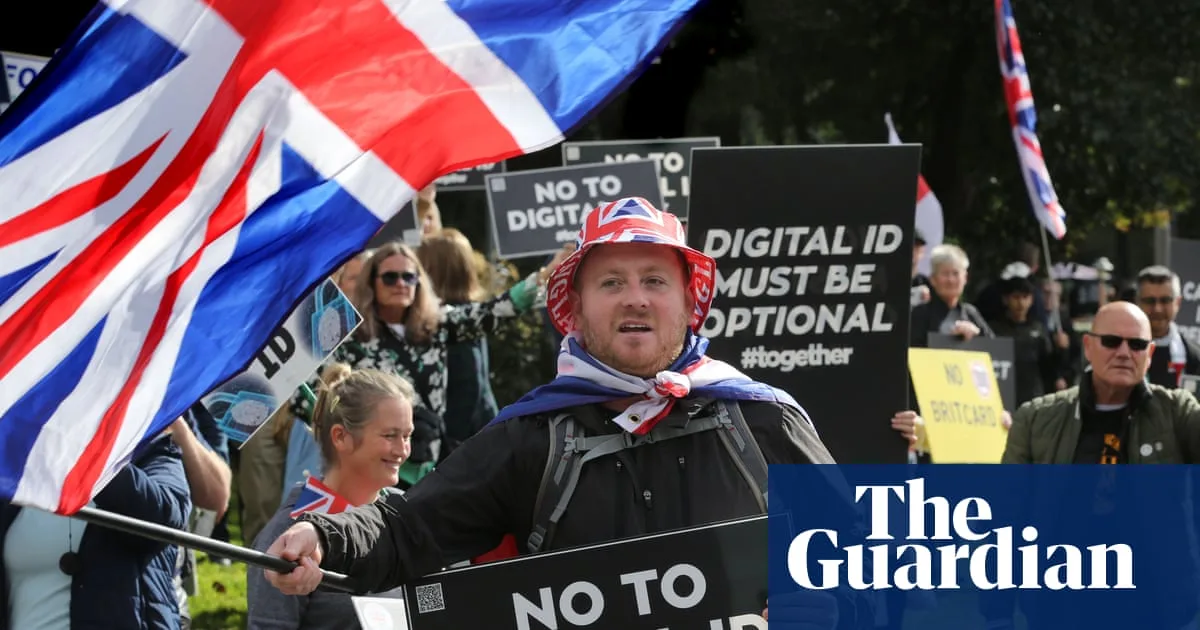
The Prime Minister's plan 'met significant opposition', today's report states, including from the first ministers of Scotland and Northern Ireland as well as all opposition parties - and a petition signed by 2.9 million people. Polling confirmed that public support for the scheme had collapsed from 53 per cent supporting Digital ID in 2024 to just 31 per cent last autumn.
There were even concerns within Government as Home Officials warned that the mandatory work checks would breach the Common Travel Area agreement with Ireland, which allows British and Irish citizens to work in both countries without a visa. By January ministers were forced to abandon the compulsory element of the scheme and by March they were trying to make a public consultation more 'user friendly' with the creation of a 'people's panel'.
Concerns Over Implementation and Costs
Today's report also raises concerns about the Government's capacity to implement even the scaled-back scheme, which is now focused on 'better access to public services'. Ministers want it to be built in-house but have not yet even said how much it will cost, despite disputing the estimate of £1.8 billion over three years put forward by the Office for Budget Responsibility.
'The track record of digital transformation in government is poor, and we are sceptical that digital ID will be any different,' the committee warns. It highlights the Government's 'poor track record in handling data security' and says people will not trust the scheme unless they believe it is safe.
The MPs also warn that under the revised plans, candidates will either have to have a passport or Digital ID in order to get a job. And they urge the Government to set out safeguards for future uses of Digital ID to avoid a 'slippery slope' that allows the authorities to build up a detailed picture of citizens from their education, health and benefits data.
Advertising Spend Revealed
Meanwhile figures obtained by civil liberties group Big Brother Watch reveal that the Government has spent £672,000 on advertising Digital ID so far. It includes £220,000 on YouTube adverts, £210,873 on social media and £235,729 on digital billboards.
Jack Coulson, Head of Advocacy at Big Brother Watch said: 'Government waste, particularly in a cost-of-living crisis, is infuriating. Discovering they have spent nearly three-quarters of a million pounds on ads to promote the deeply unpopular digital ID agenda will rightly annoy many.'
A Government spokesman said: 'Digital ID will make accessing public services through the Government app as easy and secure as online banking. It will be available for anyone who wants to use it, and reduce repeated form-filling and having to tell your story multiple times to different parts of government. We want it to work for everyone, so are speaking to people from all walks of life about how it should work, especially those from older age groups and those who are less tech-savvy.'