The US House Committee on Energy and Commerce is examining concerns about the National Institutes of Health (NIH) after two agency scientists were charged with allegedly smuggling mpox into the United States and misleading investigators.
Charges Against NIH Scientists
Federal law enforcement alleges that Dr Vincent Munster, 53, a Dutch national and chief of the virus ecology section at the NIH’s Rocky Mountain Laboratories (RML) in Montana, and Claude Kwe, 38, a research fellow from Cameroon, transported vials containing monkeypox, now known as mpox, into the country without declaring them to customs and then lying about it. RML is an NIH National Institute of Allergy and Infectious Diseases (Niaid) facility that contains biosafety level 4 (BSL-4) laboratories, the highest level of biocontainment, where researchers study dangerous pathogens like Ebola and Nipah virus.
Munster is a well-published scientist with approximately 400 publications and 69,000 citations. Together, Munster and Kwe have co-authored 12 reports related to mpox since 2023.

Details of the Incident
According to a criminal complaint filed on 2 June, the scientists arrived at the Detroit metropolitan airport on 25 January after a nine-day research trip to the Republic of Congo, where they had been studying the mpox strain linked to the country’s current outbreak. Mpox is a viral disease that can cause fever, swollen lymph nodes and a painful rash. In 2024 alone, Africa reported 80,276 suspected cases of mpox and 1,340 deaths from it.
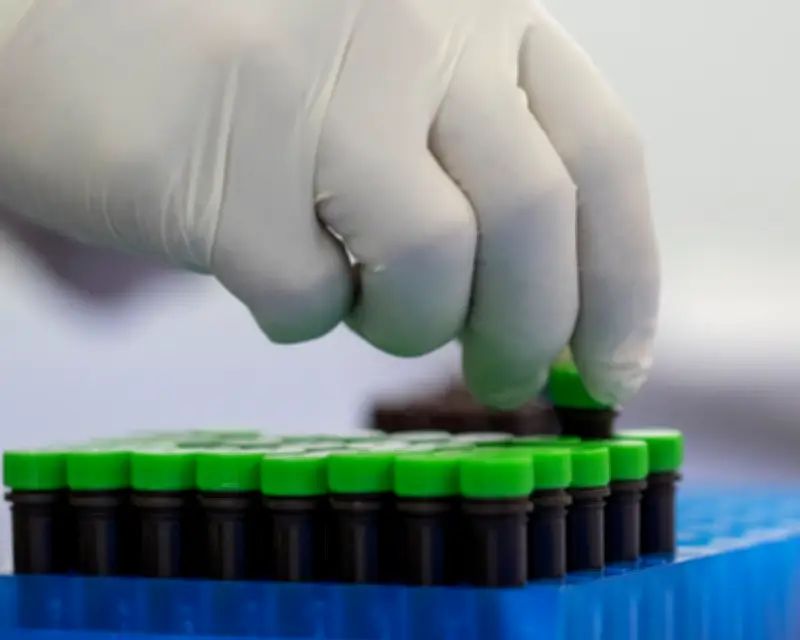
A US attorney’s office press release states that Customs and Border Protection officials questioned the scientists about a large black plastic case they were carrying through the airport. The researchers allegedly told officials that the container held diagnostic and testing equipment. However, a subsequent inspection reportedly uncovered 113 sealed laboratory vials packed inside styrofoam coolers. When asked for required documentation, Munster allegedly replied: “Yes yes, it’s all in my laptop, but you won’t need them. I do this all the time.”
Authorities say laboratory analysis has so far examined 20 of the vials. Seventeen allegedly contained inactivated monkeypox virus, one contained chickenpox virus and two contained human DNA. The contents of the remaining vials have not been publicly identified.
Legal and Regulatory Breach
The importation of biological agents, including deactivated samples rendered non-infectious, is subject to strict regulatory requirements in the US. Prosecutors allege that Munster and Kwe required authorisation and documentation to transport such materials on a commercial flight, as well as declaring them upon entry. Both Munster and Kwe were charged on 2 June with conspiracy to smuggle mpox into the US and giving false statements to federal law enforcement.
Announcing the charges, Jerome Gorgon Jr, a US attorney, said: “These NIH experts apparently broke our laws by smuggling viral pathogens on a packed commercial airplane from an outbreak in the Republic of Congo. Let that sink in.” Marcus Sykes, a special agent of the US Department of Health and Human Services (HHS) office of inspector general, said: “Any deliberate effort to conceal and smuggle biological materials into the United States without proper authorisation is a breach of the public’s trust and could have placed the public at risk.”
Both men pleaded not guilty at a hearing in Missoula, Montana, on 3 June and were released on bail after surrendering their passports.
Congressional Review and Biosafety Scrutiny
The case has triggered a congressional review. In a letter to the NIH director, Dr Jay Bhattacharya, dated 16 June, the House Committee on Energy and Commerce requested details about Munster and Kwe’s work, the origin and transport of the biological samples, whether the NIH authorised or was aware of the trip, and the agency’s response after learning of the allegations. The committee is also seeking a timeline of the NIH’s responses, including any prior compliance concerns involving the researchers, and whether they made false statements to the NIH or other federal agencies.

The criminal charges have also renewed scrutiny of Rocky Mountain Laboratories’ biosafety protocols. In a 26 May letter to the HHS inspector general, Senator Tim Sheehy (R-MT) called for an independent investigation into RML’s biosecurity and personnel practices, citing a whistleblower complaint submitted to White Coat Waste. The organization has long criticised Munster’s taxpayer-funded animal research, arguing that it raises ethical, biosafety and national security concerns. Sheehy pointed to two reported employee exposures to the potentially fatal Crimean-Congo haemorrhagic fever virus, one involving a monkey bite and another a failure of protective clothing. Both exposures have since been confirmed by the NIH. Sheehy also cited claims that Munster retained access to the high-containment lab after being detained by authorities. HHS did not respond to requests for comment.
NIH Response
An NIH spokesperson said the agency was notified of the airport incident in January and immediately implemented established protocols to secure laboratory facilities, research materials and biological samples: “NIH also took appropriate personnel actions and took all relevant steps to confirm that there was no risk at any time to staff or the public in or around the [RML] facility. This matter is currently under investigation, and NIH is cooperating fully with law enforcement. NIH leadership continues to prioritise biosafety across the agency and promote a culture of accountability, compliance, and responsible scientific research throughout the biomedical research enterprise.”
Munster and Kwe each face a maximum sentence of five years’ imprisonment if convicted. Kwe’s lawyer, Benton Martin, said: “Mr Kwe is presumed innocent and we will await further proceedings before commenting further.” Munster did not respond to requests for comment.