Mother Fears Her Four Children May Die Before 35 Due to Rare Genetic Condition
Mother Fears Children May Die Before 35 Due to Rare Condition

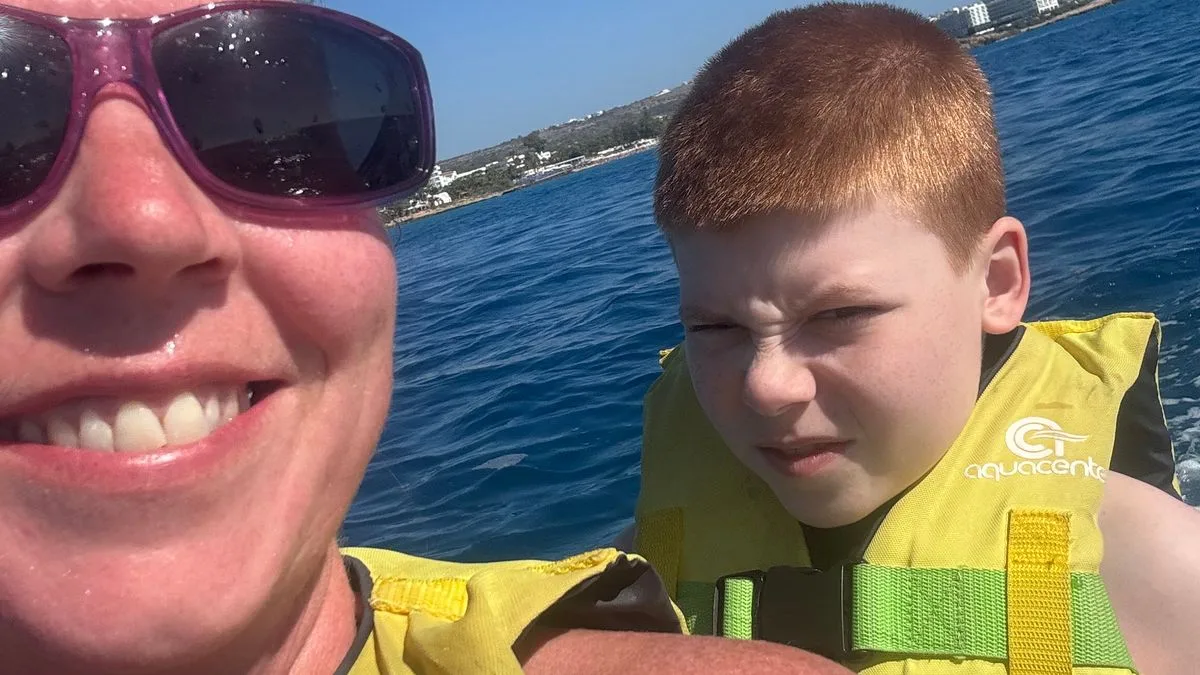
A mother has expressed her fear that all four of her children may die before the age of 35 after missed genetic test results revealed a rare progressive condition. Sarah Bingham, 39, from Weston-super-Mare, said her 14-year-old son Caleb was diagnosed with Friedreich's ataxia in November 2025, years after a genetic test in 2020 showed a chromosome seven deletion that was never communicated to her.

Caleb nearly died at eight months old in March 2012 after contracting bacterial meningitis and blood poisoning. He spent a month in a coma and, upon waking, regressed to a newborn state, unable to recognise anyone. He remained non-verbal until age five and struggled with walking and socialising. At age 10, he was diagnosed with autism, and a genetic test was conducted as part of that process. However, Sarah said she never received the results and assumed everything was fine.

It was not until 2025, when Sarah requested all of Caleb's medical records for a school application, that she discovered the genetic test had identified a chromosome seven deletion. After contacting the NHS Patient Advice and Liaison Service, Caleb underwent further testing and was diagnosed with Friedreich's ataxia, a condition that affects coordination and speech and can lead to loss of vision and hearing, as well as heart problems and reduced life expectancy.

Wide Pickt banner — collaborative shopping lists app for Telegram, phone mockup with grocery list

Sarah and her partner Richard, 41, an engineer, are both carriers of the genetic condition. Their other children, Phoebe, 12, Xavier, five, and Felicity-Jayne, three, are now being tested. Sarah said she feels guilty for having her younger children, as she might not have had them if she had known the results earlier. She fears they may all have the condition and die before 35.

Sarah, who was a social worker but is now Caleb's full-time carer, said: "All I ever wanted to be was a mum, but I feel guilty for having my youngest two because if we had these results before they were born, I probably wouldn't have had any more. I feel like it's all my fault, because it's genetic, and there's so much sadness – what if they all die before they're 35?"

She described the trauma of Caleb's infancy, when his heart stopped and he had to be resuscitated. "We were told to say our goodbyes," she recalled. After waking from the coma, Caleb had to relearn basic skills and remained non-verbal until age five. He has never had friends and often played alone in the playground.

Caleb's autism diagnosis in 2022 came after years of tests. The genetic test in 2020 was part of that process, but the results were never shared. Over the years, Caleb's balance and leg pain were attributed to dyspraxia, common in autism. After starting secondary school, his mental health deteriorated due to social struggles.

In early 2025, Sarah gathered medical records and found the genetic report showing a chromosome seven deletion, addressed to Children's Services from Bristol Genetics Laboratory but never communicated to her. She complained to PALS and saw a geneticist in May 2025, leading to the Friedreich's ataxia diagnosis in November 2025.

According to the NHS, Friedreich's ataxia is a progressive condition affecting balance and coordination, causing slurred speech, leg weakness, vision and hearing loss, scoliosis, heart problems, and reduced sensation in hands and feet. Life expectancy may be shortened, with Caleb potentially not living beyond 35.

Sarah said the diagnosis explained many issues: "He walks as if he's drunk, can't walk in a straight line, hop or jump, or fasten zips or buttons. We were always told that was because of his autism." She regrets not pushing for the earlier results.

Caleb was present for the diagnosis but shut down and did not want to discuss it until February 2026. He then told his mother he did not want to be in a wheelchair and feared being seen as different. He Googled the condition and became fixated on the life-limiting aspect, crying and saying he was going to die.

Sarah has taken Caleb on trips and encouraged him to write a bucket list, with Disneyland at the top. She set up a GoFundMe to fund these experiences.

Pickt after-article banner — collaborative shopping lists app with family illustration

Since both parents are carriers, the other children are being tested. Sarah believes Phoebe and Xavier may also have the condition; Phoebe has scoliosis, and both have wide gaits and balance issues. Caleb's feet are deformed, and Felicity's feet look similar. Results are expected by September 2026.

Sarah is preparing for the possibility that all children may be affected, requiring carers and a bungalow for adaptations. She is on the NHS waitlist for therapy but struggles with guilt and exhaustion. "When I stop and think about it, the trauma from when Caleb was in hospital as a baby all comes back, and I never really dealt with it. It feels like it's all happening again, but worse," she said.

A spokesperson from Sirona Care and Health, which manages Children's Services in the area, said: "To protect patient confidentiality, Sirona never comments on individual cases. We strive to provide the best possible healthcare at all times, and to learn from all issues and concerns raised with us by patients."