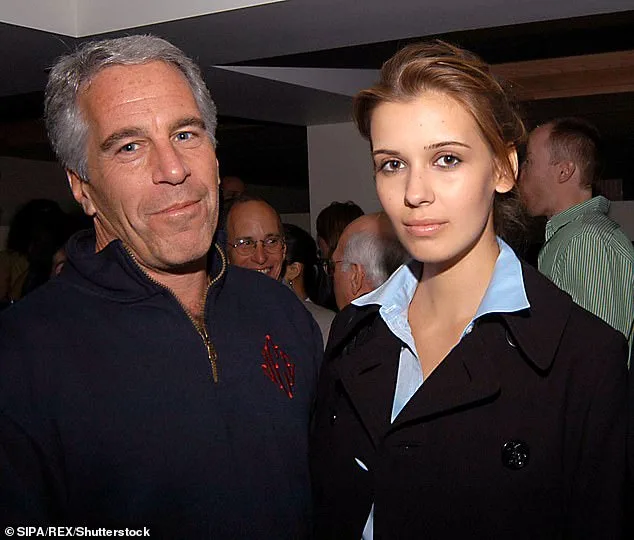
The Assistant: Lesley Groff and the Jeffrey Epstein Files
Lesley Groff: Epstein's Assistant and the Question of Complicity

Lesley Groff, Jeffrey Epstein’s former assistant, is the name that appears most frequently in the Epstein files. As thousands of emails are scrutinised, a troubling question emerges: what did she know?

The Claim of Ignorance

Jonathan Whitcomb, attorney for Lesley Groff, stated on 5 June 2020: “She did not know.” Groff, who served as Epstein’s executive assistant for 18 years, has consistently maintained that she was unaware of his criminal activities. Complicity, however, requires knowledge. Legally, to be complicit, one must know they are aiding a crime. Morally, the threshold is lower; simply knowing and doing nothing suffices. But how can we ascertain what another person truly knows?

Many of us have moments where we close our eyes to wrongdoing, whether it be environmental harm or petty theft. We rationalise that someone else will act, that it is not our responsibility. Over time, we may even convince ourselves that we do not know what we have seen.

Wide Pickt banner — collaborative shopping lists app for Telegram, phone mockup with grocery list

Groff’s Early Career

Groff never intended to be an assistant. After graduating from the University of Texas at Dallas, she moved to New Jersey, worked for an office supplies company, then as a salesperson at Nordstrom, and later met her second husband at a triathlon. In 2001, a headhunter found her resume on Monster and arranged an interview to assist a wealthy financier.

She met Ghislaine Maxwell and Jeffrey Epstein at his offices on Madison Avenue. Epstein’s phone rang repeatedly during the interview, giving Groff the impression of a bustling workplace. She was hired and given her own office, working alongside a team of assistants, lawyers, and a trader. Eventually, she worked from Epstein’s seven-storey townhouse on East 71st Street.

Daily Duties

Groff managed Epstein’s calendar, appointments, and calls. Maxwell told her that Epstein received daily massages. Epstein would call Groff every 15 minutes until a masseuse was scheduled. Her lawyer, Michael Bachner, stated: “During her employment, Lesley never witnessed or was told of anything illegal related to these massages.”

Groff worked for Epstein from 2001 until his arrest in July 2019. No charges have been brought against her. Since Epstein’s death, she has remained largely invisible, photographed only occasionally near her Connecticut home. Yet her name appears over 160,000 times in the Epstein files—more than anyone else.

Congressional Scrutiny

In March 2026, the US Congress’s committee on oversight sent Groff a letter requesting an interview, believing she possesses information relevant to their investigation into the Epstein and Maxwell case. This suggests that authorities suspect Groff knows more than she has disclosed.

The Role of an Executive Assistant

To be a good executive assistant requires immersion in the boss’s life. Victoria Rabin, founder of the Executive Assistants Organization, describes it as a work marriage, requiring immense trust and intimacy. However, it is not a marriage of equals. Rowena Chiu, former assistant to Harvey Weinstein, compared her role to a butler in Downton Abbey—invisible and obedient. Epstein once described his assistants as “an extension of my brain” and a “social prosthesis.”

Groff’s emails reveal her meticulous attention to Epstein’s preferences. She ensured he was not disturbed during workouts, expedited pastry deliveries, and managed everything from towel rails to allergic reactions. She coordinated gifts for Steve Bannon and transported Oreo ice-cream without melting. Her emails are filled with exclamation marks and emoticons, reflecting a relentlessly positive attitude.

Financial Incentives

Epstein rewarded Groff generously. When she became pregnant in 2004, he offered to pay for a nanny and bought her a car. He doubled her salary from $60,000 to $120,000 in 2005. By 2015, she earned $140,000 plus bonuses. She received a Florida holiday, a helicopter ride, and a visit to his private island. Groff and her husband bought a home in Connecticut worth an estimated $5 million, though they took out a construction loan.

Despite these perks, Groff was aware of the economic disparity. She hesitated to ask for expensive theatre tickets, settling for a cheaper show. In her FBI interview, she recalled seeing an invoice for a carpet that exceeded her annual salary.

Pickt after-article banner — collaborative shopping lists app with family illustration

Interactions with Victims

Groff’s emails include invitations for girls to “see” Epstein. She coordinated their travel, visas, and accommodation. Survivor Juliette Bryant stated that Groff arranged her appointments and flights. Bryant found it odd that so many young girls were coming and going. Groff also returned lost property, arranged cash payments of $500 to $1,000, and scheduled dentist and hair salon appointments for the girls.

One email from a girl expressed nervousness about meeting Epstein. Groff replied: “He says of course you can just stop by!!! :)” Another email chain involved photos of a 21-year-old from Ukraine, which Groff forwarded without comment.

Legal Involvement

Groff’s name first appeared in Epstein’s 2007 non-prosecution agreement, which granted immunity to potential co-conspirators including her. After Epstein’s 2008 conviction, Groff’s lawyer claims Epstein lied to her, insisting he was blackmailed. In 2011, her husband sent her a Daily Beast article about Epstein’s lenient plea deal; Groff replied that Epstein had warned her about it.

In 2017, a lawsuit by Sarah Ransome alleged Groff facilitated abuse, but Ransome later withdrew the case. Several other civil suits were dismissed. In 2021, a victim described how Groff arranged massages that turned sexual, and even arranged payment for an abortion. However, all civil cases against Groff were dropped, and federal prosecutors decided not to charge her.

Moral Complicity

While Groff may not be criminally liable, ethical questions remain. Professor Christopher Kutz argues that individual moral accountability exists even within collective actions. Amos Guiora, a law professor, calls Groff a classic enabler: “All this shit can’t happen without her.” For victims like Rina Oh, Groff’s actions speak for themselves: “They were all deeply involved.”

Groff’s lawyer maintains her ignorance: “Epstein purposefully kept Lesley isolated from his criminal conduct.” Yet, as Guiora notes, enabling is not a crime, but it is a moral failing.

Conclusion

As Groff prepares to testify before Congress, she joins other former Epstein employees who have faced scrutiny. They live in a purgatory of suspicion, unable to escape the shadow of their association with Epstein. Groff’s story serves as a cautionary tale about the capacity for ordinary people to enable extraordinary harm.




