
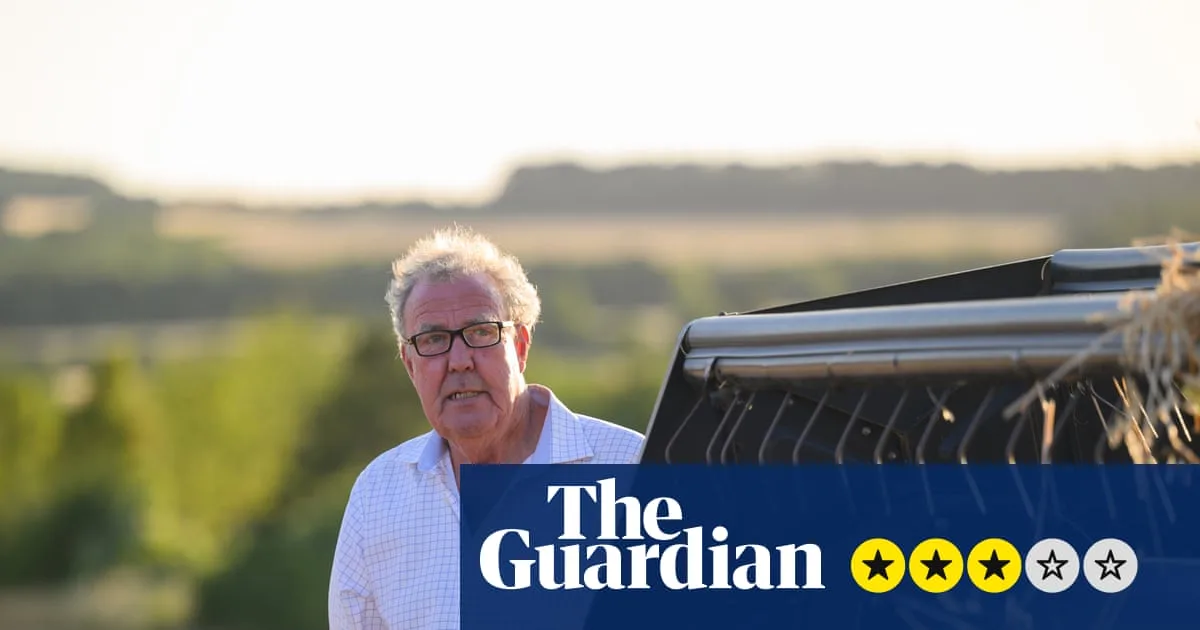
By now, five series in, the fatal flaw at the heart of Clarkson's Farm has become unignorable. Ultimately, this is meant to be a show about failure; about an oafish man who wades into an industry he knows little about and mucks everything up. Except, well, it isn't that any more, is it? Because in real life, Clarkson's Farm has become so successful that Clarkson has now essentially colonised the entire Cotswolds in his image.
His Farmer's Dog pub is now such an attraction that it recently had to turn a nearby field into a 360-space car park – the same as a large supermarket – to cope with demand. His Diddly Squat farm shop is a souvenir emporium, catering to anyone who wants to buy branded hats and cufflinks, or to own a jar of honey with Clarkson's face on it. And this isn't even mentioning his Hawkstone beer brand, which reported sales of £21.3m in the year to March 2025 and has a stated goal of putting Peroni “out of business”.
All of which makes Clarkson's mannered whoopsie daisy clumsiness harder to take. If the point of Clarkson's Farm is to show people how difficult it is to be a farmer, and yet Clarkson's biggest gripe is the number of pint glasses tourists steal from his pub, that seems like a fairly difficult structural flaw to overcome. What's so interesting about series five is that you can see Clarkson's Farm attempting to overcome this in real time.
The first, and least successful, approach is to lean a little harder into the reality show element. The series opens with iPhone footage of Clarkson in hospital with chest pains. Years of stress and bad living have caught up with him, and he reveals that he was apparently days away from a catastrophic heart attack. So a lot of this new series is given over to that: he gets on weight-loss jabs, starts eating yoghurt, and has to slow down. During these times, we basically end up following him around like a Kardashian.
By far the most satisfying parts of the show come when Clarkson stops mucking around and actually treats farming as a subject worthy of his time. A lot of this series is devoted to the modernisation necessary to keep farming profitable, and his pursuit of this takes him to some extraordinary places. He meets a potato farmer in the Netherlands who has optimised every aspect of his farm – even getting it designated as an airport to better facilitate targeted drone-based pesticide use – to cut costs and increase output. This is absurdly nerdy stuff, all heat maps and soil analysis and granular data, and by rights it should be as dull as ditchwater. But Clarkson's enthusiasm for it – his intense curiosity and schoolboyish glee – really sells it.
The issue is that there isn't nearly enough of it. As things stand, Clarkson is now a man with his own gravitational pull. But Clarkson's Farm works best when it forgets all the distractions and remembers to get its fingernails dirty. A little more of that would go a very long way.




