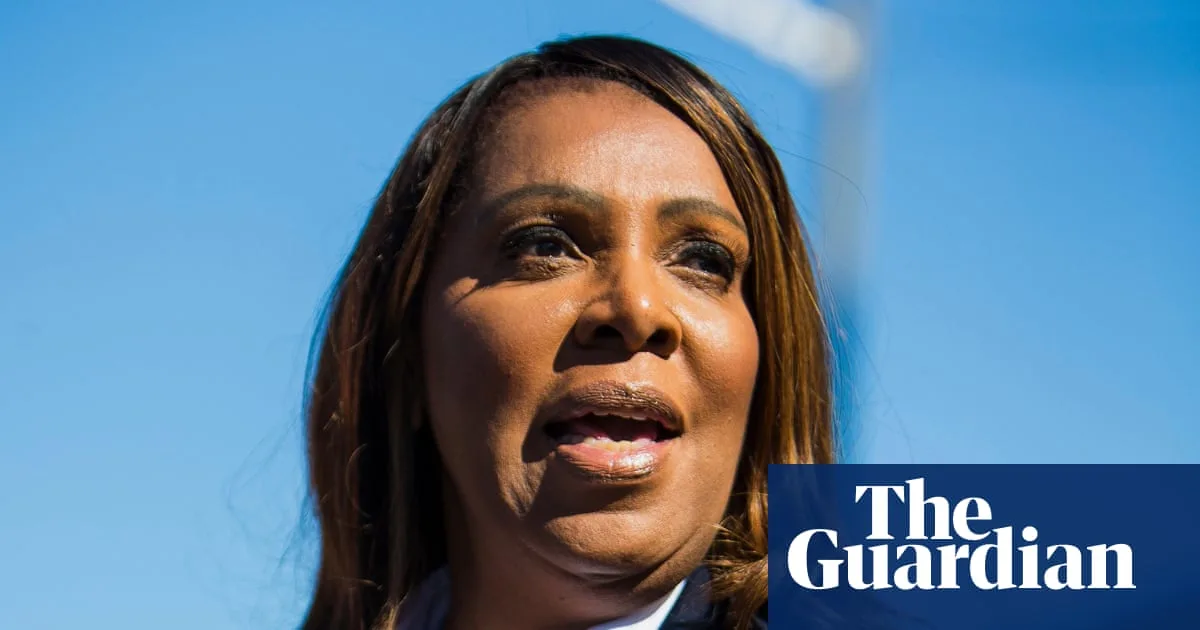
A grand jury has declined to indict New York Attorney General Letitia James, a decision that came less than two weeks after a federal judge ruled that a similar mortgage fraud case against her was unlawful.
The move by the justice department to present the case again to a grand jury was seen as a signal of its determination to prosecute James, who has been one of Donald Trump's top political adversaries since she successfully brought a fraud lawsuit against him in New York.
James was first charged in October with one count of bank fraud and one count of making a false statement to a financial institution. The charges relate to a mortgage she obtained for a home in Norfolk, Virginia, in 2020. Prosecutors allege she received a more favourable rate by indicating it would be a second home when she later rented it out, saving about $18,933 over the loan's lifetime.

James has denied wrongdoing and argued that the prosecutor, Lindsey Halligan, was unlawfully appointed as US attorney for the eastern district of Virginia. Halligan, a former White House aide and Trump ally, presented the original case to the grand jury that indicted James. She was installed after her predecessor, Erik Siebert, was forced out for declining to charge former FBI director James Comey.
US District Judge Cameron McGowan Currie agreed with James and Comey's lawyers last month, ruling that Halligan's appointment was unlawful. US attorneys must be Senate-confirmed but can serve in an acting capacity for 120 days; after that, district judges must decide who serves. Siebert had exceeded the 120-day limit, and the judges had extended his tenure. Once he left, Currie concluded, Trump could not simply appoint a replacement.
Beyond the appointment issues, experts said the criminal case appeared thin. The financial benefit was minimal, and the second-home rider did not explicitly prohibit renting. Career prosecutors had concluded there was insufficient evidence and were later fired. James's attorney, Abbe Lowell, said: 'This should be the end of this case. If they continue, undeterred by a court ruling and a grand jury’s rejection of the charges, it will be a shocking assault on the rule of law.'