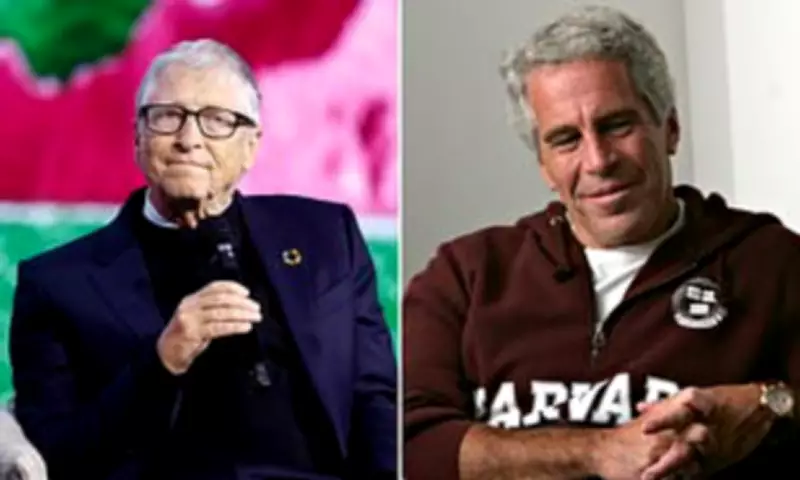
Bill Gates, long celebrated as one of the world's most successful businessmen, has been forced into damage control after his ties to convicted sex offender Jeffrey Epstein were laid bare in newly released Department of Justice (DOJ) files. According to a report from The Wall Street Journal, the Microsoft co-founder and his inner circle scrambled to manage the fallout as allegations emerged that he had slept with Russian girls, contracted a sexually transmitted disease, and planned to secretly administer antibiotics to his then-wife, Melinda French Gates.
Allegations Surface in Epstein Emails
The explosive claims were part of emails Epstein wrote to himself on July 18, 2013, and released on January 30. The correspondence suggested Gates engaged in sexual relationships with underage Russian women and subsequently sought to conceal his actions. Following the disclosure, Gates, now 70, convened a private town hall with employees of the Gates Foundation, one of the world's largest philanthropic organizations, from which Melinda resigned as co-chair in 2024.
During the closed-door session, internally dubbed 'BG Unplugged,' Gates admitted to two affairs with the Russian women mentioned in Epstein's emails, according to WSJ. He characterized his relationship with Epstein as a mistake and stated that the controversy was the 'opposite of the values of the foundation.' The more than 1,000 emails released in the DOJ files caused such distress that several employees were seen crying during another town hall meeting, the report added.

Foundation CEO Addresses Staff Concerns
Mark Suzman, who became CEO of the Gates Foundation in 2020, held a separate meeting in February, days after the files were made public. Gates did not attend. During the discussion, multiple employees questioned Suzman about Gates' ties to Epstein. One staffer asked for guidance on how to explain the situation to foundation partners. Suzman admitted he felt 'somewhat sullied' by the association with Epstein and acknowledged that it had tested the foundation's mission, sources told WSJ.
The fallout quickly spread beyond the foundation. Nonprofit executives, world leaders, and even Microsoft began distancing themselves from Gates. His team had planned an annual CEO summit in Washington state, but weeks before the event, they were advised to skip it this year. A Microsoft spokesperson said, 'While it didn’t work out this year, we’ve already extended an invitation for Bill to attend the CEO Summit next year.'
India Visit Derailed
In mid-February, Gates traveled to Vijayawada, India, with plans to visit Mumbai and New Delhi, where he was scheduled to deliver a keynote at an AI conference. However, Indian government officials announced they were reviewing his invitation due to his appearance in the Epstein files. The Gates Foundation's India office initially confirmed his attendance on social media, but Gates ultimately missed a dinner with Prime Minister Narendra Modi and other leaders. Government officials decided he should not attend the summit to avoid overshadowing the event. Gates later told his staff that it was a 'mutual agreement' and that he understood their concerns.
Polling Reveals Trust Erosion
The damage to Gates' reputation has been tracked by two internal polling teams—one at the Gates Foundation and another at Gates Ventures, his private office. Data collected over years shows a significant decline in his favorability and trustworthiness. A media analysis indicated a more than 40 percent increase in critical news narratives about Gates and his foundation since the Epstein files were released, according to internal documents obtained by WSJ.
Upcoming Congressional Testimony
Gates is scheduled to testify before the House Oversight Committee in a closed-door interview on June 10 as part of an ongoing investigation into Epstein's network. He will appear off-camera and is represented by John Moran, a former senior DOJ official. The Daily Mail has contacted the Gates Foundation and Microsoft for comment, but no responses have been reported.