A fraudster who attempted to sell fake ancient statues to Sotheby's has been handed a suspended sentence after his forged paperwork was exposed as being printed using methods 25 years too modern, a court heard.
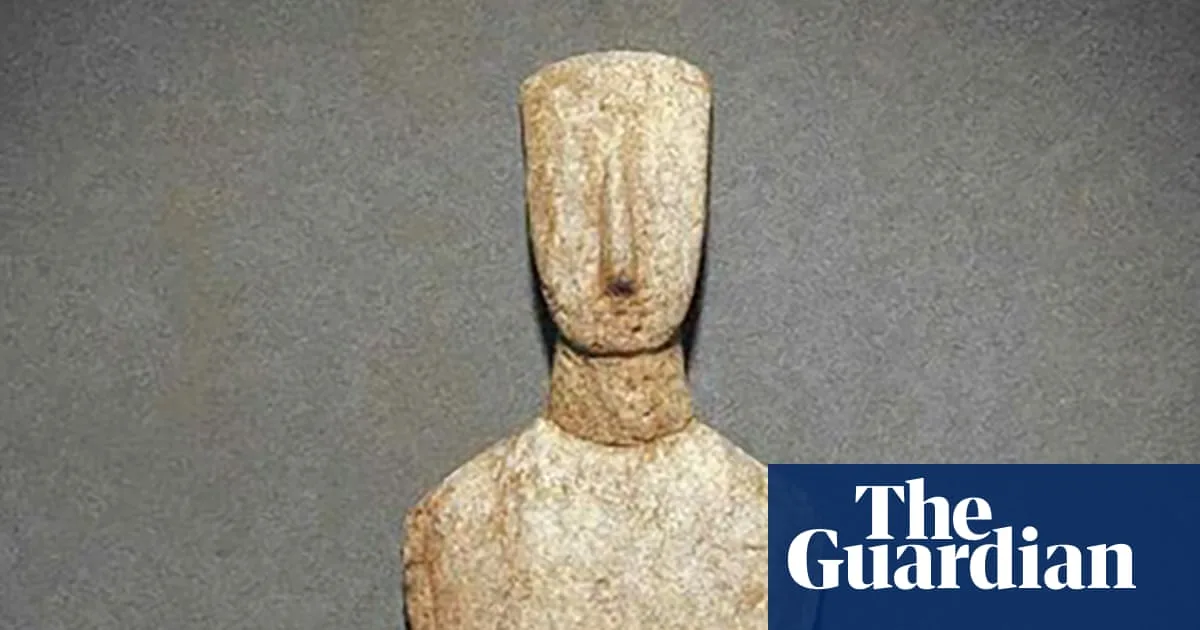
Andrew Crowley, 46, from Longwell Green, Gloucestershire, asked the auction house to value three Cycladic figures and one Anatolian stargazer statuette, claiming he had inherited them from his grandfather. Prosecutors said the items could have been worth up to £680,000 if genuine, though Judge Rimmer reduced that estimate to £340,000.
Crowley provided invoices purporting to date from 1976, typed on paper with an antique dealer's logo and a nine-pence stamp. However, forensic analysis revealed the printing methods used were not invented until 2001. Sotheby's experts also spotted spelling errors in the documents.

Handing Crowley a two-year suspended sentence, Judge Rimmer said: 'It was a crude attempt because Sotheby's rumbled, to use the vernacular, or spotted, these documents as bogus fairly early on.' The judge accepted Crowley believed the statues were genuine inheritances, noting the offending centred on the paperwork.
Crowley had admitted dishonestly making a false representation to Sotheby's between November 2022 and July 2023. He was also ordered to complete 200 hours of unpaid work and pay £1,630 in costs.
Detective Constable Ray Swan of the Metropolitan Police praised Sotheby's staff for their swift action, saying their cooperation was 'instrumental in preventing a significant fraud'. A Sotheby's spokesperson commended the police investigation for helping to protect the integrity of the London art market.