Benjamin Davis, a former senior official at the UN Food and Agriculture Organization (FAO), has alleged he was fired last week for his work highlighting hunger in Gaza and has launched an appeal against his dismissal. Davis, 62, a Spanish-American dual citizen, left the FAO after 26 years of service.
Allegations and Context
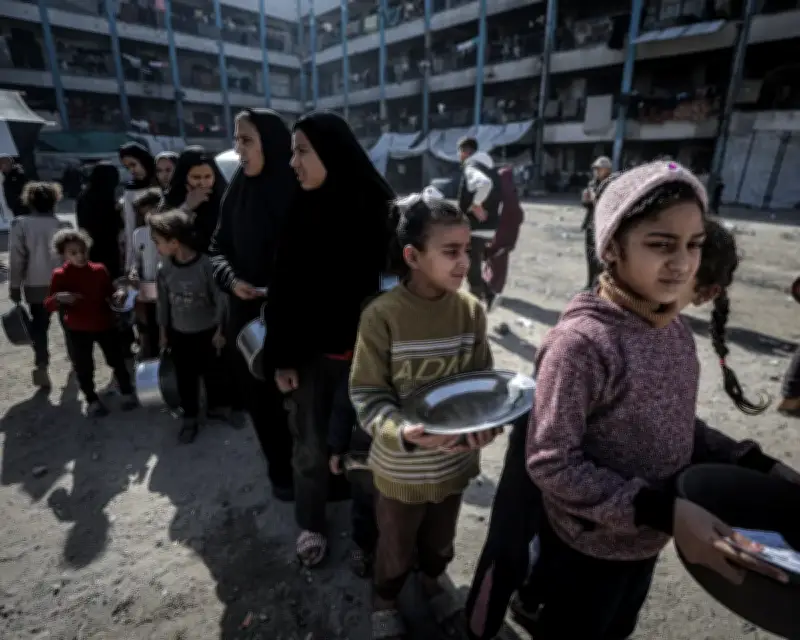
Davis said the FAO leadership refused to renew his contract as director of its rural transformation and gender equality division because his team had published a brief on hunger in Gaza and held a seminar on the subject last year, and because he took part in weekly “moment of silence” vigils on FAO grounds for those killed. The seminar in September last year triggered a complaint from the Israeli mission to the FAO, which also sent a diplomat to take pictures of staff at a moment of silence gathering last October, according to a FAO staff report filed at the time.
FAO Director General's Remarks
The FAO did not respond to a request for comment on Monday. However, the organisation’s director general, Qu Dongyu, appeared to refer to Davis’s dismissal in public remarks last Tuesday, in which he threatened to fire more people for what he deemed political activism. “We are not going to allow you to play the game here of human rights,” said Qu. “Of course human rights are very important, but they have a human rights agency in Geneva. If you want to take care [of human rights], go there.” He added, “Thats why [when] some senior members play political games here, I fire him. I’m a very soft person. I didn’t fire that many. I’m going to use my last year … to fire more if they’re against the law.”
Davis's Response and Appeal
Davis said he and fellow staff members were stunned by Qu’s remarks. “Even more than the threat about firing people was just what he said about human rights. I think that really shocked people because it undermined the foundations of why we’re here basically, or why FAO is part of the United Nations and why the United Nations exists,” he said. The official letter informing Davis that his contract would not be renewed said Qu was “no longer confident in your ability to discharge your obligations in the manner required of a senior international civil servant”. In his written response, Davis said the approach taken by FAO leadership was “simply wrong”. “Silence in the face of suffering and injustice is not neutrality, it is complicity,” he wrote.
Davis said FAO leadership had previously criticised him for a briefing paper published by his team in May last year describing the level of hunger in Gaza and setting it in the context of international humanitarian law. The report, which said current conditions in the Gaza Strip “reflect a gross violation of the right to food and the unlawful obstruction of humanitarian assistance”, was removed from the FAO website a few weeks later on the orders of its leadership. Davis also said he had been criticised for taking part in moment of silence gatherings held by concerned staff in the FAO car park every Thursday. An altercation occurred on 23 October when a woman identifying herself as an Israeli diplomat appeared and took photographs of those attending. The Israeli embassy in Rome said it had no comment on the report.
Davis said the Gaza briefing paper, the associated seminar, and the weekly moments of silence had all been approved by FAO management, and he had not been told at the time that they represented violations of the code of conduct. He said he had lodged a formal appeal against his dismissal. “I filed the appeal mostly as a matter of principle, not because I’m looking for or expecting any monetary compensation or anything like that,” Davis said. “I have requested to be reinstated, and also for them to take back the accusations that they made against me.”