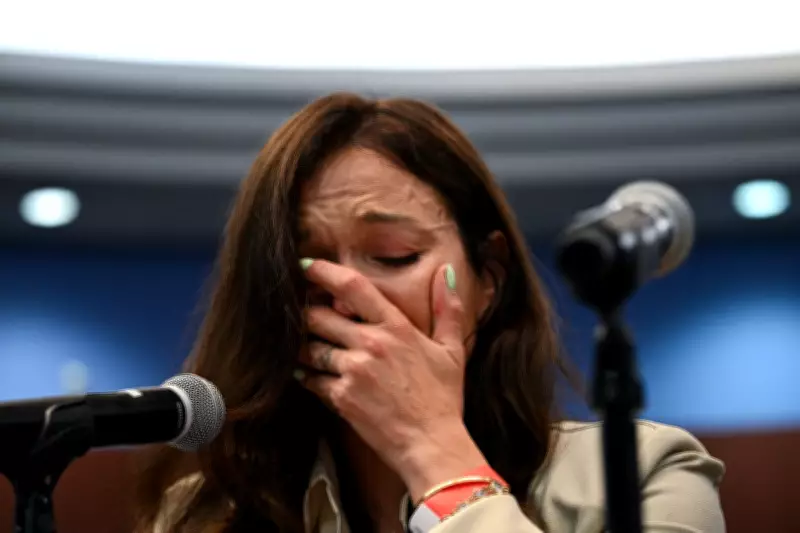
A survivor of Jeffrey Epstein's sexual abuse delivered emotional testimony before a House Oversight Committee hearing in Florida on Tuesday, alleging that the late pedophile raped her while he was under house arrest.
The witness, identified only by her first name Roza, recounted being brought to the United States from Uzbekistan at age 18 by Epstein associate and model scout Jean-Luc Brunel. Brunel secured her a talent visa and introduced her to the financier.
“I did not have the documentation to earn that visa, I’m 100 percent sure of that,” Roza told the committee. “I was promised a modelling career beyond my dreams.”

She continued: “Less than a month after arriving in the United States, my agency sent me to the home of a registered sex offender. He was meant to be in a jail cell but I met him in his house here in West Palm Beach. He was not in a jail.”
Through tears, she stated: “Jeffrey was under house arrest for the molestation of underage girls at the exact time he was abusing me.”
Florida law enforcement initially investigated Epstein in 2005 after an underage girl hired to give him a massage reported sexual abuse. Investigators compiled a 53-page indictment with evidence from 34 victims, but federal attorneys granted Epstein a non-prosecution agreement as part of a controversial plea deal. He pleaded guilty to soliciting a minor for prostitution, registered as a sex offender, and paid compensation. Epstein served only 13 months of an 18-month sentence in county jail and was allowed work-release privileges.
Roza testified that Epstein threatened her visa status and financial security to prevent her from leaving. “The fact he could commit those acts made justice feel impossible to me,” she said.
She also criticized the Department of Justice for leaving her name and those of other survivors unredacted in Epstein files released in December and January, noting her name appeared over 500 times while accomplices' names were blacked out. She called this a “choice,” not a “mistake.”
When asked what justice looked like, Roza responded: “You guys have to figure out justice. Not me. You can’t give me justice. When I came to this country, I thought something was going to be different. I am shocked this is happening here, in the United States. You need to figure it out, and I hope you do, and I hope this never happens again.”
She concluded by comparing the Epstein survivors' movement to the campaign of 19th-century Hungarian doctor Ignaz Semmelweis, who advocated antiseptic procedures in maternity care. “I’m begging you, please wash your hands,” Roza told the committee.