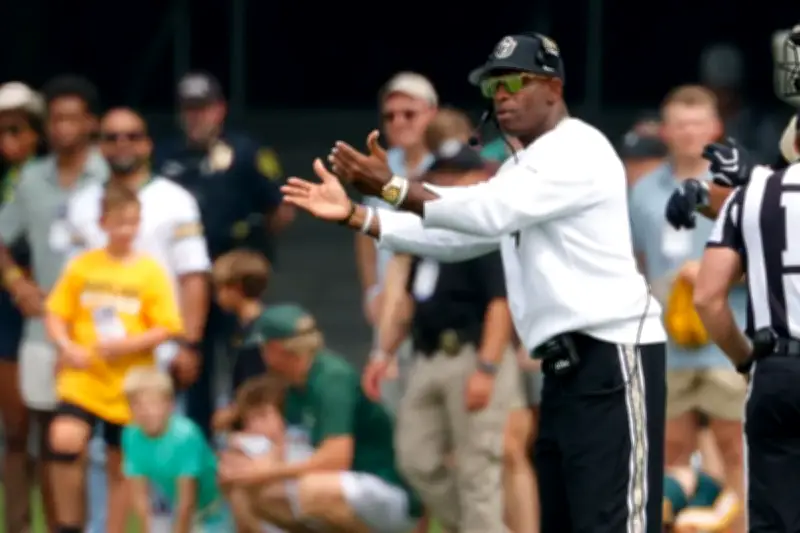
Deion Sanders, the Hall of Fame cornerback turned coach, is facing criticism for supporting the Protect College Sports Act (PCSA), a bill that would impose a ceiling of around $49 million on school-directed athlete compensation and restrict player transfers. Journalist Rob Parker labeled Sanders a "sellout" for appearing in an ad promoting the act, a harsh but telling reaction from those who see the measure as harmful to athletes.
What the PCSA Would Do
The Senate passed the PCSA last week, and it now awaits House approval. In addition to the compensation cap, the bill introduces a transfer rule that would, except in specific circumstances, limit players to one "free" transfer; moving schools again would require sitting out a year. Former NFL player Domonique Foxworth argued that "the core of [the PCSA] is about reestablishing the power the NCAA had in the past – that the court system determined was illegal."
Sanders, however, takes a different view. In his pro-PCSA ad, he states, "As a coach and father, I'm helping the next generation find their spotlight. That's why I support the Protect College Sports Act. It gives student-athletes a chance to shine on and off the field, strengthens historically Black colleges and universities, and keeps both men's and women's sports strong." Critics see this as vague language masking a desire to regain control over players, who now have unprecedented freedom through name, image and likeness (NIL) deals and the transfer portal.
Sanders's Shifting Position on NIL
Sanders's current stance contrasts with his past comments. In June, he told reporter Baker Machado, "I do believe that college athletes should be compensated for their name, image and likeness. But it's not about name, image and likeness right now. It's just about pay-per-view." Four years earlier, while coaching at Jackson State, he lamented that NIL deals turn NCAA athletes into "professionals," saying "you don't have staffs large enough and equipped enough to handle a young man with money." The PCSA would not end or cap NIL, but it would require players to prove deals have genuine commercial purpose, potentially ending arrangements that effectively pay athletes to play.
Sanders's comments echo those of Nick Saban, another PCSA booster, who said NIL "created an environment with no control, no guardrails." Saban added, "Now you've got transfers that are out of control. You've got salaries that are out of control. You've got budgets that are out of control." Yet Saban made over $121 million during his 17-year tenure at Alabama, and Sanders, earning $10 million a year, is the highest-paid head coach in the Big 12. Colorado's athletic department ran a $27 million deficit last fiscal year, partly due to Sanders's salary. While the PCSA includes a "Lane Kiffin rule" preventing coaches from switching teams mid-season, there is no cap on coaching salaries or buyouts.
A Hypocrisy Rooted in His Own History
Sanders's support for the bill is particularly disappointing given his own history. In his 2011 NFL Hall of Fame induction speech, he spoke candidly about his mother's financial struggles and how his "Prime Time" persona was born of economic necessity: "Cornerbacks, running backs, linebackers, defensive backs weren't paid a lot. And in my dormitory room at Florida State, I created this image … You could love him or you could hate him, but he was Prime Time." He now laments that NIL has turned the NCAA into "a business," but "Prime Time" was itself a business decision.
Sanders's stance draws parallels to Michael Jordan, who, as owner of the Charlotte Bobcats, reportedly advocated for NBA players to receive just 47% of basketball-related income during the 2011 lockout (the final figure was 51.2%). Jordan had earlier told then-Washington Wizards owner Abe Pollin, "If you can't make it work economically, you should sell the team," during the 1998 lockout, though he didn't sell his majority stake until 2023. Sanders, revered by athletes much like Jordan, now appears to be losing solidarity with players as he becomes part of the management machine.
Coaching Ambitions Over Player Rights
Sanders's motivations may be competitive. In May, he said, "At Colorado … I want to win. I want to win it all. It ain't no negotiation. No side steppin'. That's my No 1 goal." The NIL boom has hampered Colorado, which lacks the finances of top programs, and the team has lost three straight games. Sports Illustrated's Andrew Hughes wrote in April that "The Buffs no longer spend enough to truly be relevant on a national scale." The PCSA could benefit Sanders by complicating NIL salaries and restricting transfers, giving him more leverage as a recruiter and potentially improving roster continuity.
Sanders's path from Jackson State to Colorado illustrates his priorities. At Jackson State, his star power attracted Travis Hunter, the top-ranked high school player, proving five-star recruits would go to HBCUs. He then left for Colorado's "brighter lights (and bigger paycheck)." Other former NFL stars like Michael Vick (Norfolk State), DeSean Jackson (Delaware State), and Marshall Faulk (Southern University) have stayed at HBCUs, content to mentor young men. Sanders, however, left that "happy medium" behind.
The PCSA, as critics note, imposes a federally protected salary cap and employment framework without collective bargaining, rolling back players' labor rights with no meaningful athlete representation. These changes would disproportionately affect Black players, who make up 66% of football rosters in the ACC, SEC, and Big 12. NAACP president Derrick Johnson, in a letter to Congress opposing the PCSA, wrote, "Public institutions cannot depend upon Black athletes to fill their stadiums, secure television contracts, attract donations, and build nationally recognized brands, then claim neutrality when the political rights of those athletes, their families, and their communities are under attack." Sanders, by working against those rights, is doing the bidding of a power circle of legislators and boosters, a betrayal of the young Black athletes who idolize him. Must be the glory.