
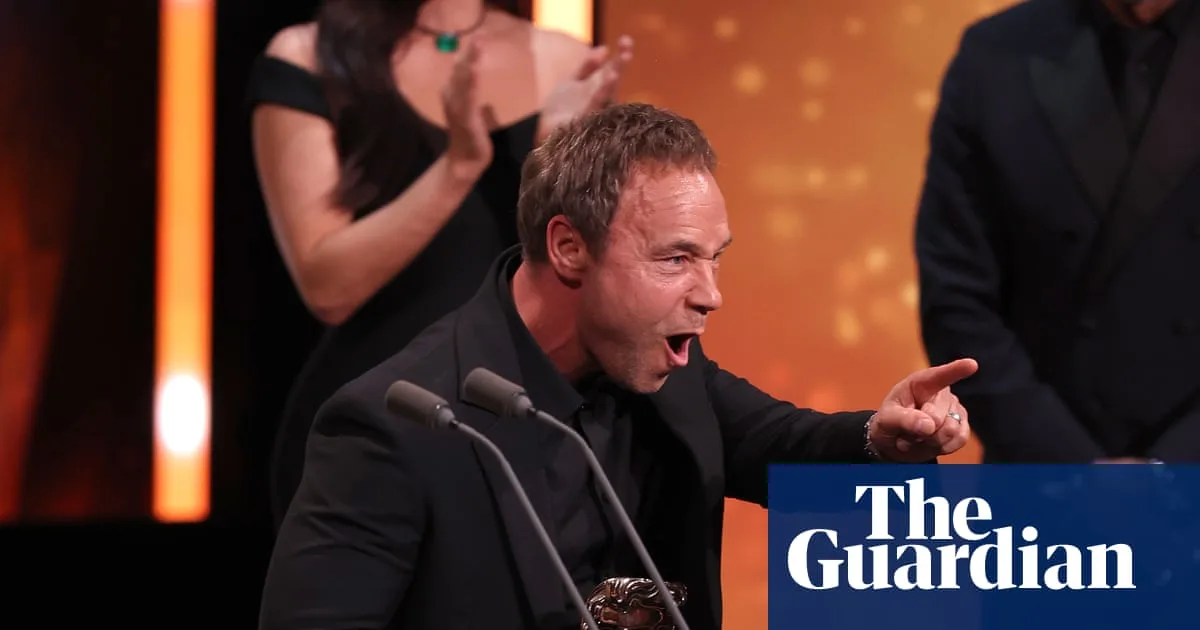
The Netflix drama Adolescence, which won universal acclaim for its chilling portrayal of violence by disaffected teenage boys, has dominated the Bafta TV awards.
The four-part series where each episode was filmed in a single take won the award for best limited drama, while Stephen Graham, who co-created the show, took the best leading actor prize. Graham, who had been nominated eight times before, talked about being inspired by the TV show Scully as a child. 'For any other young kid, no matter where you’re from, anything is possible,' he said. 'We’re not saving lives. But we have the opportunity to tell the human condition. And we have the obligation to tell beautiful stories.'
Owen Cooper, who became a household name for his performance as 13-year-old Jamie Miller, who is arrested for murdering a girl at his school, also bagged the best supporting actor award, while Christine Tremarco claimed the title of best supporting actress. While accepting his award, 16-year-old Cooper said: 'In the words of John Lennon, you won’t get anything unless you have the vision to imagine it … I think you only need three things to succeed in life: one, an obsession, two, a dream, and three, the Beatles. So thank you so much.'
Other winners on the night included the crime series Code of Silence for best drama and Narges Rashidi for best leading actress in Prisoner 951, the true story of Nazanin Zaghari-Ratcliffe, the Briton imprisoned for six years in Iran.
The documentary Gaza: Doctors Under Attack took the spoils in the current affairs category. The film was picked up by Channel 4 after first being commissioned by the BBC, then dropped over impartiality fears, which sparked uproar from within the corporation and the wider media. Ramita Navai, the film’s reporter, criticised the BBC and paid tribute to the 1,700 Palestinian doctors and healthcare workers killed by Israel. 'These are the findings of our investigation that the BBC paid for, but refused to show. But we refuse to be silenced and censored,' she said. Its executive producer Ben De Pear then dared the BBC to edit the remarks out of the ceremony, which is broadcast on a two-hour time delay. 'Given you dropped the film, will you drop us from the Bafta screening?' he asked.
Channel 4 was also recognised for its news coverage of the Israel-Iran war, beating Sky News’s reporting on Gaza and BBC Newsnight’s programme giving a voice to grooming gang survivors. The other factual categories were won by Simon Schama for his BBC Two documentary The Road to Auschwitz, and Channel 4’s series See No Evil, about the Church of England scandal over the prolific abuser John Smyth, which led to the resignation of the archbishop of Canterbury. Netflix’s Grenfell: Uncovered, which combines footage from the disaster and subsequent public inquiry with testimony from survivors and bereaved families, was named best single documentary. Its director, Olaide Sadiq, said: 'The victims of Grenfell deserve much more than remembrance. They deserve accountability, they deserve change and, most importantly, they deserve justice.'




