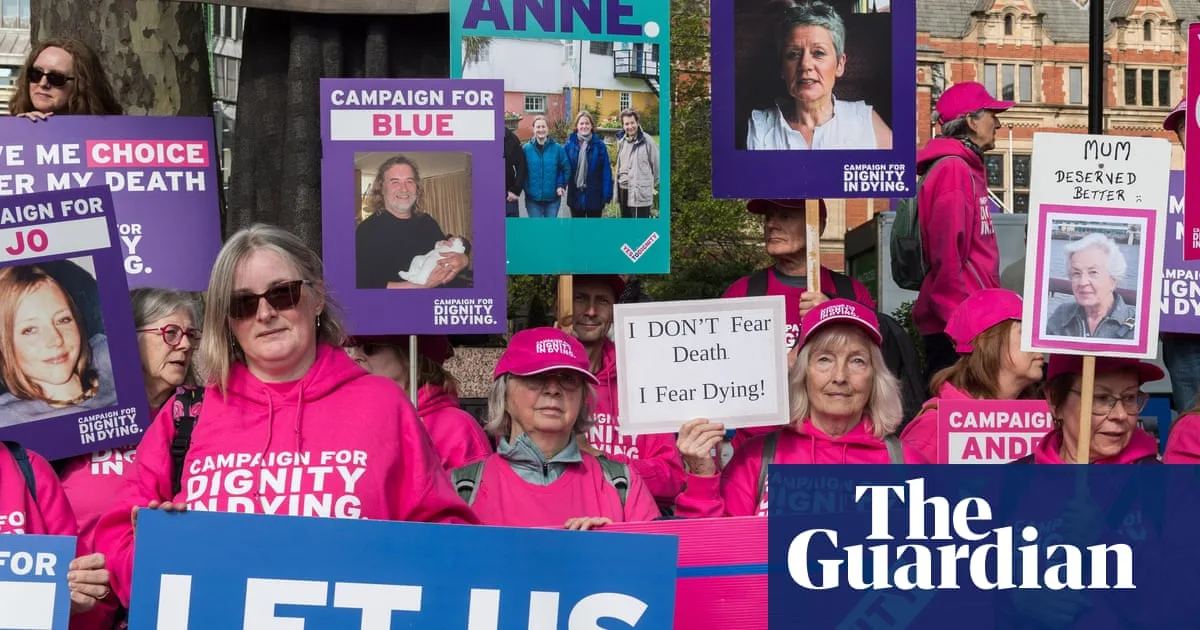
The failure of the terminally ill adults (end of life) bill in the House of Lords has led to bitter recriminations, with supporters accusing a small group of unelected peers of sabotaging the legislation, while opponents maintain the bill was too flawed to pass.
Sarah Wootton, chief executive of Dignity in Dying, said a tiny group of “implacable opponents” had dominated debates and tabled numerous amendments to talk out the bill. “It’s absolutely shameless what a tiny group, less than 1% of the unelected, the upper house, has done. Their role is to scrutinise, not to block,” she said. Hannah Slater, 38, who has terminal breast cancer, described the outcome as “not democratic”, adding: “It’s devastating for people who want to be able to choose how to die when we’ve got a terminal illness.”
However, the cross-bench peer and former Paralympian Tanni Grey-Thompson, among the seven peers most criticised, said the bill fell because it was “badly written” and needed to be much tighter. She argued that criticism of the 1,200 amendments failed to acknowledge the complexity of the process, noting that her own amendment to use the accepted legal term “disabled people” required 12 separate amendments. “Our role is to kind of look at the geeky technical stuff,” she said.
Disability rights campaigner Pete Donnelly praised the peers’ amendments, claiming that without them the legislation “would have been waived through” without adequate scrutiny. He described the bill as “unsafe [and] lethal”, and said it should be introduced as a government bill to ensure full scrutiny.
Labour MP Josh Fenton-Glynn, who abstained on the second reading in the Commons, said he still believed the bill lacked sufficient safeguards against coercion by relatives. “Any proponent of assisted dying would want to see a safe and workable bill and I don’t think it was that,” he said. Labour peer Luciana Berger argued the bill should have received pre-legislative scrutiny similar to that given to private members’ bills on issues of conscience, as happened with abortion and capital punishment reforms, to ensure it engaged with professional bodies responsible for implementation.