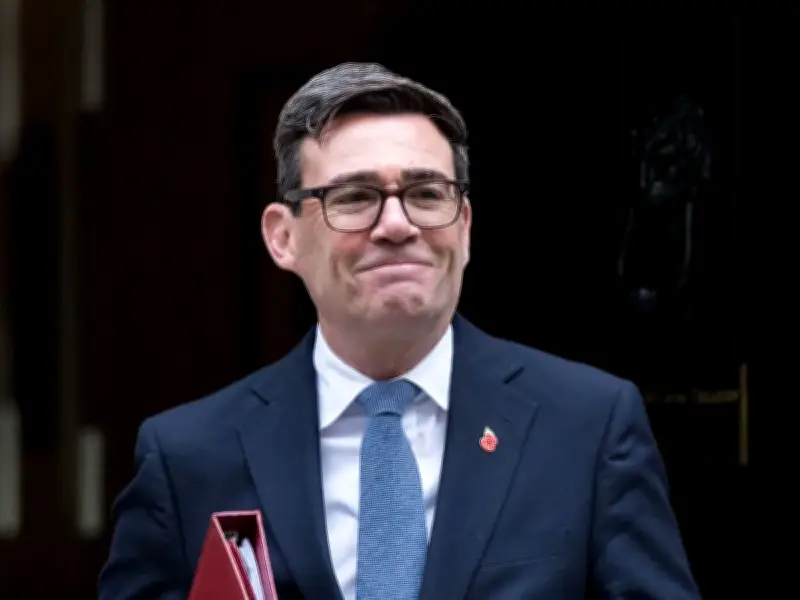
Half of Britons want the government to prioritise small, practical changes that help sooner, new polling shows, as Andy Burnham's approval ratings rose slightly after the Budget.
More in Common (MIC) research found 43% think Mr Burnham is doing a good job, up from 39%, while those who believe he is doing a bad job dropped from 31% to 30%.
Public backs practical help
The polling, carried out just after the Budget, shows 50% of Brits want the government to prioritise small, practical changes that help sooner, against 36% who prefer big structural change. Those earning under £20,000 back small changes most strongly at 53% to 31%, while those on £70,000 or more prefer structural change 56% to 38%.
Support on energy bills was found to have cut through the most with the public. The most popular spending measure is scrapping standing charges on gas bills, backed by 72% and opposed by just 4%. A one-off £100 payment off energy bills for households in council tax bands A to D is second, with 70% in favour and 9% against.
Budget faces 'tinkering' criticism
Chancellor John Healey's Budget has faced some criticism for not being radical enough, especially after Mr Burnham pledged to "rewire" Britain under his leadership. Nearly half (46%) say the Budget was not radical enough to deal with the challenges Britain faces, while 60% say the Budget "tinkers with small things around the edges".
Nicola, a housewife from Rawmarsh and Conisbrough, praised Mr Burnham - who has been focusing on "everyday fixes" to improve people's lives - for "chipping away" at issues. She told MIC's focus group: "What I quite like about Andy Burnham is he just takes things just chipping away at the ice block, just a little thing, a little thing, a little thing (...) I think it's leading to the sum total."
Luke Tryl, MIC's executive director, said: "Showing you can do stuff is clearly popular with people, and in particular those who are struggling the most. They want small practical help in the here and now, even if that means that bigger changes take longer to come."
Fairness test passed
Mr Tryl said the Budget appears to have passed the "fairness test" with voters, with tax measures hitting banks, vapes shops and gambling and targeted support on energy bills. But he admitted the "big questions left unanswered are on welfare defence", as well as concern about Britain's resilience, both economically and in terms of national security.
Some 68% fear Britain would not be resilient to a large-scale cyber attack on the NHS, banks or government, the survey found. Likewise 67% don't think Britain would be resilient to a global economic shock, and 62% don't think we're prepared for extreme weather events, like flooding or droughts.
A Treasury source said the Chancellor was happy with how the Budget had gone. "The market and the PLP are both happy. How often does that happen?"
Mr Burnham last week acknowledged the Budget was not as radical as he hoped it could have been, because of the impact of the Iran war and prevailing global headwinds. Asked if he would describe the Budget as radical, he told ITV: "We took a decision on the Budget early on. The Chancellor came to me and said given everything, given the way the world is, and things changing by the, not even week, by the day, he felt it was right to go early and to close down some of the speculation we've seen in the past, because that's added to the difficulties with budgets.
"And as we were going through, the numbers were changing a lot because of what was going on in the world. So, to come to your question, the room for manoeuvre wasn't what I would have hoped it to be. I guess then the question is, you know, radical within what we were able to do. It was quite a big call to ask the banks to repay the help they had off people 20 or so years ago."
More in Common polled 1,749 GB adults with UCL Policy Lab from October 28 to 29.