

British WWE Star Kit Wilson Poses Unexpected Challenge to Toxic Masculinity
The world of professional wrestling is witnessing a unique cultural critique from within its ranks. British WWE star Kit Wilson, whose real name is Samuel Stoker, has emerged as a captivating figure on SmackDown, using his platform to challenge what he describes as toxic masculinity among his colleagues. This development comes amid broader societal conversations, highlighted by the recent release of Louis Theroux's Netflix documentary Inside The Manosphere.
A Character with a Message
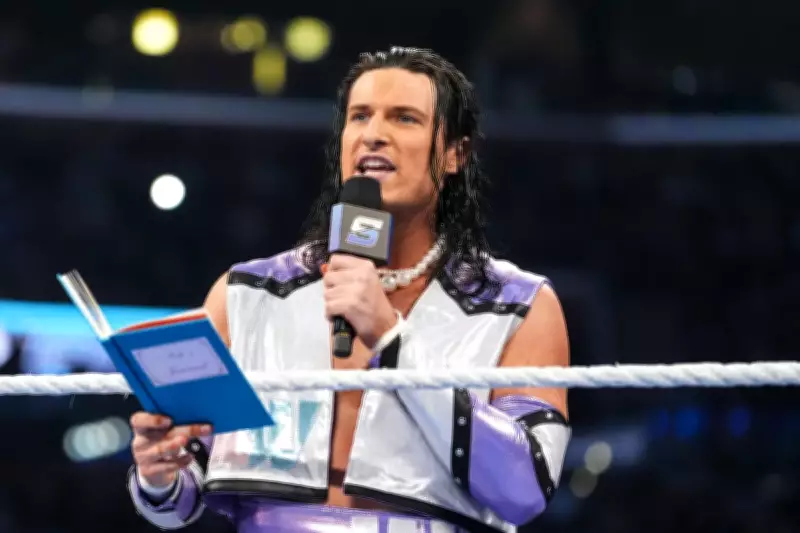
Wilson, a 31-year-old from Buckinghamshire, presents a layered persona. One moment, he embodies the classic wrestling showman with gyrating hips, flexed biceps, and a sparkly sleeveless jacket, accompanied by Charli XCX-inspired theme music. The next, he directly accuses fellow wrestlers of perpetuating problematic hyper-masculinity. His signature catchphrase, delivered with venom, is a simple but powerful: "TOXIC!"
During a recent episode of SmackDown, watched live by over one million viewers, Wilson directed this accusation at Jelly Roll, the US music star who has crossed into professional wrestling. Wilson identifies Jelly Roll as the latest perceived offender in his ongoing crusade.

"This is a TV show, it's an exaggeration of who I am," Wilson explained to The Independent in a Zoom interview. "So, I do want to be a role model, but I'm not gonna be a martyr in saying: 'You should follow everything I do.' However, I do want men to rise up together."
Fashion as a Statement
Wilson's critique extends beyond words into his aesthetic choices. He often sports a pearl necklace, a deliberate contrast to the gold chains favored by many hyper-masculine wrestlers.
"A pearl necklace leans slightly more feminine, but I'm gonna do it in my own, powerful, masculine way," he said. "I hope it can send a message. If there's a boy or girl in the audience who wants to wear a pearl necklace and express themself... If I have a small part in someone feeling okay with expressing themselves, that's what I'm here for."
Timely Alignment with Broader Discourse
The conversation with Wilson feels particularly relevant following the release of Theroux's documentary, which explores the online manosphere—a network of communities where disillusioned young men are often fed narratives blaming women for their struggles. The documentary has sparked widespread debate, and Wilson sees clear parallels with his WWE character's mission.
"I really enjoyed the documentary," Wilson noted. "It kind of rings true to something I'm diving into. I talk a lot about toxic masculinity, and I have a lot of problems with my fellow roster members because they are... toxic!"
He clarified that his issue is not with masculinity itself, but with its toxic expressions. "I view myself and the character I portray as very open to all aspects of personality – masculinity, femininity, vulnerability – and I think that openness makes us stronger as men. I think that's true masculinity," Wilson elaborated. "The classic thing of 'boys don't cry'... You should cry; we should let these emotions out. These are healthy things. It's like anger: I support anger, that's a natural emotion; it's aggression that I have a problem with."
Building a Memorable Persona
Wilson has meticulously crafted his in-ring character, developing not just the catchphrase and thematic stance, but also his look, signature poses, and even influencing his theme music—which charted on iTunes earlier this year. He provided WWE's production team with specific song references and production elements to achieve the desired sound.
"I'm trying to make every single aspect as big as possible," he explained regarding his creative process. "I'm only one half of the decision-making process. The company's got so much input as well, but I think you see how much of an effect it has when it all comes together. I'm still trying to create a massive entity."

This entity, as Wilson describes it, is indeed a complex one—a satirical, quintessentially British character woven with serious social commentary. While he may be received as a villain by some within the wrestling world, his underlying message champions a healthier, more inclusive form of masculinity, making him a distinctive and timely voice in both sports entertainment and contemporary cultural debates.





