

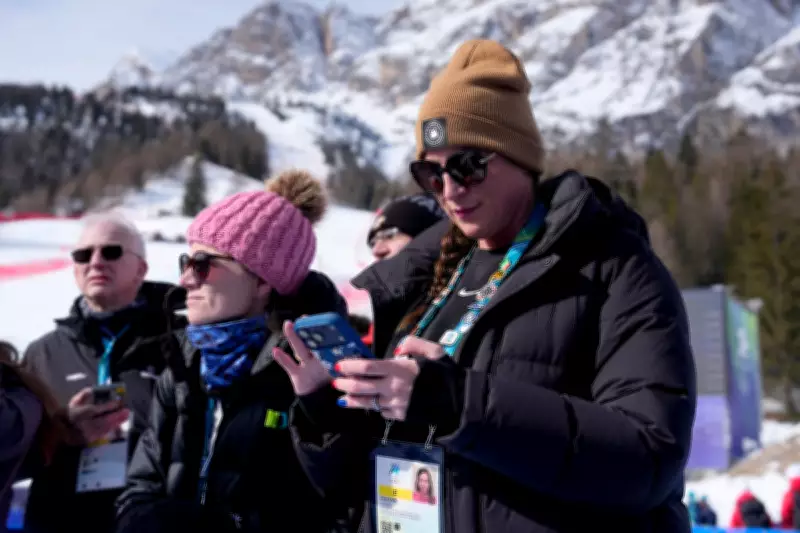
Women's Sports Media Outlets Forge New Paths Beyond Olympic Coverage
Alongside the historic growth of women's sports, the media ecosystem dedicated to covering these athletes is flourishing. Outlets such as TOGETHXR, The GIST, Just Women's Sports, The IX Sports, GOALS, and Good Game with Sarah Spain are expanding their reach and reshaping the industry, particularly evident during events like the 2026 Milan Cortina Olympics.
From Marginalisation to Mainstream Momentum
Veteran sports columnist Christine Brennan recalls a time in the 1990s when male colleagues laughed at her insistence on covering women's sports. "It was absolutely infuriating to me," said Brennan, a best-selling author and former president of the Association for Women in Sports Media. Today, entire media outlets are springing up to centre women's sports, growing rapidly and tackling coverage independently.
"The male-dominated mainstream sports media totally missed the boat on women's sports," Brennan noted, adding that she is heartened by newer outlets "doing a job that should have been done by mainstream sports media." While mainstream media have improved their women's sports coverage, University of Michigan professor Ketra Armstrong says the influx of women-led outlets is uniquely "liberating" because athletes are "owning their stories and not waiting for it to be filtered through any traditional lens."

Building Platforms from Personal Frustration
Just Women's Sports originated from founder Haley Rosen's frustration after her professional soccer career ended. She found it difficult to follow her sport in the news, where coverage felt "very young, very pink and glitter, a lot of lifestyle content." Rosen built the outlet from an Instagram account in 2020 into a prominent platform with partners like Nike and Amazon Prime, emphasising coverage with the same intensity as men's sports.
"These women are the best athletes in the world, competing at the highest level. And I think we have to treat them as such," Rosen asserted. Similarly, The GIST was founded by Ellen Hyslop and college friends after she felt shut out of traditional sports communities despite being an avid fan. The outlet now reaches roughly 1 million newsletter subscribers, with nearly 50% growth over two years, primarily Gen Z and millennial women.
Olympic Spotlight and Industry Challenges
The Olympics have demonstrated that meaningful media attention attracts enthusiastic audiences for women's sports. Sarah Spain, host of Good Game, credits social media, stars like Caitlin Clark, and the women's national soccer team for accelerating growth. "There was this blaming of the product of women's sports, without understanding the incredible ecosystem... lifting up men's sports," Spain explained. "Now we're finally catching up in terms of investment."
However, Armstrong notes that women's sports media still represents a "very small piece of the pie" compared to the wider industry. Northwestern University professor Craig LaMay cautions that growth doesn't guarantee long-term sustainability, as coverage decisions remain "relentlessly a business decision." He points out that Forbes' list of the world's 100 highest-paid athletes includes no women, highlighting persistent disparities.
Innovation and Future Prospects
TOGETHXR, founded in 2021 by star athletes including Olympic halfpipe silver medalist Chloe Kim, embraces the slogan "Everyone Watches Women's Sports." Co-founder Jessica Robertson rejects "antiquated rhetoric" and reports selling over $6 million in merchandise. The company reaches more than 4 million users across platforms, a 17% increase from 2024, producing content like podcasts with Sue Bird and Megan Rapinoe.
Streaming platforms like Netflix and Amazon are creating new opportunities for consuming women's sports, moving beyond traditional television networks. Danette Leighton, CEO of the Women's Sports Foundation, calls this a "tipping point," though she emphasises that generational change takes time, noting her organisation was founded by Billie Jean King in 1974. "This is really a tipping point," Leighton said, underscoring the long journey toward equality in sports media.






