
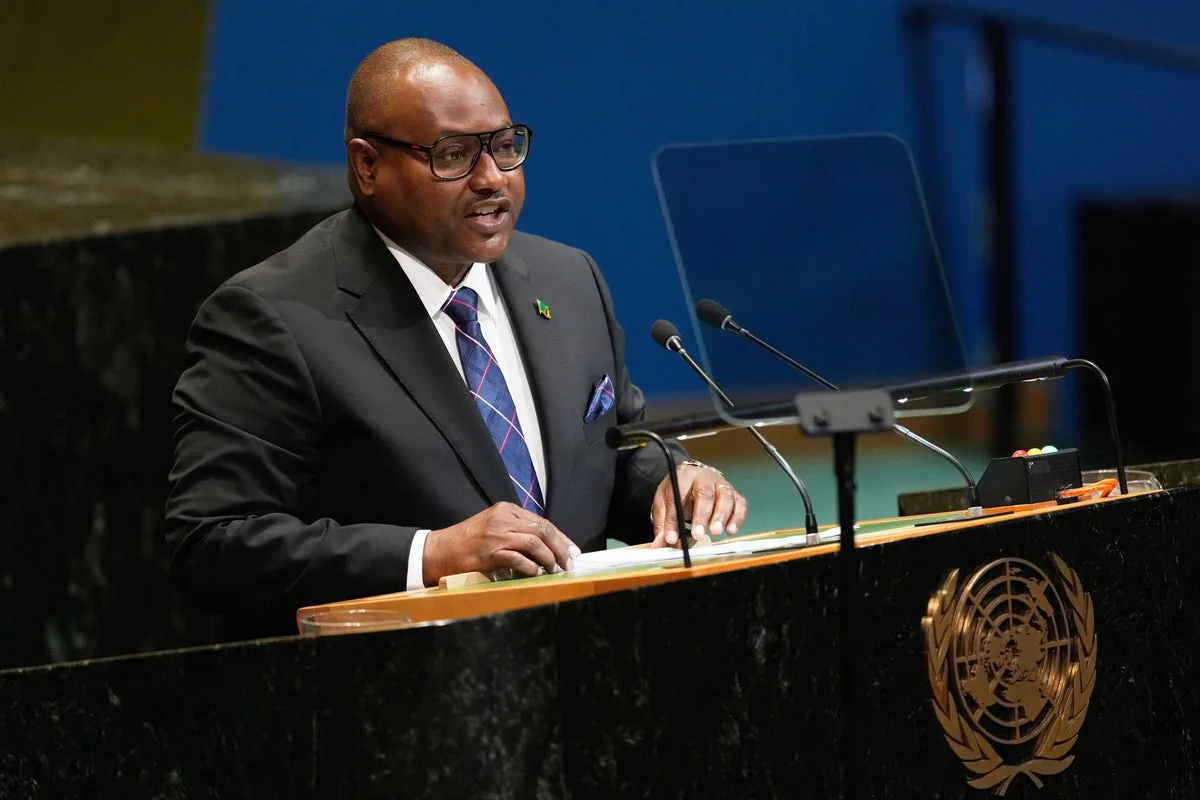
Zambia has accused the United States of tying a $2 billion health assistance deal to access to the southern African nation's critical minerals, escalating tensions over the Trump administration's transactional approach to foreign aid. Foreign Affairs Minister Mulambo Haimbe on Monday described outgoing US Ambassador Michael Gonzales's allegations of corruption as 'mischievous' and 'undiplomatic.'
Haimbe said negotiations had stalled over 'unacceptable' data-sharing demands that violated citizens' privacy rights and 'the insistence on preferential treatment of US companies over Zambia's critical minerals.' He stressed that Zambians must have a say in how their minerals are used and that no strategic partner should be treated preferentially.
The US is seeking to challenge China's dominance in Zambia and Africa, where minerals such as copper and cobalt are vital for green energy technologies. The Trump administration has replaced traditional aid programmes like USAID and PEPFAR with country-by-country agreements that tie funding to conditions including commercial provisions, disease surveillance, and data sharing.
Since late last year, the US has signed such agreements with about 30 countries, many in Africa. However, several nations have pushed back: Ghana rejected a deal over broad health data access, Zimbabwe walked away from a $367 million package, and Kenya's $2.5 billion agreement is on hold after a court challenge. In Lesotho, draft proposals sought 25 years of health data access before a shorter five-year deal was secured.
Critics argue the data-sharing demands are one-sided, favouring US interests. Asia Russell of Health GAP noted that the US, having left the World Health Organization, is pursuing direct access to disease surveillance data and biological samples outside global frameworks that ensure equitable access to vaccines. The US Embassy in Zambia did not respond to a request for comment.




