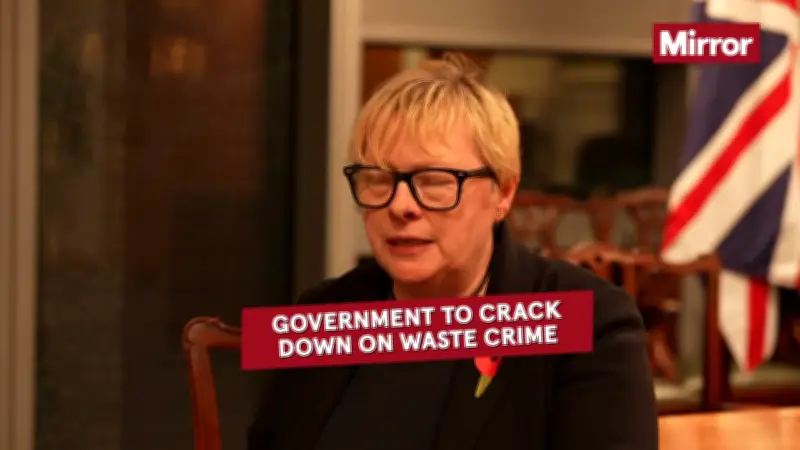
Environment Secretary Angela Eagle has vowed to treat criminal gangs who illegally dump waste like drug criminals, warning them that she is coming for them. Schools and family homes are at risk from potentially dangerous fires or toxic leaks caused by gangs dumping tonnes of waste in communities.
Government crackdown on waste crime
In her first interview with The Mirror, Eagle said the government will tackle environmental issues with urgency, adding that climate change is here now and El Niño hasn't happened by accident. Her first major drive is cleaning up illegally dumped vapes, household rubbish, bricks, asbestos and other waste blighting lives across Britain.
Schools have been forced to close because of toxic air and smoke from fires, while there are concerns about chemical leaks into groundwater, severe public health risks and the risk of a major environmental crisis. An estimated 20% of waste streams are controlled by organised criminality.
Message to waste criminals
Speaking at the first meeting of the waste crime crackdown group, Eagle told mayors, waste experts and ministers she will not tolerate the scourge. Asked for her message to waste criminals, she said: We're coming for you. We're going to stop you doing this, and we are going to - once we've convicted you - take your ill-gotten gains off you.
You're not going to profit from behaving in this way and putting our children and communities at risk, having to live next door to these waste sites, anymore. So your low-risk, high-profitable activity is over.
Arrests and cleanups
Waste crime can include criminals posing as legitimate companies, such as white van removal services, or intercepting legal waste disposal processes. Regular households trying to dispose of waste correctly may unknowingly send money to gangs who spend it on illicit activities.
Some 36 waste criminals have been arrested since April this year, while several major illegal waste sites have been fully cleared. Among sites cleaned up is Kidlington's waste dump, which was larger than the pitch at Wembley Stadium and contained more than 22,000 tonnes of waste, including tyres, shredded plastic, and household rubbish.
The government has also committed to cleaning up an 18,000-tonne site at Bolton House Road in Wigan, in Andy Burnham's Makerfield constituency. A fire at the site in July caused businesses to close and children to miss several days of school. Locals are being offered dedicated health checks amid fears over chemicals dumped at the site.
Political context
In his first month as Prime Minister, Burnham put a crackdown on waste crime at the top of his agenda, saying mountains of rubbish are a clear sign to communities that politics hasn't been working for them. He visited a waste dump estimated to hold several thousand tonnes of waste at Midland Road, Bradford, with Eagle in August, when he announced an increase in fines for waste offences from £300 to £5,000.
Those responsible for serious offences face tougher sanctions, including prosecution and imprisonment. Eagle, who is also in charge of the water sector, blamed Margaret Thatcher for the privatisation of the waste management sector. Asked if public ownership could be on the cards for waste management, she said it may be at some time in the future, but more immediate things are to deal with serious and organised crime issues and toxic waste ending up too close to communities.
Eagle added that the Labour government is the only political party taking the climate and the environment seriously. She admitted it is hard to predict the impact of El Niño but that it could cause more extreme storms and wetter winters in the UK, or disruption to global food supply chains. She said: This is climate change. It is here now. It is happening now. This El Niño hasn't come about by accident. The Tories are moving away from net zero. Reform seems to think that it's all about having nicer wine. Nicer wine is very nice, but you have to deal with the fact that our weather patterns are changing, or what effect that will have not only in our country but on food security more generally. So yeah, it's here now, and we need to realise that it is and adapt our systems to cope with the unpredictability of it.